


Chapter 14: Public Speaking (& COMMUNICATION IN THE 21ST CENTURY)
Public Speaking (& COMMUNICATION IN THE 21st CENTURY)
The definition of public speaking has not changed from its inception centuries ago; it is still defined and recognized as formal conversation. The other requirements for an effective speech still remain the same; a well-structured and organized speech, a clear goal, strong evidence as support, and a good delivery. These remain the requirements to deliver a good speech in the 21st century, what has changed is the technology.
For communication online, there are easily over 20 online teaching and remote learning platforms that can be accessed, like Blue Jeans for video meetings; Google Meet (which integrates with Gmail); Mellon; Skype (Microsoft video platform); FaceTime; Google Hangouts Meet; AnyMeeting; Webex; Go To Meeting; Youtube Streaming; Sococo; Vimeo, and Twitch(for Gamers), just to name a few.
Some speakers/entertainers opt for Podcasts (audio) or Webcast (video) transmitted via regular or live streaming. In regular streaming, the show is created, stored, and then scheduled for broadcast at a later date, while in live streaming, the show is transmitted to multiple users as it is being created.
Video conferencing technologies like Zoom, Skype, Google Hangouts, and FaceTime transmit Real Time Communication (RTC), offering educational institutions the opportunity to present speeches and talks, as well as host meetings in real time, remotely.
Despite the proliferation of technology and social media, presenting public speeches in the 21st century is still a serious challenge both to speakers and the audience/listeners. The saturation of information paired with the inability of users to efficiently sort through the barrage of information and then effectively integrate the current technology with communication has made effective public speaking in the 21st century a troubling task.
You might think that with the increase in access to information via the exploding myriad of media sources, citizens would be better informed, and therefore, better communicators. From a business perspective, there are measurable benefits: communication is easier, it is at your fingertips practically 24/7 via devices like smartphones, tablets, and laptops, it is quicker, the information is instantaneous where you can send and receive data in seconds, as well as share information, and it is efficient, once the data lines are secure, you can receive the processed information, and complete the task in a much shorter period of time. Therefore, doing business domestically or internationally via the Internet is everything a business person could ask for.
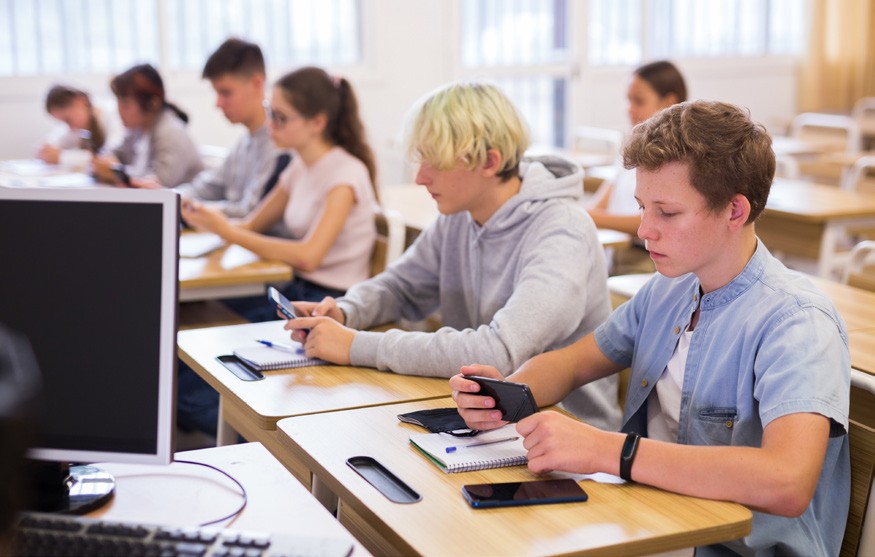
Figure 14.1
However, there are several drawbacks to this technology which is so easily accessible and has become the primary avenue for millions who have chosen to send and receive information online.
With the proliferation of information due to the advent of new technology, communication breakdown has become more common place.
More misunderstandings occur, because of the absence of the non-verbal attributes that accompany verbal communication. Non-verbal communication accounts for 65% of all communication.
Communication overload is a factor for both speakers and listeners. There is too much information being sent rapidly, with little time to be processed as quickly as it is being retrieved; this creates clutter and a backlog that eventually leads to communication overload.
Distractions have become more common place, especially when you consider the fact that the average human attention span is approximately 8 seconds, and now with more information to process, analyze, and discard, focusing has become a more difficult task, making distraction more prevalent.
Inefficient production is a drawback that can be due to outdated technology, lack of proficiency in the use of available technology, poor quality information, failure to properly plan, lack of feedback, and wastefulness of resources.
Speeches presented via video conferencing are challenging to both speakers and listeners, because of environmental distractions to listeners, the inability of speakers to properly focus because of the absence of a live audience providing measurable feedback, the inability to properly observe the body language of both the speaker and audience members because of the impersonal nature of video conferencing, impounded even more when speakers/presenters share their presentations, and audiences are blocked from view, and because observable feedback is hindered; listeners who choose to turn their cameras off also prevent measurable feedback for speakers.
A major advantage of video conferencing is the convenience; miles and countries no longer separate audiences from speakers, and meetings can be planned and presented within a matter of days, if necessary.
Social media has made advertising and promotion relatively simple, and if planned properly using the appropriate platforms, effective and relatively inexpensive.
The challenge that still remains is how to effectively integrate the current technology with some of the challenges of public speaking in particular, and with communication in general.
Technology/Communication Integration Process
The current technology provides you with immediate access; utilize that access to tell your story. You are no longer limited to one particular type of support, or support from just large organizations, corporations, or institutions who may have paid thousands of dollars to produce sponsored research. With the current technology, almost anyone with a camera and a story to tell can create that story and provide useful evidential support for presentations.
There are many videos that can be utilized; some are on tiktok (a social media platform for creative, short videos by users), others on YouTube (a free video-sharing website), and several on Ted Talks (a video podcast that allows speakers to do a talk for 18 minutes or less on a particular subject in the area of either science, technology, entertainment, business, and in variety of other areas of interest).
Richard Turere’s story aired on Ted Talk in 2012. At that time, he was at the time, a 13-year-old Kenyan teenager who invented a solar powered light that scared away lions after these animals had constantly attacked and killed his father’s livestock.
Turere’s story is significant for several reasons; for one, it is a simple and personal story that captures the imagination of adults and children alike who love a feel-good story of triumph, innovation, and creativity, secondly, Turere used personal drawings, photographs, and video as support for his 7 ½ minutes speech to show his invention and discuss how his solar lion light worked to change farming in Nairobi, Kenya, and thirdly, Turere demonstrated the KISS in public speaking, Keeping It Simply Simple; he began with a topic he was familiar with, he maximized the impact of the story, and used a platform that would provide him with the best ability, at the time, to share his human interest story with an extended audience.
“My Invention that made peace with Lions”, Richard Turere
Students and audiences are encouraged to use public speaking applications, like VirtualSpeech, which allows students to practice and polish their public speaking techniques, UMMO, which tracks your fillers/vocal interferences, Speeko, which teaches speaking techniques, the Orai app which allows you to practice speeches and receive feedback, Samsung Be Fearless, which is a self-training, virtual reality program that advances you through levels of training, and Voice Analyst, an app which allows you to analyze your voice quality. These and other public speaking apps provide ways for you to integrate technology with communication.
During the height of the COVID -9 Pandemic, from 2019 -2021, the world was forced into hibernation and virtual learning, and zoom became the new educational platform for all levels of schooling, from pre-school through College and University levels.
The initial challenge of zoom was operational security. In December of 2019, zoom’s daily meeting participants were around 10 million, 3 months later, in March 2020, the massive and unprepared migration to virtual learning witnessed zoom’s meeting participants, free and paid, ballooning to over 200 million, serving 20 countries and approximately 90,000 schools (Yaun, zoom blog, April 2020).
After initial complaints by customers of zoom bombings (hackers and other individuals accessing meetings uninvited, disrupting, and creating havoc), and other vulnerabilities that were discovered which could expose user credentials, the company had to act quickly to scale up its security operations. They hired a new product engineer, and up-scaled and upskilled their security and operations training to better handle the global crisis and influx of users.
Zoom’s platform is now more integrated and equipped to handle the needs of virtual learning. However, a major problem that still persists is virtual public speaking from a boxed screen on the internet.
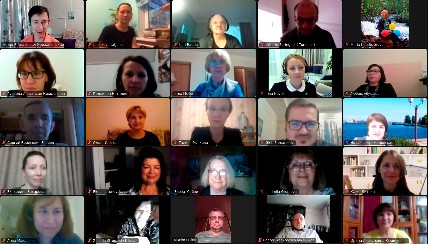
Figure 14.2
Be careful not to be used by the technology, instead you should try to extract as much as you can from the specific technology you are utilizing for your talk by finding creative ways to use its resources.
One way you can be used by technology is by becoming less aware of its usefulness and instead, finding yourself utilizing it to pass the time by aimlessly scrolling. For example, you can scroll through tiktok or snapchat for extended periods of time, with no specific purpose in mind, other than the fact that the app is available and there is little else to occupy your time.
In the 1950s, in the early days of television, the T.V. set was referred to as “the idiot box”, in reference to users and the device itself, because it was non-interactive (for users) and non-responsive (the device itself), and studies have indicated that excessive use of it not only caused addiction, it also led to mental developmental issues, myopia, and obesity in children.
Skip forward in time to the 20s, the smartphone and tablet are today’s devices of addictive behavior, but it is not the device, rather, the online connective world of games and apps, and yes, nonsense, that has created the addictive behavior exhibited by thousands who are compelled to constantly check texts, apps, and emails once the “ding” sounds off.
Smartphone addiction is referred to as nomophobia – the fear of being without a cell phone, and when children are given a phone at age 4 or 5, it is not surprising that they contract internet addiction before their teens. In the 21st century, the technological devices are both interactive and responsive.
Noticeably, in public speaking presentations, instead of index cards, some speakers use their mobile phones. For my classes, it’s a no, and some speaking coaches share my view and don’t recommend it either, for the following reasons: you are perceived as being unprofessional, remember, public speaking, like initial meetings with others, is a perception game, you don’t want to give the impression that you are so attached and addicted that you can’t put the gadget away, and we speak with our eyes, a small screen forces us to narrow our focus on the screen, making it quite noticeable that you are using your phone to scroll through what you have written, and you are actually reading it, occasionally looking up, rather than the other way around glancing down occasionally and looking up more. What’s wrong with index cards?. Nothing, they’re still quite inexpensive, and you can write as large as you want to on it without having to scroll.
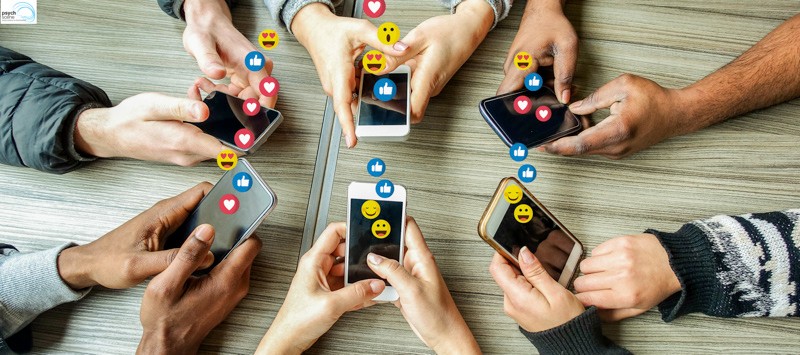
Figure 14.3
Many teens develop virtual relationships due to their addiction to social media and networking, to the point where virtual relationships have replaced real-life relationships and created the false belief that online friendship is a healthy alternative to real-life friendship, even touting as fact, that online relationships are less stressful and demanding, and produces less drama than a real life relationship.
Younger and older adults have grown accustomed to using dating apps, making short-term hook-ups more preferential and normal than establishing and developing long-term relationships.

Smartphone and Internet Addiction
Pornography has existed in our society for centuries, today’s technology has made cybersex more accessible, convenient, and anonymous. Unlike the idiot box (T.V) of the 1950s, which was non-interactive and non-responsive, the smartphone has made sexting, nude-swapping, and adult messaging interactive, and very responsive, hence the “smart” preceding “phone”.
The excessive use of dating apps have created a market for casual sex and quick ways for clients to satisfy their fantasies, which in turn has made long-term relationships more difficult to develop, and cybersex addiction more prevalent.

Figure 14.4
Gambling addiction is another issue that has plagued individuals for years. State-regulated gambling was certainly not the answer, even though State statutes did help to define what gambling was, the types of gambling considered illegal, and gave state agencies regulatory powers to monitor the day-to-day operations of gambling establishments, like casinos. However, illegal gambling still persists and has now moved online to become more main stream.
Conflicting, inconsistent, and complicated laws on legalized betting, especially in online and sports gambling, has made online gambling an easy entry into the world of betting, since instead of a casino, with today’s technology, all you need is a website, and gambling in all its forms is easily accomplished. Technology has made the process easier and unfortunately more addictive and deadlier to mental health, exacerbating anxiety, loneliness, depression, and stress.
Another aspect of integrating communication with the technology is to practice communication while simultaneously using the technology, as in Podcasting, or as in my case, radiocasting/broadcasting.
For several years, I produced brokered radio shows on various New York AM and FM radio stations. I managed the entire radio show production, from the format to the commercials/advertisements that ran in the hour or two, hour long segment of the show. The format was primarily music, the genre, Caribbean music, and the program also contained featured segments, like a segment that provided tips on cultural foods, and a featured artist segment that highlighted the life story and music of a current or past musical artist/performer of Caribbean origin. I was also the show’s engineer, running the board and switching in and out of commercial breaks and announcements. All done live.
The point is, I was forced to learn how to use the technology, and simultaneously integrate communication with the technology. There were times when it did not go as smoothly as hoped for, but the show was professionally done and received by thousands who resided in the Tri-State area of New York, New Jersey, and Connecticut. Challenge yourself at podcasting, it provides great practice for public speaking.
The use of technology by masses of people, coupled with the popularity of social media and instantaneous information, has become so pervasive that it has led itself to a disturbing trend in news reporting, “Fake News”, where reality, facts, perception, lies, outright fraud, and oftentimes a mix of both facts and fiction (misinformation) have produced a manipulated, and oftentimes, falsified view of real events, and presenting fictitious events as real news.
Dis-Informers create their own set of facts/alternative truths and fabrications with the specific intention to mislead, whereas, Mis-Informers are unaware that they are reporting incorrect information.
Fake News refers to any information that is patently and purposefully false, but attempts to be portrayed as a true or real account. Fake news is created and presented with the primary purpose of deceiving others into thinking it is real.
A recent CNN study (Prior, 2021) revealed that 3 out of 4 Americans cannot discern a fake news story, even though they think they can. The study also revealed that the more overconfident you are about your ability to identify fake news, the more likely you are to believe, consume, and share it.
Deep fake is also prevalent and very difficult to discern, like President Obama’s speech, where his image and voice inflections are utilized to recreate the speech out of context.
Teaser – Synthesizing Obama: learning Lip Sync from audio
Here’s what you should know: websites, social media sites, and accounts, as well as those who share content, are the usual purveyors of fake news content. There are websites set up to primarily funnel fake stories, disinformation, and misinformation. The agenda usually is a particular political or/and social point of view being propagated.
Satire is not fake news; however, it puts a twist to the real story so as to make mockery of that person or news event in order to make a point. Clickbait is used to get people to click on the news article or commentary, but that news may not necessarily be fake, although the headline (the clickbait) could be misleading.
Understanding The Fake News Universe, Media Matters staff, (2016),
Most recently, there has been accounts by conspiracy theorists of plots by sinister forces to undermine and disrupt the way of life as we all know it to be. These theorists have been around for a very long time. Social media technology has revived some of these theories, and provided others with the opportunity to radicalize segments of viewers and listeners with their extreme views.
During the COVID-19 pandemic, QAnon made its way into mainstream news with the conspiracy theory that former President Donald Trump was embattled with the”deep state”in his attempt to expose and destroy child trafficking and a pedophilia ring involving politicians and celebrities. The claim was that this so called “Global elite pedophile ring” (Atlantic, 2020) used the pandemic as a cover-up for the real truth, which was child trafficking.
As the number of Q followers grew, the claims became more and more extreme, bizarre, and in some instances, dangerous.
How can you tell fake news from real news. There are suggestions you may be able to utilize (Mind Tool, 2020):
- Develop your critical thinking skills. Public speaking helps you to do this. If the story is making a strong attempt to influence you emotionally, dig deeper and ask why.
For example, using “Terrorist” or “Freedom Fighter” to describe the same story should alert you, and make you question the reasons for the labels used.
- Check your source – as a course of fact, public speaking students are required to provide multiple sources as support in citations, and journalists routinely double check their sources and utilize more than one source for verification of a story.
- Trustworthy news outlets feed off of each other in reporting events. You should look to other sources and what they have reported on the story so as to verify that story’s authenticity.
- Public speakers key in on evidence; the more compelling your support and facts, the more believable you will In other words, be prepared to back-up whatever you say or write, with facts.
- Visual support is compelling, you must inquire whether the visual support provided fit the context, and inquire as to its relevancy and source trustworthiness. For assistance with image verification, the enclosed link might be useful.
Google Reverse Image Search
- If it’s too good to be true, then it may not be true. Use common sense and your perceptions.
Then there is AI, Artificial Intelligence, now being used industrially, personally, and globally.

Figure 14.5
Artificial Intelligence (AI) is the simulation of human intelligence processes by computer systems, some of which are built in humanized machine form, such as human robots. This process seems to have occurred simultaneously with the digital transformation that has taken place, and more recently, it seems to have accelerated with the implementation of 5G.
Trusting the information, which is oftentimes the solution information that machine has stored, is a barrier to the adoption of the information for everyday solutions. This process is referred to as machine learning adoption, where the information might possibly be used in diagnosing diseases, and predicting market solutions in the business world.
Integrated learning is a challenge in AI, just as integrating communication with technology is a challenge, because in both instances, trust is a key factor and responsibility is crucial.
Artificial Intelligence can be considered the next frontier in the use of technology in communication and in public speaking. However, the challenge is finding more efficient ways for the computer to collaborate with the human being; one has the capability of processing data at a scale highly impossible for the human brain (the computer), and the other (the Human) possessing the ability to contextualize that data (Foundry, 2019).
Humanized machine learning platforms have categorized and separated the human tasks from the computer tasks, resulting in a symbiotic relationship between algorithms and humans. The harnessed machine intelligence is now being used to enhance and identify the data value.
Analytics (the metrics of the data value) are now being used extensively in making sports-related decisions, making data the MVP in all major sports, including football, baseball, and basketball. The data allows teams to track, predict, and make smarter decisions on the field. Fans are already complaining that teams are becoming too dependent on analytics and are removing much of the human element of unpredictability that they derive so much pleasure from in rooting for their team.
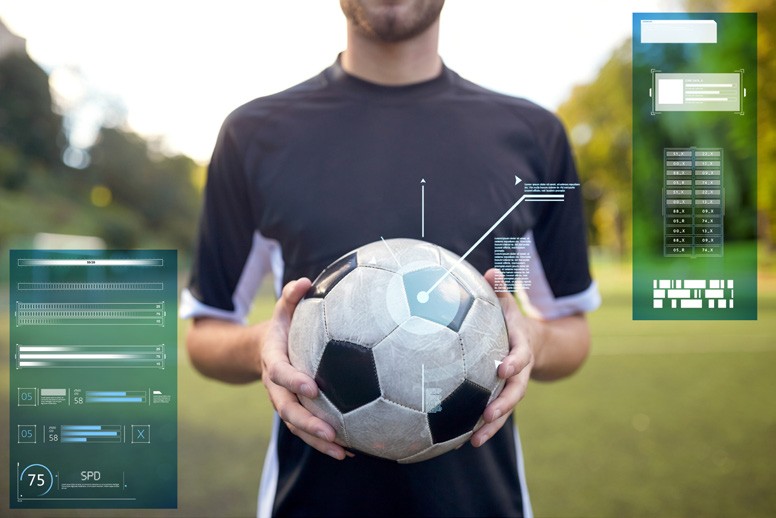
Figure 14.6
Teams are using the analytic metrics to raise Athletes’ performance levels, improve in-game strategies, and monitor nutrition. In fact, sports teams turn statistics into mathematical models to predict the outcome of a play or game (Urwin, 2022) and this intelligence is utilized both on and off the field.
In the music industry, as in sports, AI has emerged and can generate algorithms by gathering, then analyzing volumes of musical data of various artists, to eventually produce a replica of that artist’s music and voice, or even new songs that artist did not write. AI achieves this by mapping and learning that artist’s musical patterns.
Artificial Intelligence is being introduced and plugged into every facet of our existence, whether it’s entertainment, business, or social life. Recently (May 2023), a new dating app was launched using AI to create “chatbots that mimic users’ interests and personalities” (Taylor, 2023) This allows potential daters to skip most of the small talk and ghosting, associated with individuals severing all forms of communication without warning, after one or two meetings.

Figure 14.7
Dr. Goeffrey Hinton, considered the Godfather of AI, voiced concerns about the threats posed to humanity by AI’s unregulated emergence with the creation of ChatGPT, developed by OPEN AI, a company co-founded by Elon Musk and Sam Altman, with additional funding from Google.
OPEN AI allows users to utilize human-like text, images, and videos when AI tools are accessed via written prompts. However, there is growing concern about the threats that this new technological development and direction of AI pose on humanity.
“Critics have argued that unregulatedAI could fuel the spread ofmisinformation, cause major losses in the job market, and provide bad actors with a new tool to wreak havoc in society” (Barabi, 2023).
Technology has definitely placed us at the crossroads of communication; it has always led the way, with communication oftentimes lagging way behind, and those with the responsibility for making sure regulations are in place to protect humanity remain mute.
The integration of technology and communication is far from complete. Therefore, the threat to our existence from an unrestrained AI is real. How well we are able to integrate communication with the benefits and drawbacks of all of the technology at our disposal may determine our future in multiple areas of economics, business, and social life.
Planning for the best future, but also preparing for the worst is the best safeguard you possibly have in the new technological landscape.
Geoffrey Hinton- Reasons why AI will kill us all
SUMMARY
In the 21st century, the requirements to deliver a good speech remain steadfast: a well-structured and organized speech, a clear goal, strong evidence as support, and a good delivery; what has changed is the technology.
There are easily over 20 online teaching and remote learning platforms easily accessible; additionally, some speakers use podcasts (audio), while others use webcast (video), transmitted via regular or live streaming.
Video conferencing technologies like Zoom, Skype, Google Hangouts, and FaceTime transmit Real Time Communication (RTC), offering educational institutions the opportunity to present speeches and talks, as well as host remote meetings in real time.
With the proliferation of information due to the advent of new technology, communication breakdown has become more common place.
There are more misunderstandings and communication overload. Distractions have become more common place, and inefficient production is a setback. Speeches presented via video conferencing are disadvantageous to both the audience and speaker because of environmental distractions, the inability of speakers to properly focus, and the inability to properly observe the body language, and receive and provide observable and measurable feedback for speakers.
The current technology provides the opportunity for anyone with a camera and a story to tell, to create that story. Social media platforms like tiktok (a social media platform for creative, short videos by users), YouTube (a free video-sharing website), and Ted Talks (a video podcast that allows speakers to do a talk for 18 minutes or less on a particular subject) provide video Webcasters the ability to tell their stories.
Public speaking applications, like VirtualSpeech, UMMO, Speeko, Orai, Samsung Be Fearless, and Voice Analyst, not only allow students and practicing public speakers a chance to hone their skills, but they also present users with opportunities to integrate technology with communication.
Virtual relationships on social media have replaced real life relationships and created the false belief that online friendship is a healthy alternative to real-life friendship.
Young and old adults alike have utilized dating apps, making short-term hook- ups more preferential than establishing and developing long-term relationships. Cybersex is more accessible, convenient, and anonymous, and gambling now have an easy entry into the world of betting; all you need is a website.
A disturbing trend in news reporting is “Fake News”, where reality, facts, perception, lies, and outright fraud has produced misinformation- mistakenly reporting the incorrect information believing it to be correct, as well as disinformation- presenting fictitious events as real news.
Deep fake news purveyors have used technology to tout conspiracy theories and grab headlines (usually on social media) that would oftentimes either blur the truth, or totally falsify news and other events.
In order to distinguish fake news from real news;
» Develop your critical thinking skills
» Check your sources
» Use trustworthy news outlets
» Key in on the evidence
» Provide contextual visual support
Artificial Intelligence (AI) is the simulation of human intelligence processes by computer systems. Digital transformation and the implementation of 5G has now enabled AI to enter into every facet of human life.
Open AI’s ChatGPT creation has allowed users to utilize human-like text, images, and videos when AI tools are accessed via written prompts; this has created growing concerns that if left unregulated, it could spread misinformation as well as disinformation, and create devastating problems in business, social life, and in the job market.
Effectively integrating technology with communication and acting responsibly with the new technology is key to diverting potential catastrophe.
DISCUSSION QUESTIONS
- Discuss ways you believe the advent and use of technology has impacted your life.
- Discuss a situation you were involved in, where the technology being used created chaos, and prevented an effective event.
- Discuss some of the pros and cons of using Artificial Intelligence (AI) in the various facets of human life. Should we be concerned?