


Chapter 11: Vertically Integrated Production Models
Vertically Integrated Production Models
Nobody but a beggar chuses to depend chiefly upon the benevolence of his fellow-citizens.
Adam Smith
For certain agricultural products, production is controlled by a single company from production through ultimate sale. Integrated production is typically found in poultry, swine, sugar, tobacco, and some vegetable production. Control is usually accomplished through contractual arrangements. In some cases, control extends from initial production on a farm to retail (the point of sale to the consumer). It is more common for control to extend only through the wholesale level; however, examples can be found that range from complete control to only partial control of the production and marketing process. For the controlling entity to own the land where production occurs is not common. It is more common for the controlling entity to own some of the facilities involved in the supply chain.
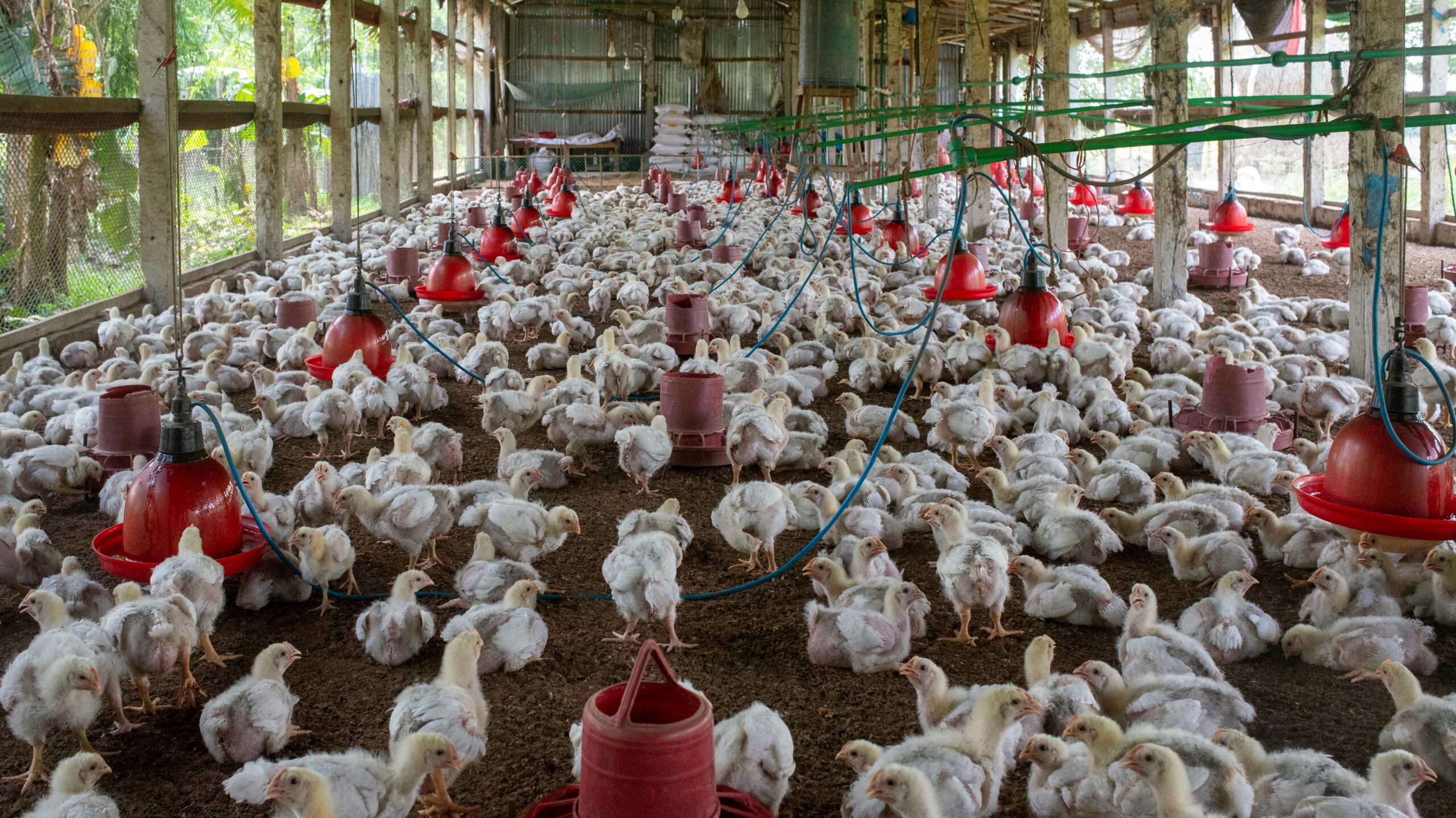
Figure 11.1 : Poultry
Where vertical integration is achieved through contracts it is known as decision-integration. Where it is achieved through ownership it is known as ownership-integration. Ownership-integration is a subset of decision-integration. Ownership may be partial (less than 100%) or complete (100%). Ownership-integration is less common than decision-integration. Decision-integration has the advantages of lower capital requirements for the integrator and a reduction in overall risks to the integrator. Risks that the integrator may be allocated to its contractors include production risks including mortalities, credit risks, property/casualty risks, tort liability, labor risks including injuries, environmental risks, some portion of price risk, as well as others. Food safety risks can only be allocated to contractors (producers) to the extent of the producers’ assets.
Vertical integration explained
ECONOMIC JUSTIFICATION FOR VERTICAL INTEGRATION
Economies of size and scale
Economies of scale reduce the average cost of production over the long run. Sources of economies of scale include improved technology, management, finance, and risk management. In agriculture improved technology can include factors such as research to provide research to provide better livestock and poultry genetics, better feed, and disease control. Most individual farmers are too small to recover these research costs. Improved management results in more efficient use of resources. Increased specialization of the various employees involved in production is something that an individual farmer cannot do. Large, vertically integrated agricultural businesses have access to credit that is not available to individual farmers. Large corporations can, for example, issue bonds or sell additional stock to finance operations. Large corporations can better manage their cash by hiring specialists to improve cash management. Other specialists can negotiate purchases of inputs directly from producers or sell products directly to end users. Large, vertically integrated companies have more, and better risk management options compared with individual farmers. They are better positioned than individual farmers to hedge using options and futures markets. Individual farmers generally do not have the expertise or the time to fully utilize the opportunities that options and future markets provide. Large, vertically integrated companies can produce in a wide variety of geographic locations that can reduce weather and other environmental risks to production.
Information
Historically livestock and poultry prices were set in spot markets. Spot prices are a cash price between a buyer and a seller. In industries such as livestock and poultry that have complicated supply chains, a great deal of information is lost.
Example 11.1. Midwest Feedlots buys cattle for the final stage of production. Its goal is to fatten cattle for a short period of time to increase weight and marbling. Marbling is intramuscular fat that contributes to the desirable qualities of beef. Midwest Feedlots buys its cattle at auction. Only by happenstance does Midwest know where the animals were raised. It knows nothing about the genetics of the animal, the breed, or much of anything else that would allow it to predict how individual animals will perform in its feedlot. Likewise, the buyer of Midwest’s cattle has no way to accurately predict the quality of these animals’ meat until it slaughters them.
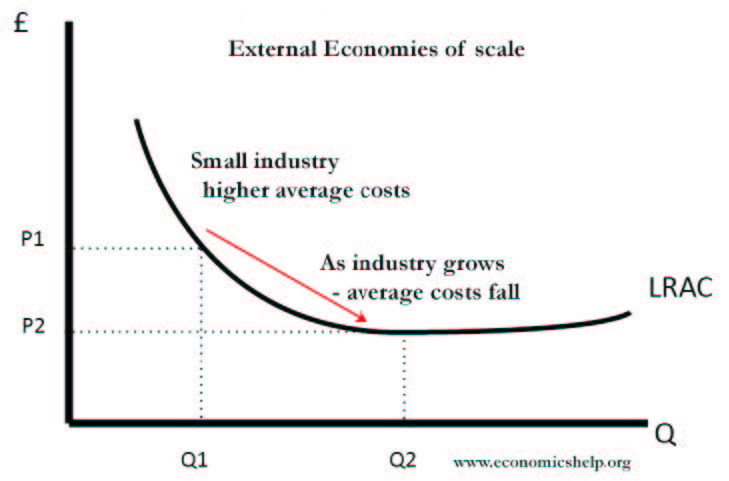
Figure 11.2 : Economies of scale graph
Vertical integration gives the company much better control over the production process. It can know precisely what an animal’s genetics are. It can know exactly the age of all animals. It can know events of the animal’s life such as diseases the animal has had. A vertically integrated company can analyze this data and make changes in production to increase both efficiency and quality. Vertical integration is achieved in one of three ways.
The first is ownership of the means of production. It provides the highest degree of control at the cost of a very high commitment of capital. Where production is geographically diverse as with the cattle industry it faces nearly insurmountable obstacles. Although examples of direct ownership can be found it is relatively rare.
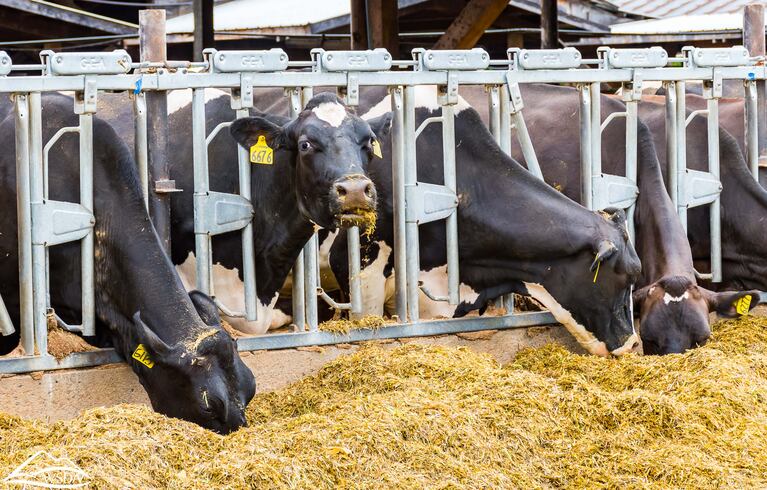
Figure 11.3 : Cattle industry
The two more commonly used means of virtual integration provide for vertical integration of decision-making through either production or marketing contracts. These two contract types are discussed below.
In some parts of agriculture there exists vertical coordination without the control exercised through production or marketing contracts. This is accomplished through grid pricing. Grid pricing is built on the grades and standards discussed in Chapter 9. Grid pricing takes grades and standards a step further but not so far as vertical integration. Grids take the various applicable grades as a given, then establish premiums for higher grades and discounts for lower grades. In the example of livestock, grades can only be accurately determined after slaughter. For grid coordination to work there must be ways of using these premiums and discounts to determine payments to producers. The more steps in the supply chain the more difficult it is for this type of coordination to work. The more market participants the more difficult it is for vertical coordination to work.
Contract type
The two primary types of contracts used in agriculture are production contracts and marketing contracts.
A Guide for Farmers: What About Contracts?
With production contracts, the farmer never owns the crops, livestock or poultry. With marketing contracts, the farmer owns the crops, livestock, or poultry until title is transferred to some buyer, usually the company that has contracted to buy the crops, livestock, or poultry. However, it is possible for the contracting company to be a broker that arranges the sale to a third party but does not title.
How the contract is structured has important implications for the allocation of responsibilities and risk. Production contracts offer farmers significant reductions in risk and responsibilities when compared with marketing contracts.
Example 11.2. Farmer Jones has a production contract with MegaMeat, a vertically integrated meat and poultry company, to produce market hogs. Megameat provides feeder pigs to Jones at a time of its choosing. MegaMeat determines when the hogs are ready for market and provides the crews, equipment, and transportation of the hogs to its slaughter plant. All veterinary services and biosecurity measures are provided by MegaMeat. Farmer Jones has responsibility for administering some veterinary medicines and measures, maintenance of biosecurity, and reporting any sick or diseased hogs or biosecurity breaches on a timely basis. Farmer Jones has sole responsibility for disposal of mortalities since title to an animal that dies passes to Farmer Jones at the moment of death.
MegaMeat does its own genetic research and contracts with specialized farms that produce its feeder pigs that are then transferred to production operations such as that owned by Jones. All of the feed used in Farmer Jones’ operation is produced in MegaMeat’s feed mills using its own proprietary feed formulas. MegaMeat does extensive research on hog feed to ensure that its hogs are fed only feeds that promote efficient feed use and desirable carcass quality. MegaMeat does research on optimizing facilities for hog production and requires Jones to update his facilities on a regular basis.
Updates of facilities are at Jones’ expense. It is his responsibility to find financing for these improvements and make them in a timely matter. Initial construction of the hog houses, waste management system, and provision of the land for these facilities is the responsibility of Farmer Jones. All construction must be done in accord with standards set by MegaMeat by contractors approved by MegaMeat. MegaMeat reserves the right to inspect both ongoing and finished construction. MegaMeat assigns a field person to Jones to visit his operation on a regular basis. Jones is compensated with payment for each pound of live weight at the point of delivery (usually the slaughter plant). All growers delivering hogs for slaughter during a set period of time are placed in a compensation pool that is divided into thirds based upon feed conversion. Those in the middle third receive the standard per pound compensation. Those in the upper third receive a per pound bonus. Those in the bottom third have the per pound bonus paid to the upper third deducted from their per pound compensation. Factors under the control of the farmer that affect feed conversion include prompt provision of water and food and timely and appropriate use of the hog house cooling systems.
Example 11.3. Farmer Amos has a marketing contract to produce certified organic hogs for Utopia Organics. The contract designated a specific certifying organization to handle certification of Farmer Amos’ hogs. Costs of certification were the responsibility of Amos. Utopia reserved the right to observe Amos’ operations. In addition to the usual feeding requirements for certified organic production, Utopia’s contract required some additional elements of the feeding program to ensure the quality of pork that its customers desired. Minimum pork quality requirements were included in the contract. Any carcasses that did not meet these requirements could be disposed of by Utopia in a commercially reasonable manner with net proceeds to Amos reduced accordingly. The contract included a list of growers that were approved to sell feeder pigs to Amos. Amos was permitted to review payment records and observe Utopia’s slaughter plant. Best practices for handling hogs were included in the contract. Veterinary supervision of Amos’ hogs by Utopia employees or contractors was permitted.
Certain food safety requirements were included in the contract between Amos and Utopia. The Hazard Analysis Critical Control Point (HACCP) program was developed to improve food safety. The contract required that Amos adhere to the program. Facilities required approval by Utopia prior to populating those facilities.
CAUTIONARY NOTES ON VERTICAL INTEGRATION
Thin markets
One of the cautionary notes to vertical integration is that the practice tends to create thin markets. A thin market is one in which there is little trading. Thin markets do not send robust price signals. A conservative estimate is that about a third of U.S. agricultural production is under either production or marketing contracts. Since the long-term trend has been to a higher percentage of contracting and the most recent estimates are a decade and a half old, it is likely that the percentage is considerably higher. For some commodities such as broilers and flue cured tobacco, the percentage under production contracts is close to 100 percent.
Spot (market) prices often serve as the reference point for production and marketing contracts. Even where there is no formal reference in the contract to spot prices, those prices often serve as an informal benchmark for contract negotiations. With no reliable price information, contract prices tend to be set administratively by large vertically coordinated companies. The failure of markets to set prices likely results in less efficient resource allocations. Anecdotal evidence over the now concluding first quarter of the 21st Century suggests that this is occurring. There of been not infrequent shortages or surpluses of various products in grocery stores that in part may owe their occurrence to arbitrary administratively set prices and production goals.
Market power
Vertically integrated companies tend to be few whereas farmers tend to be many. This sets up an imbalance that leaves farmers with little market power. There is often little or no opportunity for farmers to negotiate the terms of production contracts. One can see the imbalance in poultry contracts where these contracts run flock per flock whereas the payments on the poultry house may run for more than a decade.
The federal government has intervened in markets to support poultry farmers with perverse results. Both USDA and the U.S. Small Business Administration have guaranteed loan programs to make loans for construction of poultry houses more available. The SBA Office Inspector General has found that the program increases the number of poultry houses thus diluting the negotiating power of poultry farmers. The guaranteed loan programs operate as indirect subsidies to the large poultry integrators.
FEDERAL AND STATE PROTECTION FOR FARMERS IN CONTRACTUAL ARRANGEMENTS
The Perishable Agricultural Commodities Act (PACA) and the Packers and Stockyards Act (P&S Act) are the primary legislative authority that the USDA Agriculture Marketing Service (AMS) has available to protect producers of fruits and vegetables and livestock and poultry, respectively.
New Rules For Packers and Stockyards Act
Using the authority of the P&S Act, AMS can investigate potential violations in the livestock, meat, and poultry industries. Violations include:
- Slow, insufficient, and nonpayment for livestock, meat and poultry,
- Antitrust practices, and
- Unfair, deceptive and fraudulent practices.
Suspected violations may be reported by any person. Reporting is not limited to market participants.
On February 12, 2024, the AMS issued the final rule, Transparency in Poultry Grower Contracting and Tournaments, to require greater transparency in poultry contracts and prohibit reductions in base payments to poultry growers. This final rule implemented provisions of a 2022 consent decree. The consent decree prohibited sharing between companies of data about worker wages in processing plants for the purpose of suppressing wages. The decree provided $84.8 million in restitution to workers whose wages were wrongfully reduced.
The USDA AMS has proposed a rule to address long-standing grower complaints about mandatory improvements to poultry houses. The proposed rule requires that the financial feasibility of improvements be fully disclosed.
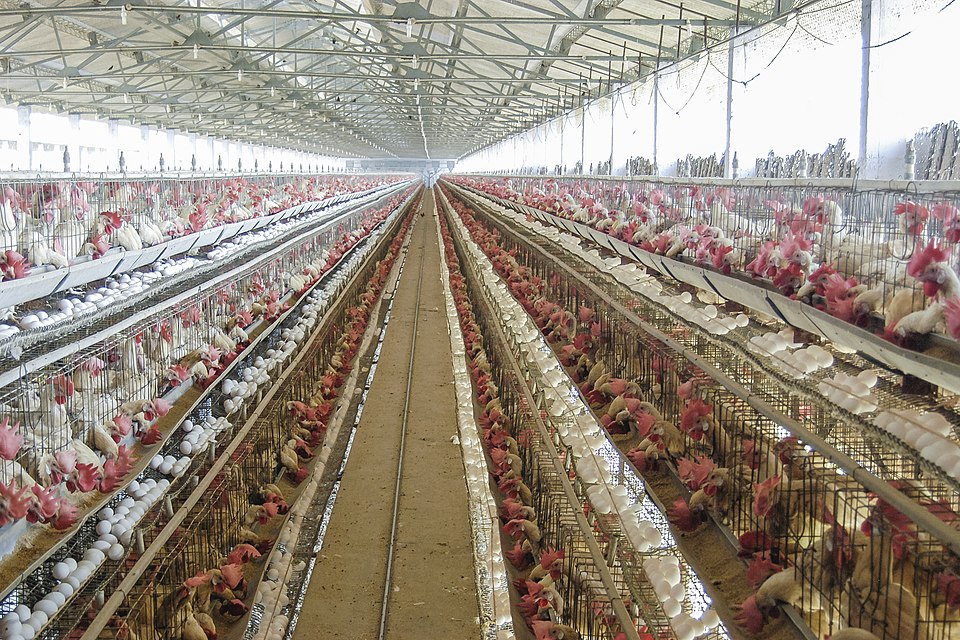
Figure 11.4 : Improved poultry house
Example 11.4. Farmer Kafka owns and operates two poultry houses as a contract broiler grower for MegaMeat. The houses have been in operation for five years. Kafka took out commercial loans guaranteed by SBA to build the houses. MegaMeat told Kafka that he could obtain another guaranteed loan for the improvements. MegaMeat also told him that if he did not make the improvements he would be dropped. Terrified that he would have empty chicken houses and no way to pay his debts, Kafka took out the loans and made the required improvements. MegaMeat provided Kafka with no financial information about whether making the improvements was financially feasible. Six months after he made the improvements, Kafka found that he was falling behind in his loan payments. A credit counsellor showed Kafka that the improvements never cash flowed even under the most optimistic scenario. The credit counsellor recommended that Kafka retain a bankruptcy attorney to discuss filing a Chapter 12 (farmer) bankruptcy.
PACA applies to the fruit and vegetable industry. The powers that it provides to AMS are similar to those that the P&S Act provides in the context for livestock, meat, and poultry. While AMS has the authority to limit or bar bad actors from the industry, its preferred method of resolution is to help companies resolve their business disputes. AMS PACA experts receive hundreds of calls each week for information ranging from the interpretation of inspection reports to bankruptcy paymnts.
References
Adjemian, M., Brorsen, B. W., Saitone, T. L. and Sexton, R. J. (2016, March 16). Thin Markets Raise Concerns, But Many Are Capable of Paying Producers Fair Prices. Amber Waves. https://www. ers.usda.gov/amber-waves/2016/march/ thin-markets-raise-concerns-but-many-arecapable- of-paying-producers-fair-prices/
Burns, C. B. and MacDonald, J. M. (2018, December). America’s Diverse Family Farms 2018 Edition. Economic Information Bulletin Number 203, USDA Economic Research Service. https://www.ers.usda.gov/webdocs/publications/ 90985/eib-203.pdf?v=376
Frank, S., Brake, B., and Duggan, T. (2024, March 7). Webinar: Transparency in Poultry Grower Contracting and Tournaments Final Rule. USDA AMS. https://youtu.be/ nLvr81KsbuA?si=xvYonIHqR9QHE8eh
Kelloway, C. (2023, July 17). Walmart To Open Second Beef Plant, Raising Concerns About Vertical Integration in Cattle Markets. Food & Power. https://www.foodandpower.net/latest/ walmart-olathe-plant-sustainable-beef-jul-23
MacDonald, J. M. and Perry, J. (2004, November 1). Contract Use Continues to Expand. Amber Waves. https://www.ers.usda.gov/amberwaves/ 2004/november/contract-use-continues- to-expand/
MacDonald, J. M., Perry, J., Ahearn, M., Banker, D.E., Chambers, W., Dimitri, C., Key, N. and Nelson, K. (2004, November). Contracts, Markets, and Prices: Organizing the Production and Use of Agricultural Commodities. Agricultural Economic Report No. (AER-837), USDA Economic Research Service. https://www.ers.usda.gov/ publications/pub-details/?pubid=41704
Martinez, S. and Zering, K. (2004, November 8). Pork Quality and the Role of Market Organization. Agricultural Economic Report No. (AER-835), USDA Economic Research Service. https://www.ers.usda.gov/publications/ pub-details/?pubid=41696
Office of Inspector General (SBA). (2018, March 6). Evaluation of SBA’s 7(a) Loans to Poultry Farmers. U.S. Small Business Administration, Report No. 18-13. https://www.sba.gov/ document/report-18-13-evaluation-sbas-7aloans- poultry-farmers
Office of Public Affairs (Justice Department). (2022, July 25). Justice Department Files Lawsuit and Proposed Consent Decrees to End Long-Running Conspiracy to Suppress Worker Pay at Poultry Processing Plants and Address Deceptive Abuses Against Poultry Growers. U.S. Department of Justice. https://www.justice.gov/opa/pr/justice- department-files-lawsuit-and-proposedconsent- decrees-end-long-running-conspiracy
Offutt, S.B. (2024, Febr. 12). Transparency in Poultry Grower Contracting and Tournaments. Packers and Stockyards Division, USDA AMS Fair Trade
Practices Program, AMS-FTPP-21-0044 (Final Rule). https://www.ams.usda.gov/rulesregulations/ transparency-poultry-growercontracting- and-tournaments
Ribaudo, M., Kuchler, F. and Mancino, L. (2008, November 1). Market Failures: When the Invisible Hand Gets Shaky. Amber Waves. https://www. ers.usda.gov/amber-waves/2008/november/ market-failures-when-the-invisible-handgets- shaky/
Seagraves, J. A., & Bishop, C. E. (1958, December). Impacts of Vertical Integration on Output Price and Industry Structure. Journal of Farm Economics, 40(5), 1814–1824. https://doi. org/10.2307/1235085
South Dakota State University Extension. (2018, December 19). Agricultural Contracts for Crops. https://extension.sdstate.edu/agricultural- contracts-crops#:
Tatum, J.D., Belk, K.E., Field, T.G., Scanga, J.A., and Smith, G.C. (2006, February). Relative Importance of Weight, Quality Grade, and Yield Grade as Drivers of Beef Carcass Value in Two Grid-Pricing Systems. Applied Animal Science. https:// doi.org/10.15232/S1080-7446(15)31059-7
Tsiboe, F. and Turner, D. (2024, May 23). Risk Management Strategies. USDA Economic Research Service. https://www.ers.usda.gov/ topics/farm-practices-management/riskmanagement/ risk-management-strategies/
Torres, C. (2022, August 29). Supermarket drives vertical beef chain. American Agriculturalist. https://www.farmprogress.com/management/ supermarket-drives-vertical-beef-chain
United States v. Cargill Meat Solutions Corp. (2022, July 25) U.S. District Court for the Distr. of Mayland. (2022). https://www.justice.gov/opa/pr/ justice-department-files-lawsuit-and-proposedconsent- decrees-end-long-running-conspiracy
USDA AMS. (2024, July 1). Packers and Stockyards Act. https://www.ams.usda.gov/rules-regulations/ packers-and-stockyards-act
USDA AMS. (2024, July 1). Perishable Agricultural Commodities Act (PACA). https://www.ams. usda.gov/rules-regulations/paca