


Chapter 13: Methods of Selling Farm Products: Basics
Methods of Selling Farm Products: Basics
A program whose basic thesis is, not that the system of free enterprise for profit has failed in this generation, but that it has not yet been tried.
Franklin D. Roosevelt
Many economists, notably Friedrich Hayek, have taught that markets are self-organizing systems. Various methods of selling farm products have developed over the centuries because they worked. William Ross Ashby used the term, probably for the first time, in a 1947 paper describing biological systems. Although the term is of relatively recent origin, the concept is not. Adam Smith described the phenomenon almost three hundred years ago when he described how markets work. He labeled the manner by which markets determine price and quantity without any centralized control. He labeled this the ‘invisible hand’.
Example 13.1. Ernie started a business selling cannabis gummies to his fellow inmates at State Prison. His mother made them from cannabis that she grew herself and gave them to him in care packages of food. His inmate customers paid him in vacuum-sealed packages of tuna fish that he could use as currency to trade with other prisoners. There were other prisoners selling cannabis in various forms, so a price was well-established. He was able to get a small premium for his product because as a locally produced farm product he was able to maintain consistently high quality. He used the packages of tuna to buy other things that he needed from other prisoners. Prison rules strictly prohibited trading as well as possession of cannabis. Nonetheless, prison guards either didn’t know or turned a blind eye to the activity in return for good behavior.
Figure 2.1 : A market-place
The market in example 13.1 is an example of a self-organizing market. This is typical of markets for products or services that are illegal. Trading seems to be a defining characteristic of the human species. What follows is a basic discussion of the methods used to sell farm products.
BARTER
Barter is probably the oldest method used for selling farm products. It undoubtedly predates the invention of money. It continues to be used for reasons that will be discussed below. Simply defined barter is the trading of one product for another. Farmers often barter with each other. It has the advantage of being simple and can be paperwork free. Although any gains generated from barter transactions are taxable, it is far easier to evade taxation with barter transactions than for transactions using money, especially if those transactions are electronic. While obtaining statistics on illegal acts are almost unobtainable, it is likely that few farmer-to-farmer barter transactions are reported. Indeed, most farmers, like Sonic in the video, do not keep records. Barter, however, is not useful if you cannot find anyone that has what you want and wants what you have.

One solution to the lack of matching products to trade for is to use a barter exchange. Barter exchanges help connect people that want each other’s goods or services. The International Reciprocal Trade Association (IRTA) is a nonprofit organization that maintains a directory of its members. It is one way to find trading partners. Its members have all pledged to maintain certain ethical standards. Any transaction using a member of IRTA will be properly reported to taxing authorities.
While many barter transactions are small, there are some that are very large. Some of these are government to government transactions. Before the collapse of the Soviet Union, barter was often used for trade between communist countries and Western market economies. Since some communist countries had no reserves of hard (Western) currencies with which they could purchase agricultural products, these countries would trade natural resources, e.g., oil, for food.
CASH SALES
A cash sale occurs when currency or coins are exchanged for a product or service. After barter, it is one of the oldest methods of selling farm products. In general usage it includes checks, credit or debit cards, or some form of electronic payments. These forms of payment are not cash sales even though most people think of them as such. Each different methods carries its own risks of loss and transaction costs.
A cash sale gives us an instantaneous measure of value. In agricultural sales, there is not one cash price. There are many. Cash prices are location sensitive. The farther the commodity must be shipped to the place where the product will be used the lower will be the price every other factor held constant. The lower price reflects the cost of transportation. This is called a transportation differential.
It is usually beneficial to check several the prices of several buyers before making a sale of grains or oil seeds. This can be done through the buyer’s website or by calling. Calling is likely to provide the most up-to-date price. There are apps that will give the prices at several nearby buyers. There are factors other than the transportation differential that may affect price. If an elevator has contracts to fulfill and is short of grain, the elevator is likely to offer a higher price to acquire the grain that it needs. On the other hand, if the elevator is approaching capacity, the price offered is likely to be lower. A farmer’s reputation for providing a consistent product of high quality is likely to result in a somewhat higher price.
Elevators are not the only cash buyers. Other farmers such as those that mix their own livestock feed often buy directly from farmers. Feed mills, crushers, and flour mills often buy directly from farmers. There are websites that allow buyers and sellers to meet online and conduct transactions. Some buyers are both dealers in grains and oil seeds and consumers of grains and oil seeds. Farmers producing large quantities may have individual company buyers assigned to work with them. This buying arrangements are typically handled with long-term contracts rather than cash buying.
Example 13.2. Cargill is a major trader in grains and oil seeds. It owns and operates many grain elevators across the United States as well as in other countries. It also operates soybean crushing plants that produce soybean oil and soybean meal. In addition to cash buying at its elevators Cargill offers a variety of contracts.

Example 13.3. For Friday, August 2, 2024, the Wall Street Journal showed a cash price for corn of $3.65 per bushel for number 2 yellow corn. The AgWeb tool shows a price of $4.38 offered by Smithfield Grain in Bentonville, NC. This is a large price differential. Some factors that likely account for it are that North Carolina is a chronically corn deficit region due to the size of its livestock and poultry industry. That the North Carolina crop was smaller than usual due to weather conditions is likely another important factor. There are certainly other factors.

The USDA Agricultural Marketing Service provides current market information for a wide variety of agricultural commodities. It even provides an app for one’s smart phone. Most grain buyers have websites and apps that will provide current prices paid for the agricultural commodities that they buy. It is a very competitive business. It is easy to compare prices using a smart phone or a notebook computer.
Auctions
Auctions are a special form of cash sales where the potential buyers bid for the product. Livestock is often sold by auction. So are cut flowers! There are auctions that handle fruits and vegetables.
There are many types of auctions. English auctions is most commonly used for the sale of agricultural products. With these auctions prices start low and get higher. When no higher bids are received, the highest bidder wins. Cash (or equivalent) payment is expected before or at the close of the auction. With a Dutch auction the price starts high and goes lower until there is a buyer, or the reserve price is reached. The reserve price is the lowest price that the seller will accept. With an English auction, all bids must be at the reserve price or higher. If no buyer is willing to bid the reserve price the item does not sell. An auction without a reserve price is called an absolute auction because there is no lower limit on the sale price.
Standing timber is often sold by sealed bid. The highest bid is selected, and no one knows what the bids of the other bidders were.
CONTRACTS
About a third of US agricultural production is subject to contracts entered into well in advance of harvest. Production contracts in vertically integrated agriculture were discussed in Chapter 11. Standardized futures and options contracts are discussed in Chapters 14 and 15, respectively. Contracts can be either marketing contracts or production contracts.
Marketing contracts
With a marketing contract, the farmer retains ownership of the crop. Two common types of marketing contracts for grains, oilseeds, and cotton are discussed below.
Bale/Bushel contract
A bale/bushel contract is for a specific quantity of grains, oilseeds, or cotton, hence the designation bale/bushel. If there is a crop failure the farmer is nonetheless expected to deliver the contracted commodity. That means that the farmer must either pay a sum to settle the contractual liability or go into the market to purchase the amount required to be delivered. Since this can be financially painful (even catastrophic) it is advisable to avoid contracting more than about 40% of the expected crop. If there is a desire to contract more of the crop than that rather low percentage, it is advisable to use futures and options to hedge against an inability to deliver. Futures and options are discussed in Chapters 14 and 15. With this type of marketing contract, the involvement of the contractor in producing the crop is usually minimal or nonexistent.
Example 13.4. Al contracted to sell his corn to the local elevator using a bushel contract. Always the optimist, Al contracted the entire crop at $6 per bushel. He watched with horror as blight destroyed his entire crop. The blight was part of a global pandemic of corn blight. By harvest time the cash price of corn was $25 per bushel. Al did not have enough money to buy the corn necessary to fulfill his contract. The elevator was forced to buy corn at $25 per bushel. It sued Al for the difference between $25 per bushel and the contract price, $6 per bushel. Since Al had contracted to sell 1 million bushels of corn, his liability was $19 million dollars. Al was last seen talking to a bankruptcy attorney before he fled to parts unknown with all of the cash that had been in his farm’s bank account.
Acre contract
An acre contract is a contract to deliver all that is grown on a particular field or farm. If nothing is produced nothing needs to be delivered. Generally, these contracts require that the farmer engage in a good faith effort to produce the crop. The contractor is more likely to be involved in production of the crop although less likely than for production contracts.
Example 13.5. Bert entered a contract with one of the large grain trading companies. The contract entitles the company to buy his entire production of wheat. The price is set by a formula based upon the Chicago cash price at the date of delivery plus a bonus. Under the terms of the contract the buyer provides expert assistance with improving his quality and uniformity of the corn that he grows. This is provided at no cost to Bert. The duration of the contract is for ten years with an option to renew for three years. The current crop year was terrible. Dry, hot weather caused a complete failure of the crop. He has no liability under the contract because the buyer is not entitled to a specific quantity of corn.
Production contracts
With production contracts the contractor usually owns the commodity while it is being produced. The farmer is paid a fee for producing the commodity. According to USDA’s Economic Research Service, the value of commodities under production and marketing contracts was about equal in the year 2020. Production contracts represent most of the production of poultry, eggs, and hogs. Marketing contracts are preferred in the production of crops. For soybean, corn, and wheat production, less than 20 percent of production was sold under marketing contracts. Figure 13.1 illustrates the breakdown between production contracts and marketing contracts for widely produced commodities. Note that the sum of the two does not add to 100 percent. This reflects the fact that much of the production for some commodities is not produced under contract.
Use of contracts varied substantially by farm size. Small farms were most likely to use contracts: however, large-scale family farms had the highest value of production under contract. Figure 13.2 illustrates the breakdown by farm size. From 1996 to 2020 farms with contracts declined. Figure 13.3 illustrates this. There are many farms that consist mostly of a couple of chicken houses. This may help explain the fact that a higher percentage of small farmers have contracts, but large-scale family farms have the highest value of production under contract. USDA ERS research bears this out. Large-scale family farms produced the highest percentage of crop production under marketing contracts in 2020 whereas production contracts for livestock prevailed among small farmers. Figure 13.4 illustrates this.
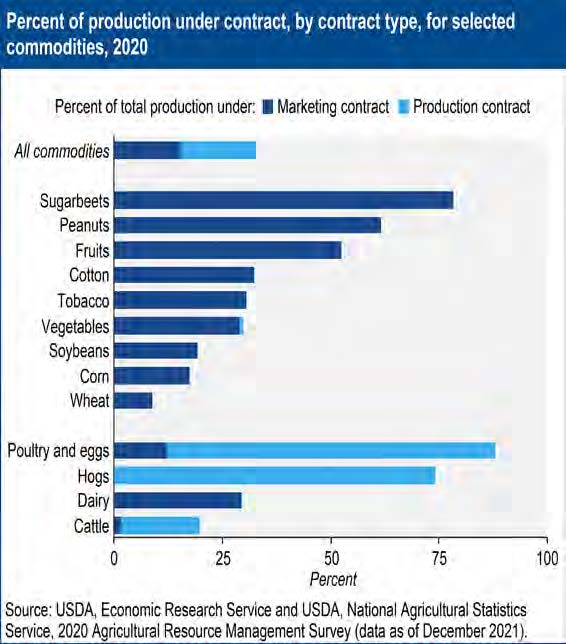
Figure 13.1 : Production contracts versus marketing contracts
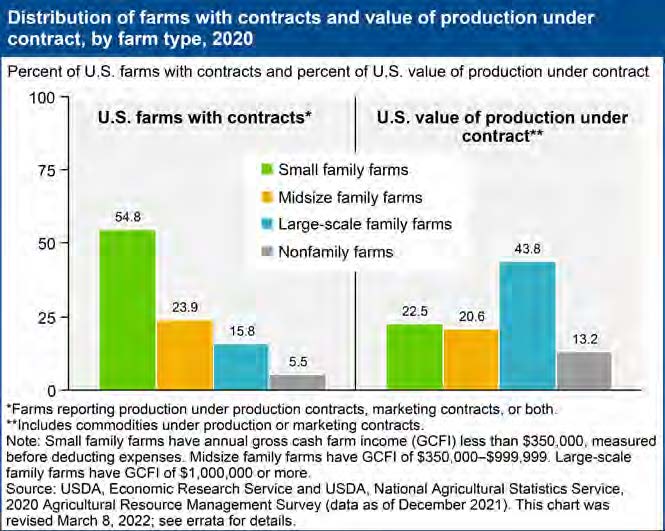
Figure 13.2 : Relationship between farm size and contracting
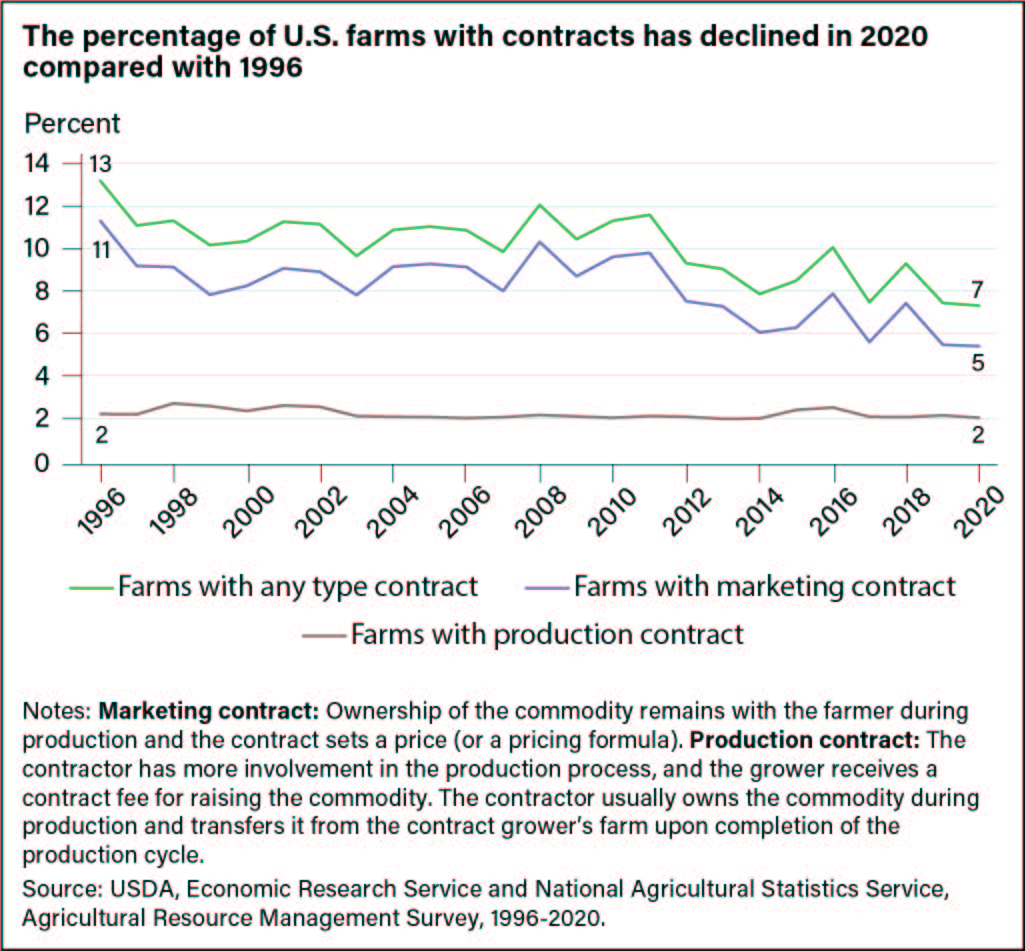
Figure 13.3 : Declining use of contracts
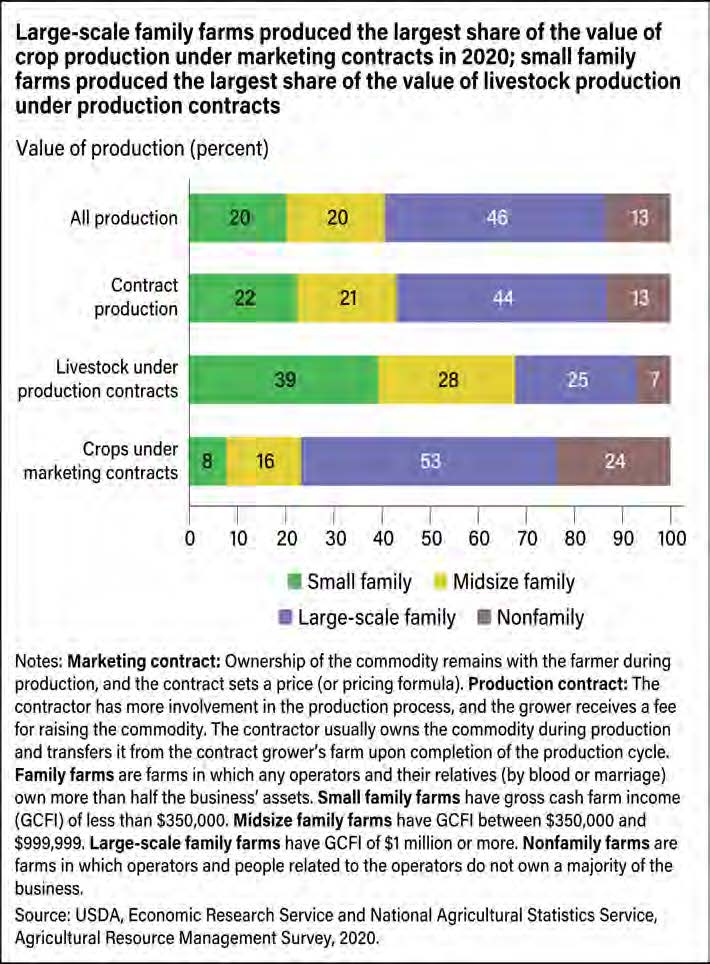
Figure 13.4 : Breakdown of production and marketing contracts by share of value
Production contracts
Ashby, W. R. (1947). Principles of the Self-Organizing Dynamic System. The Journal of General Psychology, 37(2), 125–128. https://doi.org /10.1080/00221309.1947.9918144
Bonin, D. (2024, January 29). Farm Structure and Contracting. USDA Economic Research Service. https://www.ers.usda.gov/topics/farmeconomy/ farm-structure-and-organization/ farm-structure-and-contracting/
Bonin, D. (2024, January 29). Readings. USDA Economic Research Service. https://www. ers.usda.gov/topics/farm-economy/farmstructure- and-organization/readings/
Bonin, D. (2024, January 29). Research on Farm Structure and Organization. USDA Economic Research Service. https://www.ers.usda.gov/ topics/farm-economy/farm-structure-andorganization/ research-on-farm-structureand- organization/
Hayek, F.D. (1944). The Road to Serfdom. Routledge Classics 2001. http://digamo.free.fr/ roadto.pdf
USDA Agricultural Marketing Service. (2024). About market news. https://mymarketnews. ams.usda.gov/
Whitt, C. (2022, June 23). Large-scale family farms produced the largest share of the value of crop production under marketing contracts in 2020; small family farms produced the largest share of the value of livestock production under production contracts. USDA Economic Research Service. https://www.ers.usda.gov/ data-products/chart-gallery/gallery/chartdetail/? chartId=104115
Whitt, C. (2022, June 23). The percentage of U.S. farms with contracts has declined in 2020 compared with 1996. USDA Economic Research Service. https://www.ers.usda.gov/ data-products/chart-gallery/gallery/chartdetail/? chartId=104117