


Chapter 05: Credit
Credit
“Giving debt relief to people that really need it, that’s what foreclosure is.”
J.P. Morgan
The US farm credit infrastructure confers on US agriculture an important competitive advantage. It was not always so. Although the need for agricultural credit was recognized and met by both the Romans and later by the Chinese empire, that recognition came late to the United States. There were two factors that led to this need. The first was the opening of vast areas of western land acquired through purchase, cession, conquest or some combination thereof from the European and indigenous nations that previously held or claimed it. The second factor was the rapid improvement in agricultural technology that began in the first half of the 19th Century. Credit was needed to obtain funds for land purchase, labor (hired, enslaved or under other form of bondage) for land clearing, and the factors of production (equipment, draft animals, breeding stock, seed, chemicals, and fertilizer). Improvements in technology were accompanied by increases in costs.
Initially lending was from private sources, often at usurious interest rates. The long-term, fixed-rate farm real estate acquisition mortgage was unknown. Farm real estate acquisitions were usually funded by short-term borrowings or variable rate demand notes. There was never any guarantee that financing could be obtained by rolling the previous notes over into new notes. Average interest rates were in the high teens and low 20s, measured as an annual percentage rate.1
Throughout the 19th Century and into the early 20th Century even those farmers operating with financial prudence lived in constant fear of foreclosure. These made farmers very sensitive to any reduction in income. It reduced risk taking that might have led to cost-saving innovations and increased productivity.
1 During the farm credit crisis of the 1980s and early 1990s, the lending systems that existed to supply farmers with reliable credit broke down. The result was a return to the conditions of the 19th Century. The author’s father paid 24% interest for farm operating money despite having an excellent credit history. The highest rate that the author observed in his work during that period was 67%.
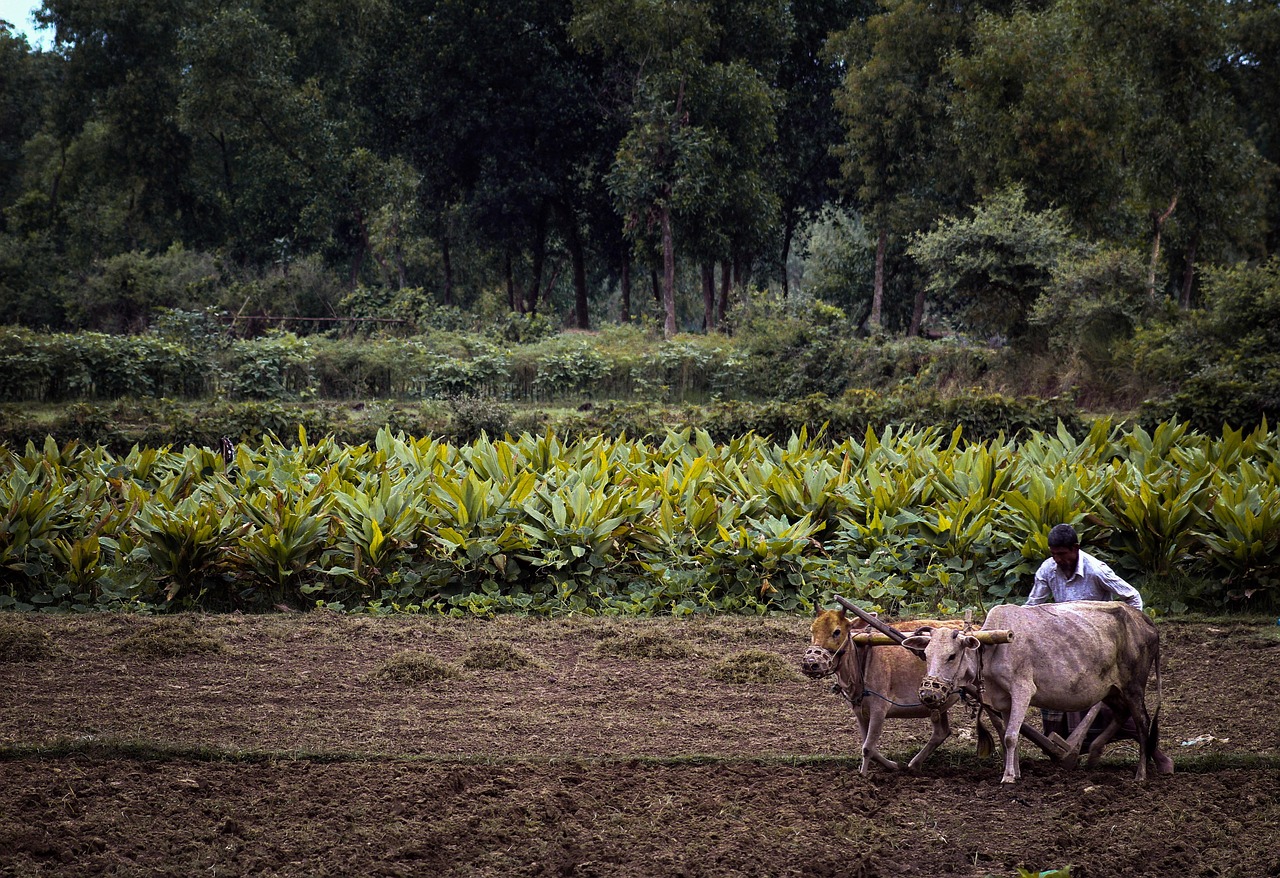
Figure 5.1 :
The remaining 14 seed companies in the top 20 seed companies are in specialty seed businesses that include grass seed, including turf; vegetables; flowers; and rice. Outside of the top 20 companies are hundreds of small companies that produce specialty seeds including those for certified organic production.
The credit situation was one of many factors that made the abolition of slavery such a contentious issue. Most Southern planters were heavily indebted. Almost all of their assets including their enslaved laborers were pledged as collateral for their debts. Except for enslaved laborers, this pattern was also found in Free States. The pattern of indebtedness continued after the Civil War and shaped much of the national political debate of the second half of the 19th Century and the early 20th Century. William Jennings Bryan, the three-time presidential candidate of the Democratic party, was leader of the Free Silver Movement. He proposed a bimetal standard for the US dollar, which at the time was backed by gold. The effect of allowing silver as backing for the dollar would have been to cause inflation. This would have inflated the prices that farmers received for their products. This would have allowed them to repay their loans in currency of reduced value.
The US farm credit infrastructure confers on US agriculture an important competitive advantage. It was not always so. Although the need for agricultural credit was recognized and met by both the Romans and later by the Chinese empire, that recognition came late to the United States. There were two factors that led to this need. The first was the opening of vast areas of western land acquired through purchase, cession, conquest or some combination thereof from the European and indigenous nations that previously held or claimed it. The second factor was the rapid improvement in agricultural technology that began in the first half of the 19th Century. Credit was needed to obtain funds for land purchase, labor (hired, enslaved or under other form of bondage) for land clearing, and the factors of production (equipment, draft animals, breeding stock, seed, chemicals, and fertilizer). Improvements in technology were accompanied by increases in costs.
Initially lending was from private sources, often at usurious interest rates. The long-term, fixed-rate farm real estate acquisition mortgage was unknown. Farm real estate acquisitions were usually funded by short-term borrowings or variable rate demand notes. There was never any guarantee that financing could be obtained by rolling the previous notes over into new notes. Average interest rates were in the high teens and low 20s, measured as an annual percentage rate.1
Throughout the 19th Century and into the early 20th Century even those farmers operating with financial prudence lived in constant fear of foreclosure. These made farmers very sensitive to any reduction in income. It reduced risk taking that might have led to cost-saving innovations and increased productivity.
1 During the farm credit crisis of the 1980s and early 1990s, the lending systems that existed to supply farmers with reliable credit broke down. The result was a return to the conditions of the 19th Century. The author’s father paid 24% interest for farm operating money despite having an excellent credit history. The highest rate that the author observed in his work during that period was 67%.
Although Bryan was never elected president, he and his followers had a strong influence on the development of agricultural credit. To satisfy his followers, the Federal Reserve Act of 1913 that created the Federal Reserve contained provisions to improve agricultural credit. Among these provisions was authority to discount agricultural paper. This reduced banks’ lending costs by lowering their cost of funds for agricultural loans. The hope was that the reduced costs would be passed on to farmers in the form of lower interest rates. However, as noted in the September 1921 Federal Reserve Bulletin, there was a reluctance on the part of banks to take on more paper, even at discounted rates, due to the risk associated with more paper outstanding. Total paper outstanding represents money that a bank owes. Banks attempt to maintain certain ratios of debt to shareholder equity. A second provision greatly reduced the restrictions on federally chartered banks that had prevented them from making long-term farm real estate loans. Nonetheless there was a reluctance to make such loans because they used short-term deposits to make long-term loans.2 Banks attempt to balance the maturity dates of what they owe with what they are owed by borrowers. At this time long-term land acquisition loans were generally unavailable to farmers. If farmers used credit to acquire land it was generally through short-term notes that were rolled over at whatever was the prevailing interest rate.
Congress continued to seek a way to address the farm credit problem in a way that did not create a general inflation of the dollar (as bimetal standard would have done), resolved the weaknesses of the Federal Reserve Act of 1913, and avoided the commercial banking lobby’s objections to direct government lending, e.g., postal savings banks. The Federal Farm Loan Act of 1916 (FFLA) addressed these issues through the creation of 12 or more Federal Land Banks (FLBs) that were privately owned. The FLBs were regulated by the Federal Farm Loan Board that consisted of the US Secretary of the Treasury and four members appointed by the President and confirmed by the Senate. The federal government provided the initial funding for the FLBs. That federal funding was repaid once the FLBs sold stock and began generating revenue. Loans were made by local farmer-owned associations. Farmers owned stock in these local associations in proportion to the amount that they borrowed. The FFLA permitted farmers to borrow up to 50% of the real estate value of the land, serving as collateral for up to 36 years.
The US farm credit infrastructure confers on US agriculture an important competitive advantage. It was not always so. Although the need for agricultural credit was recognized and met by both the Romans and later by the Chinese empire, that recognition came late to the United States. There were two factors that led to this need. The first was the opening of vast areas of western land acquired through purchase, cession, conquest or some combination thereof from the European and indigenous nations that previously held or claimed it. The second factor was the rapid improvement in agricultural technology that began in the first half of the 19th Century. Credit was needed to obtain funds for land purchase, labor (hired, enslaved or under other form of bondage) for land clearing, and the factors of production (equipment, draft animals, breeding stock, seed, chemicals, and fertilizer). Improvements in technology were accompanied by increases in costs.
Initially lending was from private sources, often at usurious interest rates. The long-term, fixed-rate farm real estate acquisition mortgage was unknown. Farm real estate acquisitions were usually funded by short-term borrowings or variable rate demand notes. There was never any guarantee that financing could be obtained by rolling the previous notes over into new notes. Average interest rates were in the high teens and low 20s, measured as an annual percentage rate.1
Throughout the 19th Century and into the early 20th Century even those farmers operating with financial prudence lived in constant fear of foreclosure. These made farmers very sensitive to any reduction in income. It reduced risk taking that might have led to cost-saving innovations and increased productivity.
1 During the farm credit crisis of the 1980s and early 1990s, the lending systems that existed to supply farmers with reliable credit broke down. The result was a return to the conditions of the 19th Century. The author’s father paid 24% interest for farm operating money despite having an excellent credit history. The highest rate that the author observed in his work during that period was 67%.
Although Bryan was never elected president, he and his followers had a strong influence on the development of agricultural credit. To satisfy his followers, the Federal Reserve Act of 1913 that created the Federal Reserve contained provisions to improve agricultural credit. Among these provisions was authority to discount agricultural paper. This reduced banks’ lending costs by lowering their cost of funds for agricultural loans. The hope was that the reduced costs would be passed on to farmers in the form of lower interest rates. However, as noted in the September 1921 Federal Reserve Bulletin, there was a reluctance on the part of banks to take on more paper, even at discounted rates, due to the risk associated with more paper outstanding. Total paper outstanding represents money that a bank owes. Banks attempt to maintain certain ratios of debt to shareholder equity. A second provision greatly reduced the restrictions on federally chartered banks that had prevented them from making long-term farm real estate loans. Nonetheless there was a reluctance to make such loans because they used short-term deposits to make long-term loans.2 Banks attempt to balance the maturity dates of what they owe with what they are owed by borrowers. At this time long-term land acquisition loans were generally unavailable to farmers. If farmers used credit to acquire land it was generally through short-term notes that were rolled over at whatever was the prevailing interest rate.
Congress continued to seek a way to address the farm credit problem in a way that did not create a general inflation of the dollar (as bimetal standard would have done), resolved the weaknesses of the Federal Reserve Act of 1913, and avoided the commercial banking lobby’s objections to direct government lending, e.g., postal savings banks. The Federal Farm Loan Act of 1916 (FFLA) addressed these issues through the creation of 12 or more Federal Land Banks (FLBs) that were privately owned. The FLBs were regulated by the Federal Farm Loan Board that consisted of the US Secretary of the Treasury and four members appointed by the President and confirmed by the Senate. The federal government provided the initial funding for the FLBs. That federal funding was repaid once the FLBs sold stock and began generating revenue. Loans were made by local farmer-owned associations. Farmers owned stock in these local associations in proportion to the amount that they borrowed. The FFLA permitted farmers to borrow up to 50% of the real estate value of the land, serving as collateral for up to 36 years.
2 As demonstrated by the 2023 failures of First Republic Bank, Silicon Valley Bank, and Signature Bank, this weakness of lending institutions has not been solved.
The FLBs served as intermediaries between investors and borrowers. The FLBs securitized farm mortgage debt and sold it to investors. This protected investors by shielding them from the effect of individual defaults. Each FLB served a defined territory in which it provided the funds that local associations loaned. This system worked reasonably well for over 100 years as both a source of long-term real estate loans for farmers, and as competition with other sources of money for farm real estate acquisition. However, the system has required two rescues, the first in 1933 and the second in the 1980s. The FFLA was almost immediately successful. Farmers initially used the local organizations created by the FFLA to refinance existing real estate loans. Credit for farm real estate loans became available at the lowest cost in US history. By 1922, the FLBs held over $1 billion dollars in long-term loans.
There are several important things that the FFLA did not do. It did not provide short-term credit that farmers used for production costs. It did not provide assistance to the many tenant farmers that wished to become farm owners.3 The FFLA also failed to address systemic risks. In the face of falling farm commodity prices and farm land values in the 1980s, the entire system experienced systemic failure. A restructuring through congressional legislation was required to restore the system to financial health. This topic and the current form of the farm credit system will be addressed later in this chapter.
Example 5.1. There is a rural legend of unknown origin about a sharecropper that has often been told in various versions. Farmer Jones went to his landlord to settle accounts at the end of the season. His landlord asked him how many bales of cotton he made this year. To which Farmer Jones replied “Two.” The landlord spent what seemed an eternity figuring. At long last he said, “Jones, I have good news for you. You broke even this year. You owe me two bales.” To which Farmer Jones happily exclaimed, “I made three bales.” His landlord lamented, “Jones, you should have told me that upfront. I am going to have to recalculate all of this.”
On March 4, 1923, Congress passed the Agricultural Credits Act of 1923. Through this legislation Congress provided short and intermediate term credit to farmers. Twelve Federal Intermediate Credit banks (FICBs) were established to make loans to local cooperative organizations.
There are five primary sources of borrowed funds for farms and agribusinesses. These include commercial banks, Farm Credit System institutions, the Federal government, insurance companies, and other nonbank lenders including trade sources. Farm Credit System institutions and USDA sources of credit are focused on farmers; however, these sources have some availability to rural agribusinesses and even local governments. Each of these sources of borrowed funds will be discussed below. Sources of equity for farmers are more limited. Since equity is an alternative to the market for credit and some loans, e.g., debt convertible to equity, blur the line between credit and equity, it will be discussed in this chapter.
COMMERCIAL BANKS
Federally chartered banks
Commercial banks may be either federally chartered or state chartered. State chartered banks may operate only in their chartering state whereas federally chartered banks may operate throughout the United States. All large banks are federally chartered. The Office of the Comptroller of the Currency (OCC) is an independent bureau of the US Department of the Treasury. The OCC is responsible for the chartering, regulation, and supervision of all national banks, federal savings associations (credit unions), and branches of foreign banks operating as federal branches or agencies in US territory. The Federal Deposit Insurance Corporation (FDIC) is an independent federal agency charged with maintaining stability of and public confidence in the banking system. Together with the OCC it supervises national (federally chartered) banks. It provides deposit insurance. It is the lead agency for receiverships of failed national banks.
The FDIC reports that there are 1,500 federally insured banks that are considered farm banks. These are banks that have at least 25% of their loans concentrated in farm production loans or farmland-secured loans. This data has not been updated since 2010. Bank mergers and consolidation has likely reduced this number. Eighty-four percent of farm banks are concentrated in 10 states: Iowa, Nebraska, Kansas, Illinois, Minnesota, Texas, Missouri, North Dakota, Oklahoma, and South Dakota.
Most farm banks are small with limited geographic coverage. Lack of diversity in their loan portfolios puts these banks at higher risk of failure than their counterparts with more diverse loan portfolios. Use of best practices can reduce this risk.
The risks faced by these banks are those that face agriculture. Environmental risks, e.g., adverse weather, may render farmers unable to make required loan payments. Market volatility is a second major risk. Banks can encourage farmers to use risk management practices that include forward contracting, and hedging using futures contracts and options. These markets are discussed in Chapters 14 and 15.
Rising interest rates are a third major risk that farm banks face. As interest rates rise the cost of deposits rises while the interest rates on long-term farm real estate loans remain fixed. Rising interest rates also tend to depress farm real estate values. This can lead to some farm real estate loans being “under water.” That means that the value of the loan collateral is less than the face amount of the loan. This can require banks to increase their reserves and reduce new loan origination. This can threaten the revenue stream upon which banks depend.
Fourth, farming faces geopolitical risks. War is one such geopolitical risk. Geopolitical risks also include diseases such as avian influenza that has recently adversely affected egg producers. Legislation both domestically and in other countries can pose geopolitical risks.
Example 5.2. The war in Ukraine is an example of a geopolitical risk. It initially buoyed prices of wheat, oilseeds, and corn because Ukraine and Russia are major producers of those crops. An agreement brokered by Turkey with Russia has allowed Ukraine to export its agricultural commodities. Every time Russia expressed reluctance to renew the agreement, prices spiked. When the war ends as it inevitably must, this support for commodity prices will be removed.
Example 5.3. Lending to farmers has been based upon programs in the 2018 Farm Bill. That expires on September 30, 2023. Should Congress fail to pass a new farm bill, the impact on farm banks as well as farmers would be widespread failure of both banks and farms.
Fifth is the likelihood of a drop in farmland values. If history is a guide, the current increase in farmland values is likely to end with a sharp drop in farmland values. The two increases in farmland values in the 20th Century were both followed by sharp declines in farmland values. One of these increases peaked in 1914 and one peaked in 1981. Both were followed by drops in farmland values of over 40%.
State chartered banks
Every state, except Tennessee, plus the District of Columbia, Puerto Rico, and Guam, have statechartered banks that are chartered by state governments. Many of these banks are farm banks. At 240, Texas has the largest number of statechartered banks.
There are two federal agencies that supervise state-chartered banks. The Federal Reserve Board supervises state-chartered banks that are part of the Federal Reserve System. State-chartered banks that are neither part of the Federal Reserve System nor part of state-chartered saving associations are supervised by the FDIC. The FDIC insures deposits in state-chartered banks and savings associations.
Banking services for hemp and cannabis growers
The 2018 Farm Bill removed hemp from the list of federally controlled substances. As a result, any bank can provide banking services to hemp growers. As this is a recent development, some lenders may not have experience working with hemp growers. This may limit the available of credit for hemp farmers.
Cannabis (marihuana, either medical or recreational) remains a schedule I federally controlled substance. Even in those states where cannabis is legal, it is a violation of federal law to grow, possess, distribute, or sell cannabis. It is a violation of federal law for a federally chartered bank to handle money generated in a marijuana related business (MRB).
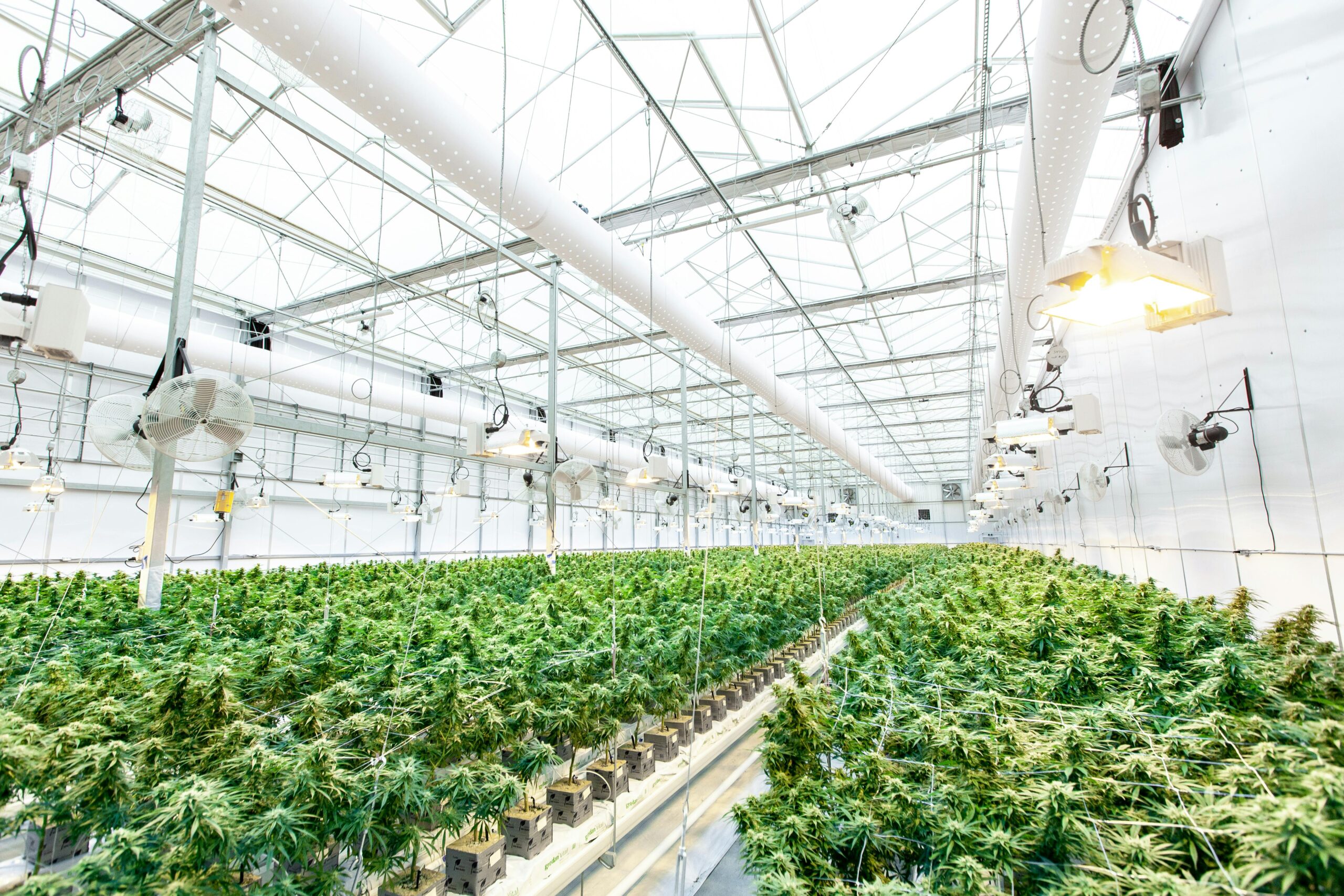
Figure 5.2 :
For state-chartered banks in states where cannabis is legal under state law, it may be possible for such institutions to handle funds generated from MRBs. The law is in flux, so the risks are unclear. Many MRBs have not found success in finding any institution willing to offer them even basic banking services such as a checking account. Those MRBs incur the risks and security costs associated with holding large amounts of cash.
Farm Credit System institutions
The Farm Credit System consists of wholesale banks and local associations that are operated as member-owned cooperatives. Each wholesale bank is owned by the associations that it serves. The System provides about 45% of total agricultural lending. The Farm Credit System is the successor in interest to the institutions authorized by the FFLA of 1916. These initial cooperative lenders were the nation’s first Government-sponsored enterprises (GSEs). A GSE is a privately-owned business that is set up by the Federal government. Typically, as was the case with the FFLA of 1916, the Federal government provides the initial capital, to be repaid at a later date. GSEs may be given certain advantages such as access to credit at below market interest rates and various tax advantages. There is usually no legally enforceable claim against the Federal government if a GSE fails; however, there is an implicit assumption of Federal backing in the event of failure. In times of crisis this assumption has usually proven correct.
The current Farm Credit System structure reflects the restructuring that Congress imposed on it as the price of rescue from the widespread insolvencies of member institutions as a result of the farm crisis of the 1980s and early 1990s. It also reflects continued voluntary consolidation that has occurred since that crisis.
The wholesale banks in the Farm Credit System issue securities that are sold in national and international markets. The wholesale banks then lend the funds raised to the associations which in turn lend the money to eligible borrowers. Of the four wholesale banks there is one Agricultural Credit Bank (CoBank, ACB) and the Farm Credit Banks (AgFirst Farm Credit Bank, Agribank, FCB, and Farm Credit Bank of Texas).
These four wholesale banks were created as the result of mergers required by the Agricultural Credit Act of 1987. The Agricultural Credit Act of 1987 created the GSE, the Federal Agricultural Mortgage Corporation (Farmer Mac). Farmer Mac provides a secondary market for loans created by the Farm Credit System institutions. Farmer Mac securitizes loans and guarantees payment of principal and interest.
CoBank is the sole wholesale bank that is an Agricultural Credit Bank. As do the Farm Credit banks it lends to affiliated local associations in its assigned geographic territory. However, it also provides services in all fifty states. It lends and provides financial services to farmer-owned cooperatives, rural electric and telephone utilities that are user-owned cooperatives, and rural sewer and water systems. It provides equity funds to rural health care facilities. It provides trade financing for the import and export of agricultural commodities, supplies, and products. It also provides a variety of financial services that include leasing services, cash management, and hedging against interest rate risk.
The three Farm Credit Banks (AgFirst Farm Credit Bank, Agribank, FCB, and Farm Credit Bank of Texas) make loans to associations in their respective territories. They all have some other activities, but these activities are not as geographically extensive as those of Cobank.
The list of eligible borrowers of associations beyond farmers is long. (Critics of GSEs see this as an example of mission creep found in many government-sponsored programs.) At times the expansion of the definition of an eligible borrower has been vigorously resisted by the commercial banking industry. The result has been a series of political compromises that have made the definition of eligible borrower rather complex. To borrow, a person must be a member-owner of the association from which it borrows. This requirement is usually met at the same time that money is borrowed. A portion of the loan is typically designated to acquire stock in the association that originates the loan. A person eligible to borrow includes both biological persons and legal persons such as rural cooperatives. To further complicate the picture of who may borrow, associations may make loans to those not eligible to borrow directly from the Farm Credit System institutions if two conditions are met. Those two conditions are that the member association is participating in a loan package with non-System lenders, and the ineligible borrower is engaged in activities functionally similar to eligible borrowers.
Without going onto all of the complexity, what follows is a discussion of the purposes and persons that may borrow through the Farm Credit System. Persons may be either biological persons or legal entities. Farmers, either individually or as the legal entities through which they operate, are eligible. The list of eligible borrowers in addition includes producers and harvesters of aquatic products, farmer-owned cooperatives, rural home purchasers, rural utilities, those needing export or import financing, and others.
Farm Credit System institutions are organized cooperatives and are taxed at the corporate level but may exclude patronage paid to members from their taxable income. Taxation of cooperatives, especially agricultural cooperatives, is complex and beyond the scope of this chapter. The basics are this. Cooperatives pay out their profits as patronage dividends. Those patronage dividends may be either immediate or retained. The ability of a cooperative to retain patronage dividends allows the cooperative to maintain a reserve against future losses. Cooperatives may deduct retained patronage dividends from current income. Members only pay taxes on patronage dividends in the tax year that they are received. Where the recipients are themselves cooperatives taxation becomes even more complex. Any income of a cooperative that is not patronage income is usually subject to income tax. Agricultural cooperatives may pool tax deductions that are then distributed to members.
Example 5.4. A Farm Credit System institution member A participated in a multi-lender financing package with other lenders. The borrower was not a member of A; however, the borrower was a member of B, the lead Farm Credit System institution that put together the package. Income from the interest on A’s share of the loan package is not patronage income because the borrower is not a member of A. B’s share of the income would be patronage income because the borrower is a member of B.
Example 5.5. Farmer Joe is a borrower member of his local Farm Credit System association. The association elected to pay its income for the year out as a retained patronage dividend. The association may take a deduction from income for the retained patronage dividend. Farmer Joe pays no taxes on the retained patronage dividend in the year it was declared. He will pay taxes on the dividend in the year the money is actually paid to him.
FEDERAL AGENCIES THAT LEND OR GUARANTEE LOANS
USDA programs
History of USDA lending programs
Federal lending to farmers was vigorously opposed by the US banking industry and Southern Senators. The latter feared that such programs might disturb the Jim Crow system that had been established in the former Confederate states after the Federal government quit supporting Reconstruction. Although President Woodrow Wilson was a Progressive Democrat, he was also from one of those former Confederate states (Virginia). Thus, he strongly opposed any direct aid to farmers. Despite strong support for Federal aid to farmers among Wilson’s fellow Progressives, his opposition blocked it. The FFLA of 1916 discussed above was the compromise.
4 Woodrow Wilson ordered a private screening of D.W. Griffith’s film, Birth of a Nation. In that film he is quoted, “The white men were roused by a mere instinct of self-preservation ….. until at last there had sprung into existence a great Ku Klux Klan, a veritable empire of the South, to protect the Southern country.”
Thus, racism was embedded in direct federal aid to farmers. What was done at the creation of direct aid to farmers continues to bedevil the USDA to the present. despite sincere efforts to improve the situation. The 1999 Pigford cases alleged discrimination by USDA against Black farmers in loan-making and other decisions. The case was settled in 1999, contingent upon Congress appropriating funds. That settlement has neither ended allegations of discrimination nor resolved all claims. Native Americans and Hispanics have also brought various discrimination suits against USDA. The Inflation Reduction Act, signed in August 2022, provided $2.1 billion in assistance to farmers that faced discrimination in USDA lending programs prior to January 1, 2021. Earlier efforts by the Biden Administration were enjoined by a federal court decision based claims by White farmers preferences given to Blacks were unlawfully discriminatory.
The Bankhead-Jones Farm Tenant Act of 1937 addressed a perceived crisis caused by increasing farm tenancy during the Great Depression. For the first time in US history the Secretary of Agricultural was authorized to make direct loans to farmers. The 1937 article by James G. Maddox, cited herein, provides a detailed discussion of the tortured legislative history of the Bankhead-Jones Farm Tenant Act. As ultimately enacted, the legislation contained four titles. Title I covered farm tenant provisions. Title II covered rehabilitation loans. Title III covered retirement of submarginal land. Title IV contained general provisions.
Title I provided the authority to address the farm tenancy problem. Section 1 (a) of Title I authorized the Secretary of Agriculture (hereinafter, the Secretary) to make farm acquisition loans in the United States, the Territories5 of Alaska and Hawai‘i, and Puerto Rico6.
5 Alaska was admitted as the 49th state on January 3, 1959. Hawai‘i was admitted as the 50th state on August 21, 1959.
6 Puerto Rico is a freely associated commonwealth. Puerto Ricans are U.S. citizens but have neither a vote for president nor voting representation in Congress.
Section 1 (b) defines an eligible borrower as limited to:
- tenants,
- farm laborers,
- sharecroppers, and
- other individuals that currently or recently obtained a major portion of their income from farming operations.
Citizenship was, and is, a requirement of eligibility to receive a direct loan. Section 1(b) also establishes preferences for loans. Although these are not eligibility requirements, they effectively exclude many eligible borrowers. The funds provided were sufficient only for a paltry number of eligible borrowers. The same can be said of the funding provided by Congress in recent decades. The preference items are:
- married,
- have dependent families,
- have ability to make an initial down payment, or
- already own livestock and farm equipment necessary for farming.
The statute left application of these preferences to the county committees, which will be discussed below.
Section 2 of Title I established duties of County Committees in the loan making process. Section 42 (Title IV) established County Committees in each county. Each County Committee was composed of three farmers appointed by the Secretary. Subsequent legislation provided for election of the farmers on the County Committee by farmers in the county. Members of the County Committee were paid a stipend plus expenses. USDA provided them with forms and all other necessary equipment. County Committees met at the call of the county agent or other person designated by the Secretary.
Duties of the County Committees included reviewing loan applications, determining eligibility and likelihood of success in farming. The County Committee also appraised the farm and certified its value to the Secretary. No loan could be made without the certification of the County Committee. There was a provision to prevent self-dealing or dealing to benefit a relative within the third degree. Relatives within the third degree include great-grandparents, grandparents, parents, children, grandchildren, great-grandchildren, aunts and uncles, and brothers and sisters.
Terms of farm acquisition loans included:
- repayment in no more than 40 years,
- a below market interest rate, initially set at 3%,
- payment of the loan and interest in installments as determined by an amortization established by the Secretary,
- covenants to protect the security by maintenance of the property, avoidance of waste and exhaustion of the soil, and use of proper farming practices, and
- Payment of all taxes and assessments, and maintenance of insurance on fam buildings.
There was a restriction on assigning, selling, or transferring of the farm within 5 years of receiving the loan. Beyond that restriction there was no restriction on prepayment of the loan. No loan was subject to discharge in bankruptcy until at least 15% of the loan principle had been repaid.
USDA was required to equitably distribute funds among the states and territories based upon numbers of farmers and the prevalence of tenancy in each state and territory. Loans were generally restricted to land already in cultivation to avoid interfering with programs to restrict production of supported commodities. Production restriction was implemented in the Great Depression to raise farm prices, helping farmers avoid foreclosure.
Titles II and III were a response to the Dust Bowl, the environmental catastrophe that rendered much land unfarmable. Section 21 made loans available for rehabilitation of farms. Permissible purposes of these loans included:
- purchases of livestock, farm equipment and supplies,
- other farm needs including minor improvements and minor repairs to real property,
- refinancing of indebtedness, and
- family living (subsistence) expenses.
Rehabilitation loans had a term of 5 years and were renewable. The initial interest rate as with farm acquisition loans was set at 3%. Loans were to be secured with any mix of chattel mortgages, liens on crops, and assignment of proceeds from the sale of farm products. Eligibility was limited to farm owners, tenants, laborers, sharecroppers and others that obtain or recently obtained the major portion of their income from farming. Those that could obtain loans at reasonable terms from federally incorporated lending institutions were not eligible.
USDA was authorized to participate in voluntary debt adjustment (workouts) between farm debtors and their creditors. The USDA was authorized to reimburse states, territories and local governments for all, or part of their expenses associated with farm debt adjustment.
Section 31 authorized USDA to participate in the retirement of land not suitable for agriculture. Section 32 authorized the Secretary to acquire submarginal land. Much of what is now national forest in eastern states was acquired this way. It was submarginal land acquired, then reforested. Section 33 provided for sharing of any revenue produced from this acquired land with counties.
Section 40 of title IV authorized the creation of the Farmers’ Home Corporation as the vehicle for making loans under the Bankhead-Jones Farm Tenant Act. From the 1938 Report of the Administrator of the Farm Security Administration, it appears that the Farmers’ Home Corporation may never have been formed. The report lists the USDA Farm Security Administration as source of direct farm loans.
Section 42 of Title IV established county committees. The county committee was a key component of the Bankhead-Jones Farm Tenant Act. It remains a key component of direct federal lending to farmers. Each county committee is composed of farmers that review loan applicants for eligibility and determine the amount that an applicant can borrow. Members of county committees were prohibited from reviewing loan applicants from close relatives; however, no such prohibition applied to close friends.

Figure 5.3 :
The crucial flaw is that direct loan programs benefit large, well-connected farmers and disadvantage smaller, less well-connected farmers. This has resulted in discrimination against Black and native American farmers as well as White farmers with smaller farms. Serving on a county committee is an invaluable source of information. It is often the case that there is not enough money for everyone that wants a direct loan. In such cases, early applicants have a considerable advantage. The current county committee system is not much different from the way it was structured in 1937. The last major revision of the Uniform Guidelines for Conducting Farm Service Agency County Committee Elections was in 2005. The most contentious issue was adding members of underrepresented groups (socially disadvantaged audiences (SDAs), in USDA terminology). The final Guidelines contained no provisions for improving fairness by appointing SDA members to county committees.
USDA lending programs today
Although changes have been made through subsequent legislation, the basic framework for direct USDA loans remains that established by the Bankhead-Jones Farm Tenant Act. Guaranteed loans are one of the more important changes that have been made since the original Bankhead-Jones Farm Tenant Act. Direct loans that the USDA Farm Service Agency (FSA) makes include operating loans, farm ownership loans, microloans, youth loans, native American tribal loans, and emergency loans. Guaranteed loans are made by USD Approved private lenders.
All loans are subject to general eligibility requirements. FSA offers assistance to prospective borrowers with determining all steps of the loan application process including determining eligibility. The FSA direct loan application process is complicated. The Direct Loan Making Handbook, used as a guide by FSA loan officers, is 322 pages long. To reduce the complexity of the process, the FSA has a web-based Loan Assistant Tool to help borrowers determine which loans are right for them.
Direct and guaranteed loans are available only to eligible farm enterprises. Funds cannot be used to finance nonfarm purposes that include exotic birds, tropical fish and dogs. Horses used for nonfarm purposes are not eligible. This includes racing, pleasure, show, and boarding.
Applicants must not have any convictions involving controlled substances. Applicants must have the ability to assume responsibility for a debt obligation and have an acceptable credit history.
Example 5.6. Larry, an Iraq war veteran, received a traumatic brain injury that rendered him incompetent to manage his own affairs. Upon his return from an extended hospitalization, Larry’s uncle applied to the local court to be appointed Larry’s guardian. The court granted the application. As Larry’s health improved, his uncle turned the management of his affairs over to Larry. Neither petitioned the court to terminate that guardianship. Larry applied for an FSA loan. In the process of examining Larry’s loan application, FSA found the adjudication of incompetency. FSA determined that Larry was ineligible for a loan. For Larry to be eligible, either Larry, his uncle, or both will need to petition the court for a termination of the guardianship.
Other eligibility requirements include:
- Applicants must be citizens, non-citizen nationals7, or legal resident aliens or permanent residents of the United States, including Puerto Rico, the U.S. Virgin Islands, Guam, American Samoa, and certain former Pacific Trust Territories,
- No previous debt forgiveness of US direct or guaranteed loans,
- Unable to obtain sufficient credit elsewhere,
- Not delinquent on any federal debt, including student loan debt and IRS tax debt, and
- No Federal Crop Insurance violation.
Successful applicants must be able to show farm managerial experience through education, on-the-job training, general farm experience, or some combination thereof. The applicant must be the owner-operator of a family farm after loan closing.
There are a variety of ways to demonstrate experience. Military service can be counted as part of the required experience. There are two complete substitutes for the 3-year farm management experience. The first is to apply for a Guaranteed Farm Ownership loan through a private lender. The second is to have 1 year of experience as a hired farm laborer with substantial management responsibilities and be working with a SCORE mentor. The U.S. Small Business Administration’s Service Corps of Retired Executives (SCORE) program provides mentors.
The Beginning Farmer Down Payment loan offers up to 45% of the purchase price ($300,150), with applicant providing 5% of the purchase price and the balance provided by a commercial lender, private lender, a cooperative, or the seller. The term of down payment loans is for no more than 20 years with an interest rate of 4% below the direct farm ownership rate. The rate may not be less than 1.5% Guaranteed down payment loans must have a term of at least 30 years with no balloon payments within the first 20 years o the loan.
7 These are citizens of those nations with agreements of free association with the United States (Federated States of Micronesia and the Republic of the Marshall Islands).
Farm ownership loans offer up to 100% financing. The maximum loan amount is $600,000. Guaranteed farm ownership loans are available through commercial or cooperative lenders for amounts of up to $2,037,000 and terms of up to 40 years. The maximum interest rate is set by the federal government and is higher than the rate on direct loans. The actual interest rate charged depends on market conditions. Eligibility requirements for guaranteed loans are less stringent than those for direct loans.
Farm operating loans may be used for normal operating expenses, machinery and equipment, minor real estate repairs and improvements, and refinancing debt. Direct loans are available for amounts of up to $400,000 and guaranteed loans for amounts up to $2,037,000. Repayment terms may be for no more than seven years; however, most loans are repaid within 12 months or when the commodity produced is sold.
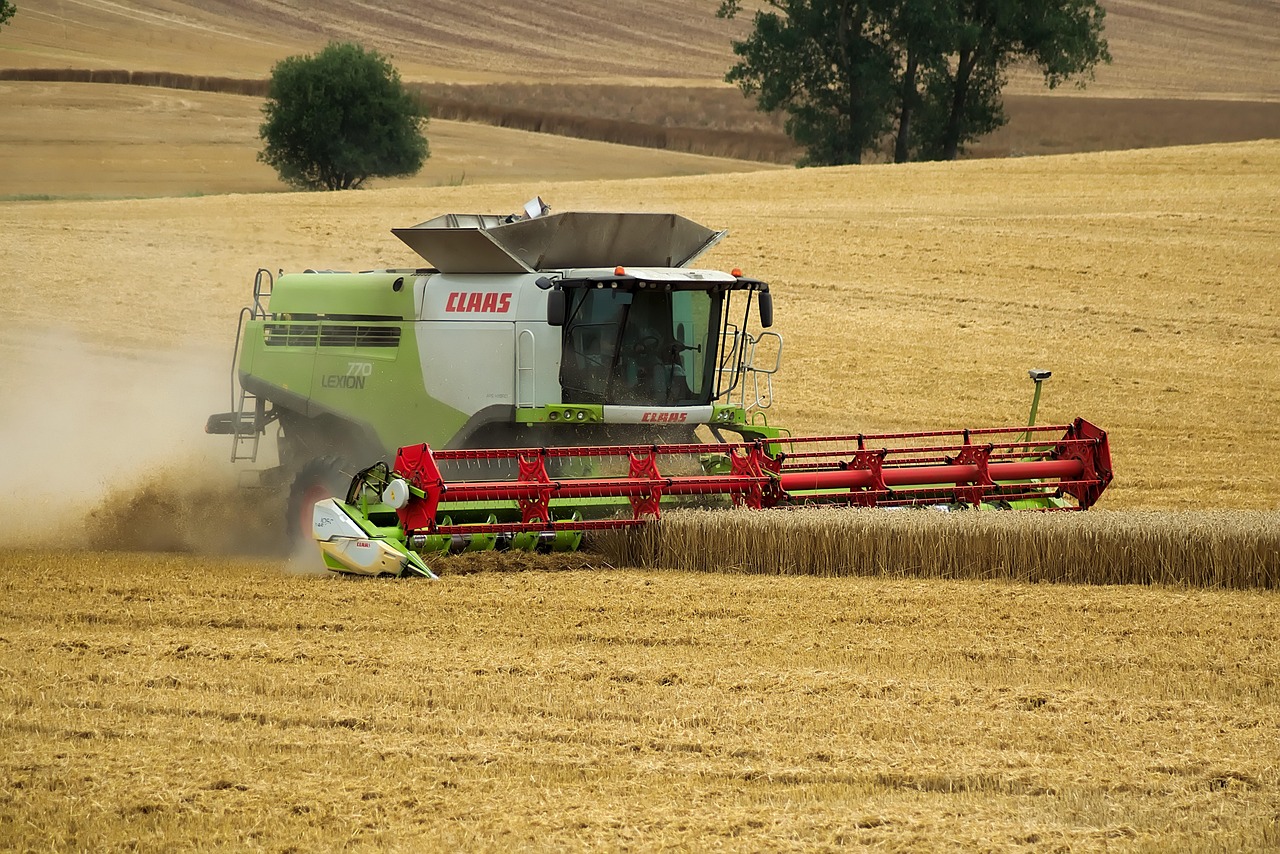
Figure 5.5 :
All direct loans are dependent on annual appropriations passed by Congress. USDA FSA initially allocates those funds among the states. If some states run out of funds, the USDA FSA may pool funds to ensure that all needs are met to the extent of available funds. Once funds have been exhausted, loan applicants must wait until the next fiscal year for their loans to be funded. The federal fiscal year begins on October 1 of each year. Congress seldom passes appropriations bills by that date so there may be a gap in funding. Guaranteed loans are made by private lenders from private funds so are not directly affected by the appropriations process. In the event of a government shutdown caused by a failure to fund the FSA budget either through an annual appropriations bill or a continuing resolution, delay in issuing funds under a guaranteed loan may be delayed because there are no FSA employees to process the guarantee.
A portion of USDA FSA loans are targeted to women, African Americans, Alaskan Natives, American Indians, Hispanics, Asians, Native Hawaiians and Pacific Islanders. These loans include both farm ownership and operating loans. To the extent that Congress has targeted funding toward these groups, there may be funds for these loans even though the funds for nontargeted loans have been exhausted.
As a result of the June 29, 2023, Supreme Court decision in Students for Fair Admissions, Inc. v. President and Fellows of Harvard College, the authority for all of these loan programs is constitutionally suspect. The Supreme Court broadly held that virtually all preferences for women, African Americans, Alaskan Natives, American Indians, Hispanics, Asians, Native Hawaiians and Pacific Islanders violate the Equal Protection Clause of the 14th Amendment.8 Loans targeted at beginning farmers are not likely to be affected by this decision because such preferences do not violate equal protection. Beginning farmers are not the same class as more experienced farmers.
8 Authority for preferential treatment for American Indians is found in the Commerce Clause of the Constitution and may be allowable.
USDA FSA provides emergency loans to farmers in counties declared disaster or quarantine areas, including counties contiguous to those counties. These loans are designed to help farmers and ranchers recover from production and physical losses due to drought, flooding, other natural disasters, and quarantine. Eligible farmers and ranchers must be established and experienced, US citizens or permanent residents, and suffered at least a 30% loss in crop production or physical loss of livestock, livestock products, real estate, or personal property. Applicants must demonstrate the inability to obtain credit from commercial sources, sufficient collateral to secure the loan, and repayment capacity. Once the loan is made the recipient must keep adequate farm records, operate according to a farm plan agreed upon with FSA staff, participate in a financial management training program, and maintain crop insurance coverage. At times the emergency funding is provided on a broader basis than declared disasters. For example, the 2022 Inflation reduction Act provided $3.1 million to help financially distressed farmers with direct and guaranteed FSA loans. The assistance provided was in the form of additional loans.
Applicants may borrow up to 100% of production and physical losses, up to $500,000. Loans for losses to production, livestock, and other non-real estate losses must be repaid in seven years. Under special circumstances this limit can be extended to 20 years. Loans for real estate losses have a term of 30 years. In some cases, repayment can be extended to 40 years.
The primary federal source of loan assistance outside of USDA is the U.S. Small Business Administration. It guarantees private loans in much the same way that USDA does. It can be a source of funding for agriculturally related businesses that are not farms, e.g., a food processing facility. Like USDA it provides disaster loans. It is an excellent source of information and counseling for anyone starting or operating an existing business. Some states also have loan programs for farms, ranches, and agriculturally related businesses. Although the loan amounts available are often small, these programs should not be overlooked because they often come with marketing and other business assistance.
Federal direct loans through USDA FSA are a useful source of loans for many farms and ranches. In emergencies they may be the only source available. There are significant downsides. As noted, the county committee system was instituted, in part, to ensure the continuance of the Jim Crow system in the South. While the USDA has made attempts to reform the county committee system, and has largely eliminated overt racial discrimination, it is nonetheless a system that favors borrowers with connections to the politically powerful in the counties where they farm. The limitation opposed by the annual appropriation process is probably more problematic. It is often difficult timing problem for a beginning farmer to line available property up with the availability of a farm ownership loan. Unless the seller is a family member, it is often difficult to find a seller willing to wait until loan funds are available. The problem is more severe with farm operating loans. If the farmer needs the operating loan in order to plant, a lack appropriations for such loans can be catastrophic.
There is a great deal of paperwork involved in these loans that can consume time and be a source of frustration. USDA FSA has made a sincere effort to improve the situation; however, FSA must follow the rules that Congress has mandated. In many respects, guaranteed loans represent the best of both government and commercial loans. The interest rate is usually lower than a regular commercial loan. Eligibility requirements are lower than for regular commercial loans and the required paperwork is usually less.
Life insurance companies
Life insurance companies have roughly 10% of their investment portfolio in commercial mortgages. An important portion of this is invested in mortgages on agricultural real estate. Most of the borrowers are larger farms or agricultural real estate investors. These loans have the advantage that they are typically for long terms (10 to 30 years) at fixed rates. Agricultural mortgage loans constitute less than 10% of farm real estate debt.
Life insurance companies are conservative lenders. They typically require higher down payments than most other lenders. In general, they are interested in fairly large dollar amount loans. The number of USDA ERS, there are six life insurance companies active in the farm mortgage business. These are AEGON USA, Citigroup Investments AgriFinance, Lend Lease Agri- Business, Metropolitan Life, MONY Life Insurance, and Prudential. They account for 90% of the farm mortgage debt held by insurance companies. Metropolitan Life as well as others have been making direct acquisitions of farm and forest land in addition to making real estate loans.
Life insurance company lending discussed here is to be distinguished from life insurance policy lending. Many life insurance policies have cash values that the insurance policy owner (usually the insured) may borrow against. The amounts available are usually too little to fund serious land acquisition; however, they can be a useful emergency source of funds. If the funds are not repaid prior to the date of the insured’s death, the loan amount is deducted from the policy proceeds paid to the beneficiaries. That may prevent the life insurance from fulfilling its intended role in an estate plan, e.g., creating an asset for the nonfarm legatee to equitably balance the farm assets given to the legatees involved in the farm business. Policy loans are not a significant part of the agricultural credit market.
Nonbank lenders including trade sources.
The remaining farm debt includes individuals, real estate sellers, and farm suppliers. Intrafamily borrowing is fairly common. Nonbank lenders constitute less than 10% of total farm real estate debt. And 10 to 20% nonreal estate debt, depending upon the time period.
Seller funded real estate sales, especially between family members are common. The two common ways that sellers secure their interest is through a mortgage (or deed of trust, depending upon state law) or a contract for deed. The latter is subject to abuse. With a mortgage or deed of trust there is a deed transfer title at the time of sale. With a contract for deed the seller remains the owner of record until the last payment is received. For a 30-year contract this would be at the end of 30 years. If the buyer defaults the seller keeps all of the payments made and keeps the land. There have been many court decisions involving nonmonetary defaults (e.g., failure to maintain farm buildings) where the buyer sought to prevent loss of all payments as well as the land.
Trade sources are an important source of shortterm credit. Most suppliers will carry an account with farmers. Typically, farmers could obtain a significantly lower interest rate by obtaining an operating loan and paying their trade balances in full. One of the advantages of trade credit for the farmer is that it is usually unsecured debt.
Venture capital firms are a source of capital for some agricultural startups. Venture capital firms usually take an equity stake in firms rather than making loans. Despite the opportunities, agriculture has not been kind to venture capital firms. It is hard to know how the track record in agriculture compares to other areas because there is little publicly available data.
REFERENCES
About banks & associations. (2021, March 9). Farm Credit Administration.
https://www.fca.gov/bank-oversight/about-banks-and-associations
About Farmer Mac. (2022, April 13). Farm Credit Administration.
https://www.fca.gov/farmermac-oversight/about-farmer-mac
About the FDIC. (2023, May 31). Federal Deposit Insurance Corporation (FDIC).
https://www.fdic.gov/
Agricultural Credit Act of 1987. Pub. L. No. 100-233 (1988).
https://www.congress.gov/bill/100th-congress/house-bill/3030/text
Alexander, W.W. (1938, October 1). Report of the Administrator of the Farm Security Administration 1938. U.S. Government Printing Office.
https://www.google.com/books/edition/_/7bbk2CAEkusC?hl=en&gbpv=1
Bankhead-Jones Farm Tenant Act of 1937. (1937, July 22). Pub. L. No. 75-210 (1937). Bardzik, S.J. (n.d.) Commercial mortgage loans. Capital Markets Bureau Primer.
https://content.naic.org/sites/default/files/capital-marketsprimer- commercial-mortgage-loans.pdf
Board of Governors of the Federal Reserve System. (1921, September). Federal Reserve bank discount rates on agricultural paper maturing within six month. Federal Reserve Bulletin.
https://fraser.stlouisfed.org/title/62/item/20527/toc/392895?start_page=11
Charters & licensing. (2023, March 20). Office of the Comptroller of the Currency.
https://www.occ.treas.gov/topics/charters-and-licensing/indexcharters- licensing.html
Cofer, R.D, Jr. and Anderlik, J.M. (2021). Farm banks: Resilience through changing conditions. FDIC Quarterly.
https://www.fdic.gov/analysis/quarterly-banking-profile/fdic-quarterly/2021-vol15-1/fdic-v15n1-4q2020.pdf
Cofer, R.D, Jr. and McGregor, A.E. (2010, Winter). From the examiner’s desk: Managing agricultural credit concentrations. Supervisory Insights.
https://www.fdic.gov/regulations/examinations/supervisory/insights/siwin10/siwin10.pdf
Cofer, R.D, Jr. and McGregor, A.E. (2023, May 25). From the examiner’s desk: Managing agricultural credit concentrations. Supervisory Insights.
https://www.fdic.gov/regulations/examinations/ supervisory/insights/siwin10/siwinter2010-article04.html
Coppess, J. (2021, March 11). Reviewing the history and development of USDA’s farm loan programs, Part 2: 1937 t0 1946. farmdoc daily (11):31, Department of Agricultural and Consumer Economics, University of Illinois at Urbana-Champaign.
https://farmdocdaily.illinois.edu/2021/03/reviewing-thehistory-and-development-of-usda-farm-loans-part-2-1937-to-1946.html
Coppess, J. (2021, March 25). Reviewing the history and development of USDA’s farm loan programs, Part 3: 1946 to 1961. farmdoc daily (11):31, Department of Agricultural and Consumer Economics, University of Illinois at Urbana-Champaign.
https://farmdocdaily.illinois.edu/2021/03/the-historyand-development-of-usda-farm-loan-programspart-3-1946-to-1961.html
Coppess, J. (2021, March 4). Reviewing the history and development of USDA’s farm loan programs, Part 1: origins. farmdoc daily (11):31, Department of Agricultural and Consumer Economics, University of Illinois at Urbana-Champaign.
https://farmdocdaily.illinois.edu/2021/03/reviewing-the-history-and-development-ofusdas-farm-loan-programs-part-1-origins.html
Description of FCS institution types. (2018, April 28). Farm Credit Administration.
https://www.fca.gov/bank-oversight/description-of-fcs-institution-types
Editor. (2021, October 1). From the archives: The Southern Tenant Farmers’ Union. Facing South.
https://www.facingsouth.org/2021/10/archivessouthern-tenant-farmers-union
Ellinger, P. and Sherrick, B. (2008, October 15). Financial markets in agriculture. Illinois Farm Economics Update.
https://farmdoc.illinois.edu/assets/presentation/IFEU_2008/IFEU_08_02/ IFEU_08_02.pdf
Farm Income Team. (2023, February 7). Documentation for the farm sector balance sheet. USDA Economic Research Service.
https://www.ers.usda.gov/data-products/farm-income-andwealth- statistics/documentation-for-the-farmsector-balance-sheet/
Farm Income Team. (2023, February 7). Data files: U.S. and state-level farm income and wealth statistics. USDA Economic Research Service.
https://www.ers.usda.gov/data-products/farm-income-and-wealth-statistics/data-filesu-s-and-state-level-farm-income-and-wealthstatistics/
Farm loan programs. (2023, July 1). USDA Farm Service Agency. https://www.fsa.usda.gov/programs-and-services/farm-loan-programs/ index
FDIC. (2023, May 23). Agricultural lending. Banker Resource Center.
https://www.fdic.gov/resources/bankers/credit/agricultural-lending/
Financial institution lists. (2023, April 30). Office of the Comptroller of the Currency.
https://www.occ.treas.gov/topics/charters-and-licensing/financial-institution-lists/index-financialinstitution-lists.html
Inflation Reduction Act. (2022, August 16). Pub. L. No. 117–169 (2022).
Inflation Reduction Act investments in USDA loan and conservation programs. (2023, July 5). USDA Farm Service Agency.
https://www.farmers.gov/loans/inflation-reduction-investments
Inflation Reduction Act assistance for producers who experienced discrimination in USDA farm loan programs. (2023, July 7). USDA Farm Service Agency.
https://www.farmers.gov/loans/inflation-reduction-investments/assistanceexperienced-discrimination
Kenkel, P. and Fitzwater, B. (2019, August 21). Cooperative taxation. Cooperatives. Cooperative Taxation – Cooperatives (extension.org)
Kenkel, P. and Fitzwater, B. (2019, August 26). Understanding regional patronage. Cooperatives.
https://cooperatives.extension.org/understandingregional-patronage/
Kenkel, P., McKee, G., Boland, M., and Jacobs, K. (2019, August 12). The new role of agricultural cooperatives in pooling and distributing tax deductions. Cooperatives.
https://cooperatives.extension.org/the-new-role-of-agriculturalcooperatives-in-pooling-and-distributing-taxdeductions/
Maddox, J.G. (1937). The Bankhead-Jones Farm Tenant Act. Law and Contemporary Problems.
https://scholarship.law.duke.edu/cgi/viewcontent.cgi?article=1875&context=lcp
One mission, many voices. (2022, December 31). Farm Credit.
https://farmcredit.com/sites/default/files/2023-04/Farm%20Credit%20 101%202023.pdf
Our history, interactive timeline. (2016, July 17). Farm Credit.
https://farmcredit.com/timeline/
Pigford v. Glickman, 185 F.R.D. 82, 1999 U.S. Dist. LEXIS 5220 (D.D.C. 1999).
Ramkumar, A. and Thomas, P. (2023, May 25). Hightech farm startups are laid low by financing drought, pests. The Wall Street Journal. https://www.wsj.com/articles/high-tech-farm-startups-are-laidlow-by-financing-drought-pests-1bf6a60a
Shaw, C.W. (2018, Fall). “Tired of being exploited”: The grassroots origin of the Federal Farm Loan Act of 1916. Agricultural History.
https://doi.org/10.3098/ah.2018.092.4.512
Start your business in 10 steps. (2023, July 6). U.S. Small Business Administration.
https://www.sba.gov/
State-chartered banks by state. (2017, November 1). Conference of State Bank Supervisors (CSBS).
https://www.csbs.org/state-chartered-banksstate
Status of citizens of the Freely Associated States of the Federated States of Micronesia and the Republic of the Marshall Islands. (2020, September). U.S. Citizenship and Immigration Services.
https://www.uscis.gov/sites/default/files/document/fact-sheets/FactSheetVerifyFASCitizens.pdf
Students for Fair Admissions, Inc. v. President and Fellows of Harvard College. ___ U.S. ___ (2023).
https://www.supremecourt.gov/opinions/22pdf/20-1199_l6gn.pdf
Thompson, L. (2016, November 18). Bankhead- Jones Farm Tenant Act (1937). The Living New Deal.
https://livingnewdeal.org/glossary/bankheadjones-farm-tenant-act-1937/
Turvey, C.G. (2016, November 10). Historical developments in agricultural finance and the genesis of America’s farm credit system. Agricultural Finance Review.
https://www.emerald.com/insight/content/doi/10.1108/AFR-09-2016- 0076/full/pdf?title=historical-developments-inagricultural-finance-and-the-genesis-of-americasfarm-credit-system
Uniform Guidelines for Conducting Farm Service Agency County Committee Elections, 70 Fed. Reg. 2837 (2005).
https://www.fsa.usda.gov/Assets/USDA-FSA-Public/usdafiles/NewsRoom/County-
Committee-Elections/pdf/election_guidelines.pdf What is a commercial mortgage from a life insurance company?. (2019). Plum.
https://plumlending.com/what-is-a-commercial-mortgage-from-a-lifeinsurance-company/
With SCORE and USDA, you don’t have to go it alone. (2023). SCORE.
https://www.score.org/usda