


Chapter 01: What is a Market?
What is a Market?
What is a market? Almost all marketing and advertising executives could answer the question, and yet many would give different answers to the same question. Their answers might differ because their particular jobs require only the use of limited definitions of a market.
Jack Z. Scissors, Assistant Professor of Advertising at the Medhill School of Journalism at Northwestern University
A market consists of the facilities that allow buyers and sellers to exchange goods or services.
What Is a Market?
People tend to think of a market as a place where people come together to buy and sell. A market can be a place; however, markets do not have to be tied to a specific place. The success of internet-based e-commerce that spans the globe makes this abundantly clear. Such globe-spanning markets in which buyers and sellers never meet face to face have existed for centuries before the advent of the internet. A market does not have to be legal to exist.
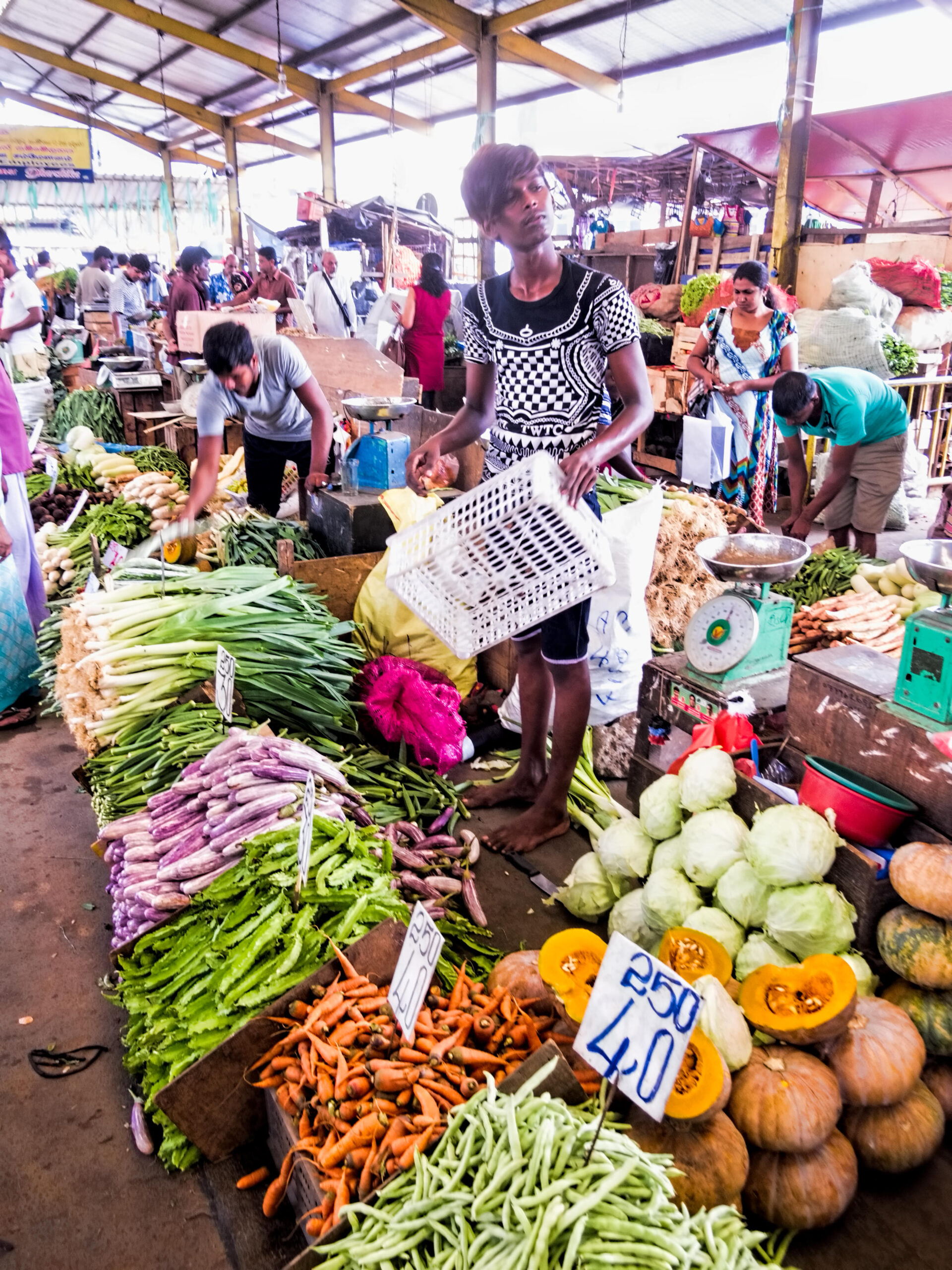
Figure 1.1 : A market-place
As the above quote from Professor Scissors suggests, stating a concise definition of a market is not an easy task. One way to define a market is by types of products or services sold. Geographic region is another way to define a market. Demographic characteristics of buyers is another way to define a market. One might look at the social-psychological characteristics of buyers. This category would include social class. One might define the market by the industry that buys the product. If there are pronounced differences between seasons in terms of who buys the product it might be reasonable to include seasonality in the definition of a market. All of these factors and more are valid characteristics that may be used to define a market.
DIFFERENCE BETWEEN MARKETS AND MARKETING
Before proceeding with further discussion of how markets might be defined, it is useful to distinguish between markets and marketing. These concepts are closely related and often confused. A market, as discussed above, is the infrastructure that includes the physical, intellectual, social, electronic and other factors needed to create conditions under which buyers and sellers can exchange goods or services.
The practice and study of marketing takes the existence of markets as a given and asks the question: how can a product or service most profitably be sold in existing markets? Excellent marketers optimize their efforts to use markets for their products and services in the most profitable way. It is not always easy to determine which marketing tools are the most effective, particularly when evaluating advertising.
With the advent of internet-based advertising, determining the value of advertising has become increasingly difficult. The standard way of charging for advertising has been to charge for the number of people that view an online ad. This is sometimes called counting eyeballs. Unscrupulous site operators can increase their eyeball count by employing robots (bots) to increase the hit number. While this is fraud and may involve both criminal and civil liability for the perpetrator, it is very lucrative and sometimes hard to catch.

Please read this Forbes article on advertising fraud.
Markets change over time. There are many reasons for this. The previous paragraph implies one of these reasons. Market structure can become unworkable for one or more market participants. Fraud in the calculation of the usefulness (and therefore the cost) of internet-based advertising will, as the cost of fraud rises, force advertisers to choose alternatives to the internet for their advertising.
That will in turn force the providers of that advertising to adapt to reduce fraud. That in turn will alter the structure of the market. That is how the feedback loops between marketing and markets work. An interesting question is how AI (artificial intelligence) will change the structure of internet-based advertising markets. On the one hand, AI provides tools that improve the detection of fraud. On the other hand, AI makes it possible to engage in more sophisticated frauds.
One of the most common sources of change in markets is that the laws and regulations governing the markets change. This is particularly true of agricultural markets that can change rapidly when Congress changes the law governing the market. Example 1.1 illustrates this for tobacco.
Example 1.1. The tobacco program began as part of the Agricultural Adjustment Act of 1938. That was an effort to increase catastrophically low agricultural commodity prices. The tobacco program set up a system of allotments and marketing quotas. The allotment was the amount of land that a farmer could devote to tobacco. The marketing quota was the amount of tobacco that a farmer could sell in a given year. Farmers took their tobacco to a tobacco warehouse where the tobacco was auctioned by open outcry to buyers. The program changed over the years but did not deviate dramatically from its original form. In 2004 President Bush signed the Fair and Equitable Tobacco Reform Act that created the Tobacco Transition Payment Program (TTPP, or the ‘Tobacco Buyout.). All restrictions on the sale and production of tobacco ended after 2004. The iconic tobacco warehouses found in many rural towns in tobacco growing regions closed. Tobacco producers and quota holders (who were often not the same people) received annual payments through 2014.
Starting in 2004, farmers began contracting directly with buyers. Contracts generally contain nondisclosure clauses. The price discovery mechanism of the open outcry auction was lost. This has caused a remarkable shift in bargaining power from producers to buyers. Without price discovery, producers have no way to accurately gauge the market value of the tobacco that they grow. Tobacco production has consolidated to fewer, larger farms, in part because profit margins are now lower. Smaller tobacco farms cannot make enough money to cover fixed costs and provide a reasonable income. After 2004, thousands of tobacco farmers either quit growing tobacco or went out of business entirely.
The interaction between markets and marketing is a key reason that markets change over time. That interaction creates a feedback loop that can result in changes in market structure. Innovative companies look for ways to change the market structure to their benefit. Sometimes those changes are minor.
Other times they change the entire character of the market. Usually, the latter also involve changes in laws or regulations. The advent of electronic trading of securities is an example of how this feedback loop coupled with regulatory changes by the Securities and Exchange Commission (SEC) changed those markets.

A History of Trading. (You may need a Wall Street Journal subscription to read this article.
MARKET DEFINITIONS USED IN THIS BOOK
Agricultural markets are among the world’s most complex markets. There are a number of reasons for this. Agricultural markets depend upon biological processes that depend on the vagaries of such factors as weather and disease. That dependence makes agriculture riskier than many other lines of business. A healthy agricultural industry is one of the keys to U.S. national security. No army can fight long without food. People get emotional about food. People care about where their food comes from and the perceived safety of that food. Food and its preparation are cultural and religiously important. With all this complexity there are many ways to define agricultural markets. For one to study agricultural markets there must be some simplifying principles.
Since this text is intended primarily for students of agribusiness and agricultural business in the United States there is an inherent geographical limitation to the market definitions described herein. Markets described in this text are further limited to those either for agricultural products or those for inputs for agricultural production. Within those limitations agricultural markets described in this text are defined by three parameters; the legal, institutional, and economic structures that undergird these markets. These three factors are closely intertwined and critical for a student of agricultural markets to understand. There are other factors of importance but are beyond the scope of an undergraduate class in markets.
The legal structures that support and govern agricultural markets are a complex mix of federal and state law and regulations. Local government law can be important. For example, land use laws may require that some local land may be protected from development. Those sorts of local regulations certainly affect local markets for agricultural land. Grades and standards discussed in Chapter 9 are defined by Federal law. These grades and standards have been harmonized with the laws of other nations. This permits export markets to operate smoothly. Some standards are established by private organizations such as the International Organization for Standardization (ISO).

Please view this short (about 1 minute) video introduction
to the ISO.
These function in much the same way as standards established by the laws of governments. The ISO is a non-governmental international organization. ISO standards can be applied by private contract between buyer and seller of agricultural products.
Example 1.2. Prior to 1990 organic standards were set by private organizations. To promote commerce both domestically and internationally through harmonization with other nations, Congress passed the Organic Foods Production Act of 1990. Due to disagreements among the interested parties, it took about a decade and additional congressional action to complete the transition from private standards, to implementation of standards under the federal program (the National Organic Program (NOP)). These standards are described in Chapter 9. Implementation of the NOP standards is through certification, a process described in Chapter 10.
Institutions are the second parameter used in this text to define agricultural markets. These institutions include both government agencies and private organizations. Many of the institutions that support agricultural markets are unique to agriculture. For example, the Farm Credit System institutions described in Chapter 5 were set up by Congress initially to make farm loans. (They do more than that now.) The Commodity Credit Corporation described in Chapter 7 makes commodity loans to farmers as part of the federal program to support markets for certain commodities. Marketing orders described in Chapter 8 are unique to agriculture. They are established by producer referenda and once established are binding on covered producers. Farmer cooperatives (Chapter 12) are producer-owned private businesses that are important to the implementation of some marketing orders. What makes them unique institutions is their partial antitrust exemption that allows them to engage in practices that would otherwise violate antitrust laws. The scope of the antitrust exemption is often contested in litigation between affected private parties and cooperatives.
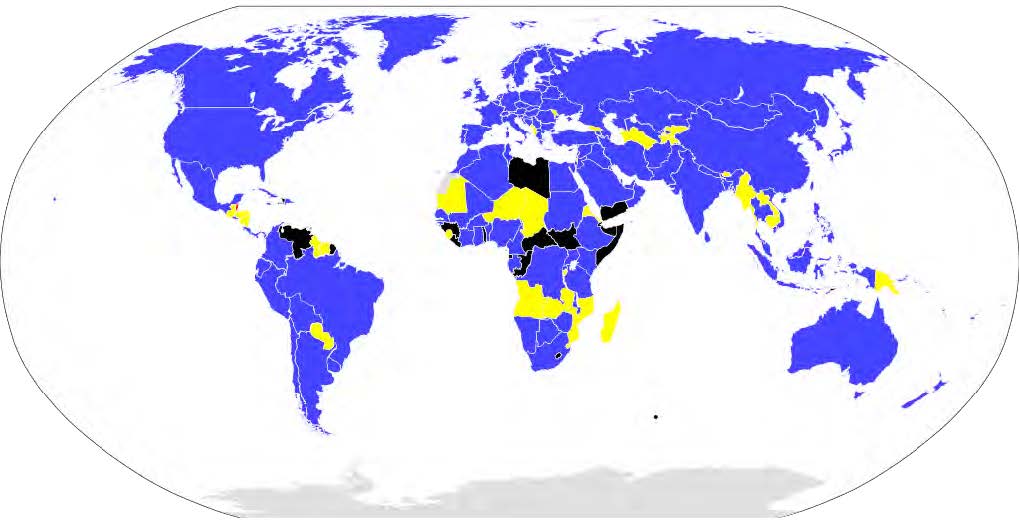
Figure 1.2 : A map of ISO members as of November 2020
Blue – ISO member countries with a national standards body and ISO voting rights
Yellow – Correspondent members (countries without a national standards body)
Black – Subscriber members (countries with small economies)
The third parameter used to define the markets described in this text is economics. Chapter 2 describes some basic economic principles used to define markets. Chapter 2 is written at a level that a typical layperson without advanced mathematical skills can understand. To succeed as a trader (speculator) in some agricultural markets such as futures and options, described in Chapters 14 and 15, requires a high level of understanding of mathematical concepts. Example 1.3 illustrates the unhappy and all too common fate of those that speculate without understanding this point. Fortunately, successfully hedging using the commodity markets does not require such a high level of understanding although it can certainly make it more profitable. Hedging is the focus of Chapters 14 and 15. Hedging is an important risk management strategy for both users and sellers of agricultural commodities. Some market participants such as soybean crushers are both buyers and sellers. A soybean crusher may use options to hedge its position as a buyer of soybeans and hedge its position as a producer of soybean oil and soybean meal.
Futures and options markets illustrate an important point about market structure. These markets are among the freest in the world; however, their existence depends upon federal regulations. Federal regulation of options markets came to the industry in the 1980s and 90s at the request of the securities industry. Federal regulation gives market participants the confidence in these markets necessary for them to be widely used.
Example 1.3. Percy was hired several years ago to run a grain elevator in a small Corn Belt town. The elevator handled many millions of dollars’ worth of grain every year. It was federally licensed and stored grain under CCC loan. As Percy handled grain transactions for his employer, he saw the huge (from his point of view) amount of money that the elevator handled. To Percy, his salary was paltry by comparison and increasing inadequate to handle the needs of his growing family. He decided that he could sell a few futures contracts to supplement his income. Those contracts went badly so he made delivery using grain stored in the elevator that he managed. He sold a few more futures contracts to recover his losses. Those contracts went badly too. Eventually he was unable to redeem stored grain when farmers asked for it. Shortly thereafter federal law enforcement officers led him away in handcuffs.

Read about the United States Warehouse Act.
Hedging using futures as options is similar to insurance. Both are tools for managing risk. Insurance is discussed in Chapter 6. Hedging and insurance are also similar in that both have costs that reduce long-term profits. It is reasonable to ask why a business would thus reduce its profits. The reason is straightforward. Some risks are so large that businesses lack the financial depth to survive them. It is safer to transfer the risk to insurance companies and speculators.

Trading losses can be spectacularly large. The largest in history was the $20 billion loss of former Wall Street investor Bill Hwang. In 2021 he lost that sum in a mere two days. He was sentenced to serve 18 years in prison.
A similar risk shifting function is provided by export financers. Export financers include banks and other lenders. It is the practice of the U.S. government to reduce the risks of export lenders by partially guaranteeing the loans that they make. These programs are discussed in Chapter 20. Chapter 18 discusses the basics of exporting and Chapter 19 discusses the rules governing agricultural exports.
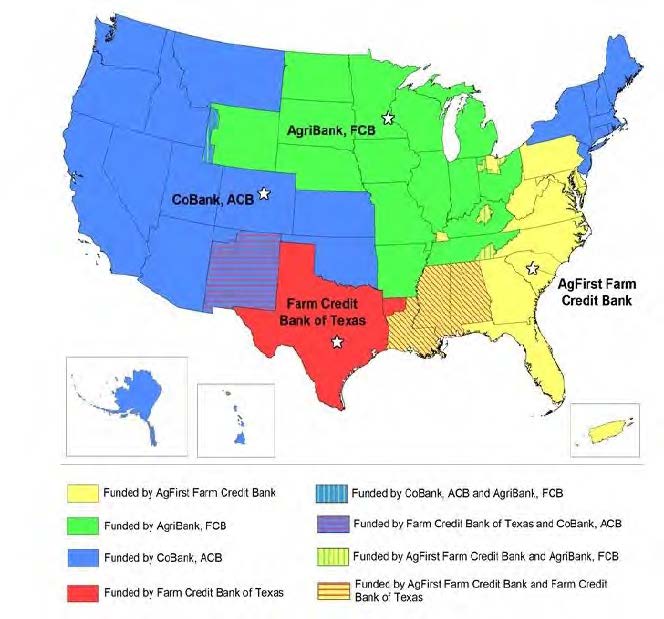
Figure 1.3 : Farm Credit Bank (and Agricultural Credit Bank) charter territories
Chapter 13 provides an overview of various means of selling agricultural products. Economic factors such as the degree of concentration in the market are important to defining markets. Market power is the ability of a seller or buyer to set price. Most farmers have little or no power to set prices. When there are few suppliers of certain inputs or buyers of certain products it is to be expected that those companies have market power. Chapter 3 provides an overview of input markets for crop, livestock and poultry producers. Chapter 11 provides an overview of vertically integrated production that dominates poultry and hog markets. In such markets one company controls production from the farm through slaughter or beyond. The retail food business is highly concentrated. Chapter 16 describes retail and wholesale food markets.

A federal court recently blocked the proposed merger between retailers Kroger and Albertson because the court found that it would impermissibly increase concentration in the grocery market. Access to this article may require a Wall Street Journal subscription.
Markets for local food are described in Chapter 17. The institutions, regulations, and economic structures vary considerably from one locality to another.
Markets for agricultural labor are unusual because the market is dominated by family labor. There is no other area of the U.S. economy that is so heavily dominated by the use of family labor. It is also unusual but not unique that foreign-born labor dominates the market for hired labor. Much of that labor is without authorization to work in the United States. That raises many issues for agricultural producers that employ undocumented labor. Those issues include the stability of the labor force, law enforcement action against farmers and slaughter facilities employing undocumented labor, and working conditions.

References
About ISO. (n.d.). International Standards Organization.
https://www.iso.org/about
Chiocchi, P. (2023, Nov. 7). Ad Fraud: The Biggest Threat to The Advertising Industry. Forbes.
https://www.forbes.com/councils/forbesa-gencycouncil/2023/11/07/ad-fraud-the-biggest-threat-to-the-advertising-industry/
Hayek, F.A. (1945). The Use of Knowledge in Society. Econlib.
https://www.econlib.org/books-by-author-and-letter/?selected_%20letter=H#FriedrichA.Hayek
International Labour Organization (ILO), Walk Free, and International Organization for Migration (IOM). (2022, September). Global Estimates of Modern Slavery, Forced Labour, and Forced Marriage.
https://cdn.walkfree.org/content/uploads/2022/09/12142341/GEMS-2022_Report_EN_V8.pdf
Senate Res.21 – A resolution supporting the observation of National Trafficking and Modern Slavery Prevention Month during the period beginning on January 1, 2023, and ending on February 1, 2023, to raise awareness of, and opposition to, human trafficking and modern slavery. S.Res.21. 118th Cong. (2023-2024).
https://www.congress.gov/bill/118th-congress/senate-resolution/21
Scissors, J.Z. (1966, July). What is a market? Journal of Marketing, 07/1966, Volume 30, Issue 3.
Wilde, H. (2024, Jan. 9). How Technology Is Helping Fight Online Ad Fraud. Inc.
https://www.inc.com/heather-wilde/how-technology-ishelping-fight-online-ad-fraud.html