


Chapter 03: Overview of U.S. Agricultural Industry: Crops, Livestock, and Poultry – Inputs
Overview of U.S. Agricultural Industry: Crops, Livestock, and Poultry – Inputs
“…the first essential component of social justice is adequate food for all mankind.”
Norman Borlaug
In this chapter we discuss the inputs for the production of crops, livestock and poultry. We will focus first on crops. Crops are key inputs for livestock and poultry production. When crop prices are high, livestock and poultry producers tend to suffer and vice versa. Many farmers produce crops and livestock, poultry, or both. This creates a natural hedge for such farmers. More sophisticated hedging strategies will be discussed in Chapter 14. Labor, credit, and insurance are key inputs for crops, livestock and poultry. These inputs are discussed in chapters 4, 5, and 6, respectively. All other inputs are discussed in this chapter.
Certified organic production of crops is for the most part in a separate supply chain from conventional production discussed below. The National Organic Program is supervised by the USDA Agricultural marketing Service (AMS). The AMS sets standards for inputs such as seed and fertilizer that are used in producing certified organic products. The Organic Materials Review Institute (OMRI) is a private nonprofit that independently reviews products for use in certified organic production, handling and processing. OMRI is an essential source of information for organic growers about products that they need for certified organic production. State departments of agriculture are also important sources of information and startup grants for certified organic production.
INPUTS FOR CROP PRODUCTION
Inputs for crop production will focus primarily on the major commodities; food grains (rice, wheat, and pulses), feed grains (corn, sorghum, barley, and oats), oilseeds (soybeans, sunflower seed (oil and non-oil types), safflower, flaxseed, rapeseed, canola, mustard seed, crambe, and sesame), and various types of cotton. These are the commodities that are supported through the USDA Farm Service Agency (FSA). The primary inputs for production are seed, chemicals, labor, credit, insurance, water and land, and equipment and supplies. Chemicals can be subdivided into fertilizers and pesticides.
Biologics are a newly emerging market in agriculture. Biologics are derived from or are living organisms, usually microbes, that enhance crop production or provide crop protection. The market for biologics began with organic and other alternative agriculture; however, the products and practices are increasingly being adopted by large conventional operations. Although the market is rapidly growing it remains small.
Seed
Production of seed is highly concentrated with Bayer and Corteva Agriscience controlling 60% of total global sales of the top 20 seed companies in 2018. BASF and Syngenta, a subsidiary of China National Chemical Corporation (ChemChina), round out the top four global seed companies. These last two plus Limagrain and KWS control 26% of seed sales of the top twenty seed companies. Bayer, BASF, and KWS are German companies. Corteva is a US company. ChemChina is Chinese and Limagrain is French. With 86% of global seed sales of the top 20 companies controlled by 6 companies, the market for seed is highly concentrated with limited competition. Most of these seed sales are of genetically engineered (GE) seed of the major commodity crops listed above.
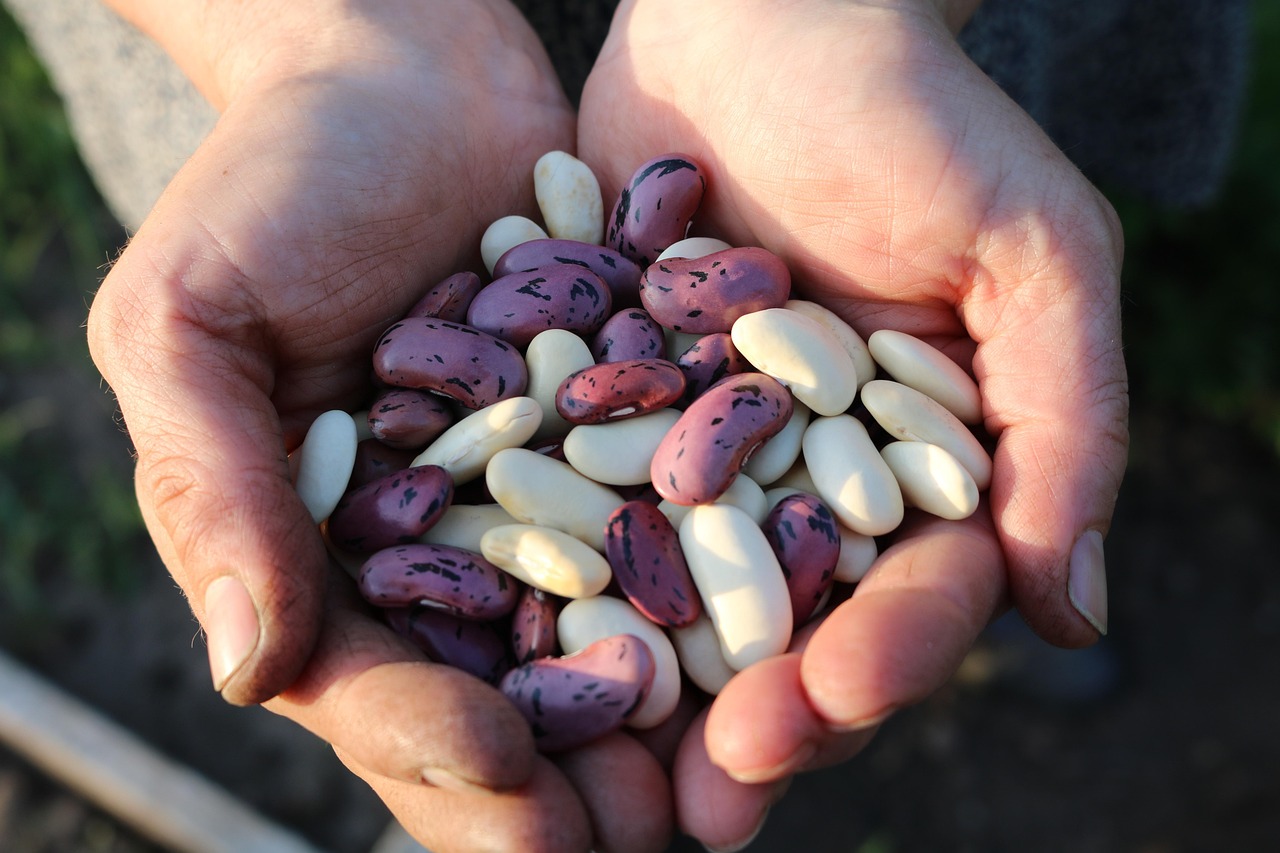
Figure 3.1 :
The remaining 14 seed companies in the top 20 seed companies are in specialty seed businesses that include grass seed, including turf; vegetables; flowers; and rice. Outside of the top 20 companies are hundreds of small companies that produce specialty seeds including those for certified organic production.
The industry has seen major consolidation over the last decade. The merger of Dow and Dupont was completed in 2018. It was then dissolved as of June 1, 2019, to create three companies. All of the seed business was placed in one of the three companies, Corteva. Corteva is now an independent company containing the agriculture products of the two merged companies Dow and Dupont. Syngenta was a Swiss company until it was acquired by ChemChina in 2018. Bayer purchased Monsanto then sold its Monsanto’s seed business to BASF at the end of 2018. Bayer continues to be the world’s largest producer of vegetable seeds. Bayer’s offerings include started plants (rootstock) as well as seeds. The seed industry has continued to consolidate.
Concentration in an industry tends to limit competition and often increases overall price levels as companies exercise market power. There is another effect that is less often discussed. Concentration may also reduce competition (J. M. MacDonald, 2017). Companies that have market power may have little incentive to develop new products that reduce sales of existing products. Agricultural research to produce new genetically engineered varieties of seed is very expensive and takes years to receive the necessary regulatory approval. GE varieties are usually protected from competition by utility patents for a limited number of years (usually 20) after which the public is free to use the innovation. Utility patents are to be distinguished from plant patents that are used primarily for horticultural crops that are asexually reproduced.
One would expect that as patents on these products expire that the generic portion of the market to grow. That may not be the case. It may be more cost-effective for companies to use techniques such as patent stacking to extend exclusive rights to products. The litigation costs associated with extending patent life are generally far less than the cost of agricultural research.
One of the more straightforward ways to do this is to add a newly patented trait to an existing variety and cease marketing the old variety without the new trait prior to the expiration of the original patent. Since saving seed of a patented variety constitutes infringement it is impossible to reproduce a generic version of that product. This is in contrast to non-genetically engineered varieties that are protected by certificates of Plant Variety Protection issued by the USDA Agricultural Marketing Service (AMS). Farmers may save seed varieties protected by Plant Variety Protection so long as it is for their own use on their own farm. Thus, it is possible to have seeds of such varieties available after expiration of the certificate.
Neither Congress nor the Supreme Court has adequately addressed the question of patent exhaustion and self-replicating technologies. Seeds are the classic example of a self-replicating technology. The justification for the patent system is that innovation is encouraged by giving the inventor exclusive rights to practice the invention for a limited time. The other half of the bargain is that the public has full benefit of the invention after the patent expires. The doctrine of patent exhaustion exists to ensure that the public receives its part of the bargain. Two Supreme Court decisions have narrowly addressed the question of patent exhaustion in seed subject to patent protection. In Bowman v. Monsanto Co., the Supreme Court held that the doctrine of patent exhaustion did not protect a farmer that planted patented seed. The terms of the decision were narrow and did not address the question generally. In Impression Prods. v. Lexmark Int’l, Inc., the Supreme Court upheld the continuing viability of the doctrine of patent exhaustion. That decision involved refilling used printer cartridges. The Supreme Court did not cite Bowman, leaving the application of the doctrine of patent exhaustion unclear. A farmer that risks planting patented seed hoping for the protection of the doctrine of patent exhaustion should be prepared to spend millions of dollars in legal fees vindicating themselves. Most contracts that farmers sign when they buy seed subject to patent protection prohibit reproduction beyond the initial authorized planting. A farmer that holds seed and plants after the expiration of the patent clearly violates the terms of the contract. Whether those contract provisions are an invalid attempt to extend the life of the patent is an unresolved issue.
Example 3.1. Larry’s Generic Seeds was created by Larry Bright to take patented seeds generic at the expiration of the applicable patents. To do so he purchased seed from farmers who had grown it while it was under patent protection. He held the seed in storage designed to preserve the ability of the seed to germinate. When the patents covering that seed expired, he began reproducing and selling the seed. The seed companies that had held the patents sued Larry’s Generic Seeds and Larry, personally, for patent infringement and tortious interference with contract. The seed companies argued that saving seed with the intent to reproduce it infringed their patents even though the actual planting of the seed occurred after the applicable patents expired. The seed companies also argued that Larry and Larry’s Generic Seeds induced the farmers that sold seed to him to breach their contracts that prohibited reproducing the seed. The farmers that sold seed to Larry’s Generic Seeds were named as codefendants. The seed companies alleged that they breached their contracts and contributed to Larry’s infringement. The attorney that Larry consulted said the case might be winnable. She also said that it would cost $20 million dollars and more than 10 or more years of litigation, assuming appeals. This was far more money than Larry had. Larry agreed to a consent decree that provided for a permanent injunction requiring closing Larry’s Generic Seeds, destruction of any stocks of seeds, and never again planting any of the plaintiffs’ varieties.
In the United States the seed business is highly regulated under state law. In most states, regulation of seed is housed in the state department of agriculture. States regulate both seed labels and seed quality. Most states operate testing laboratories that test seed for germination rates and other characteristics. Most states have the authority to stop the sale of seeds that are out of compliance with the state seed law.
Many vegetable farmers buy started plants rather than seeds. For some crops such as sweet potatoes, cuttings are the standard method of propagating them. While there are some large suppliers such as Bayer, most of the suppliers of plants are small to medium sized businesses. These businesses are typically regulated by state departments of agriculture. The level of scrutiny is higher for suppliers that ship across state borders, and even higher for shipments across national borders.
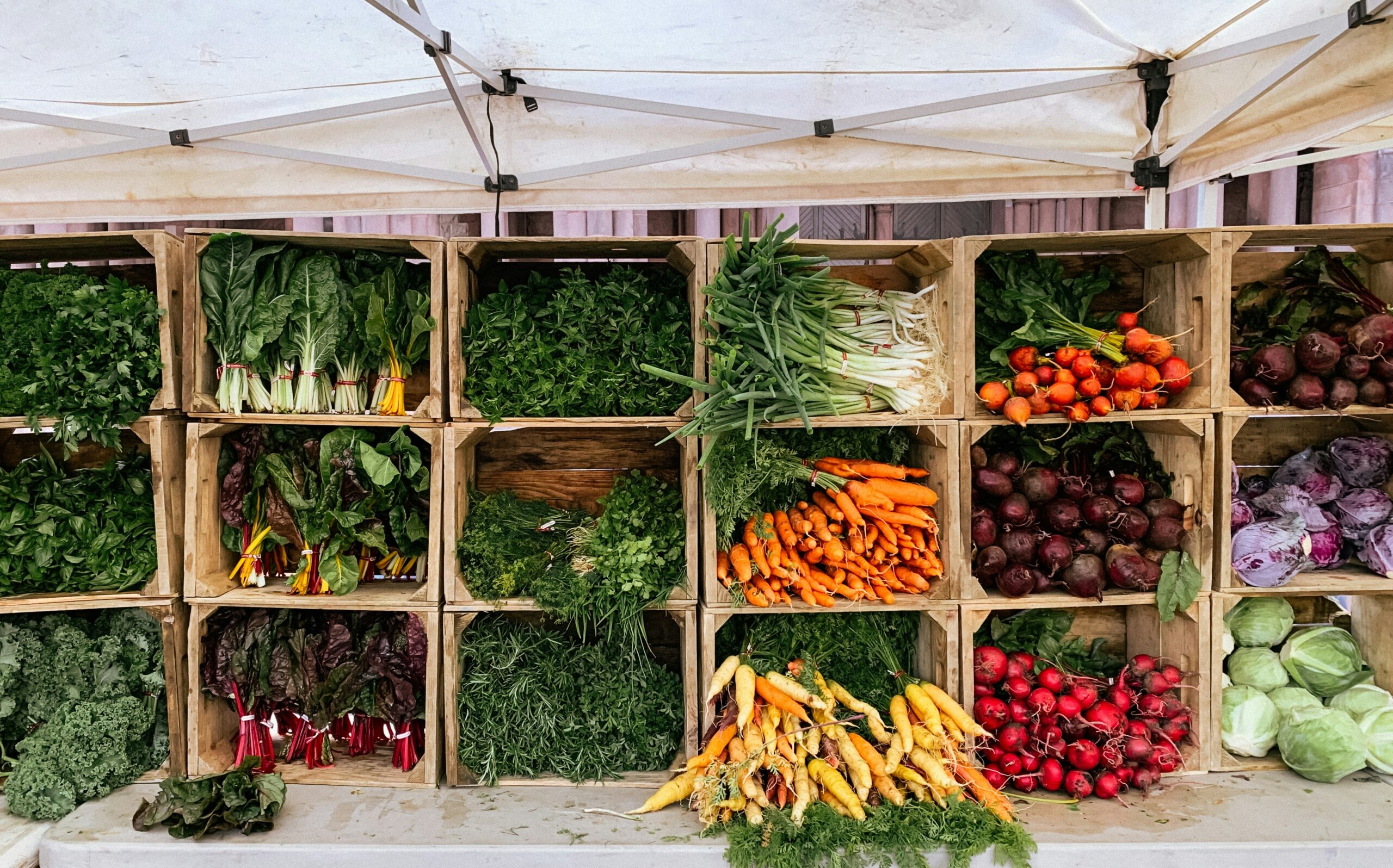
Figure 3.2 :
Fertilizer
Crops cannot be grown well without fertilizer. The three basic fertilizer ingredients are nitrogen, phosphorus, and potash. On containers of fertilizer these three basic elements are designated as NPK, expressed as percentages. If a fertilizer is designated 5-5-5, 20 pounds of the fertilizer will be needed to provide 1 pound of each nutrient. (100 divided by 5 equals 20.) The higher the rating the less of the fertilizer needs to be applied to provide 1 pound of the element. For conventional production, most of the phosphorus and potash used is mined. Phosphorus is usually mined in open pit mines. Potash is typically mined in underground mines or by extraction from brine (primarily the Dead Sea). The largest producers of potash are Canada (31.3%), Russia (20.8%), Belarus (18%), China (9.5%), and Israel (5.3%) as of 2021. Total world production in 2021 was 71.9 million tons.
Potassium chloride is the most commonly used and least processed form of potassium used in the United States. Potassium sulphate may be used where sulfur is also needed for plant growth. Potassium thiosulfate is a liquid fertilizer that can be added to irrigation water (fertigation) or used in foliar (applied to the leaves) applications. Animal manure is also used as an important source of potassium.
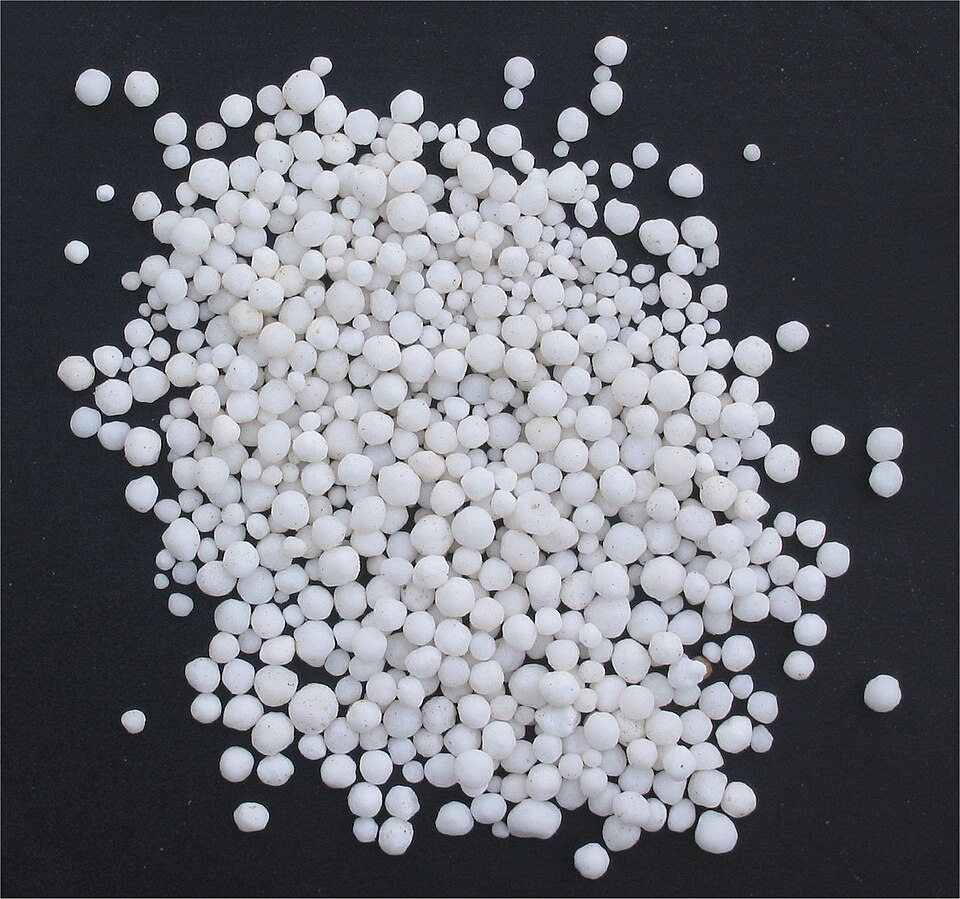
Figure 3.3 :
The largest producers of rock phosphate in 2021 are China (85 million metric tons (MT)), Morocco (38 million MT), United States (22 million MT), Russia (14 million MT), Saudi Arabia (8.5 million MT), Brazil (5.5 million MT), Egypt (5 million MT), Vietnam (4.7 million MT), and Tunisia (3.2 million MT).
Rock phosphate is generally not used for fertilizer without further processing. It has low availability, is costly to transport, and produces poor plant response. There are two processes used for manufacturing fertilizer from rock phosphate. One is a dry process and the other a wet process. The dry process is more expensive than the wet process but produces a very pure phosphoric acid that is used in the food and chemical industries. Carbonated drinks are one of the large uses of this type of phosphorus. A ’phosphorus’ is a term that was once used for such drinks. The phosphoric acid produces a tangy taste that is much loved by consumers. Although some phosphoric acid produced by the dry process is used in fertilizers, most of the phosphoric acid used in fertilizers is produced by the less costly wet process. The wet process employs acid to convert the rock phosphate into phosphoric acid.
Common phosphorus fertilizers are superphosphate (OSP) and concentrated superphosphate (CSP). Ammonia, a nitrogen source, is readily combined with phosphoric acid to produce products for the market. Common combined products are monoammonium phosphate (MAP), diammonium phosphate (DAP), and ammonium polyphosphate (APP).
There are organic sources of phosphorus that include animal manure and sewage sludge. Animal manure may be composted prior to application although it may be applied directly if the crop is not to be consumed raw by humans.
Nitrogen is the most widely available of the three key fertilizer elements because it is found in the air as the largest component of the atmosphere (about 80%). Atmospheric nitrogen is not available for plant growth. There are two natural ways that it converted into available nitrogen. The first is through lightning strikes and the second is by the action of naturally occurring soil bacteria. Some of these bacteria have a beneficial, symbiotic relationship with leguminous plants. Soybeans are a legume and do not require the application of nitrogen containing fertilizers under most circumstances.
Synthetic nitrogen fertilizer starts with the production of ammonia using the Haber-Bosch process. In 1905, Fritz Haber succeeded in fixing nitrogen from the air in an available form. A BASF chemist and engineer, Carl Bosch, scaled up production that made the process a practical source of agricultural nitrogen fertilizers. The process was critical to German production of fertilizer and explosives during World War I because the British blockade cut off its guanobased source of nitrates from Chile.
In the modern process, natural gas is used as both the source of hydrogen and the source of energy that drives the process. The anhydrous ammonia produced by the process may be used directly as fertilizer. Since it is in a gaseous state, it is injected into the soil. At 82% anhydrous ammonia has the highest possible nitrogen content. This reduces transportation and storage costs compared with other nitrogen sources. Its toxicity, losses to the air after application, and the need for well-maintained equipment to store it at high pressure constitute serious disadvantages.
Other widely used forms include urea, ureaammonium nitrate solutions (UAN), ammonium sulfate, and calcium nitrate, as well as the forms combined with phosphorus discussed above. Urea has been the most widely used form of nitrogen world-wide due to its low toxicity and stability. The United States is the fourth largest producer of nitrogen fertilizers. With 16 companies and a total of 35 plants producing ammonia, the industry is not highly concentrated.
Ammonium nitrate continues to be used as a fertilizer. However, it is unstable. It has been the source of recent disastrous explosions in fertilizer plants.
The market for fertilizer has been disrupted by the war in Ukraine that began February 24, 2022. Natural gas is a raw material and a source of energy for the production of nitrogen fertilizers. Reduced gas supplies have forced some European producers of nitrogen fertilizers to reduce output or cease production. Increases in natural gas prices have caused dramatic cost increases for US producers. Similar price increases have been seen for potash due to sanctions on Belarus which had been a major supplier to the US. The US has only limited domestic potash mining capacity. Canada is a major producer, but its short-term ability to expand production has been limited.
In the United States the fertilizer business, including lime and other soil amendments is regulated under state law. In most states, regulation of fertilizer is housed in the state department of agriculture. States regulate both labels and fertilizer quality. Most states operate testing laboratories that test fertilizer to determine that it has the characteristics advertised. Most states have the authority to stop the sale of fertilizer that is out of compliance. States also regulate fertilizer facilities for safety. This regulation is typically a joint effort with state labor departments and local fire marshals.
Pesticides
Much of the GE seed marketed is part of a technology set that includes the seed and an herbicide. GE seeds are often designed for resistance to specific herbicides. It is no surprise that herbicides are the largest part of the U.S. pesticide market at about 70% of sales (M. Shan, 2022). The other two large categories of sales are fungicides at 15%, and insecticides at 12%. Other products make up less than 3% of the market. Syngenta, Bayer, Corteva, and BASF account for the bulk of the pesticide sales. Patents have been very impotent to this market; however, many products have recently, or soon will, come off patent. Barriers to generic production of pesticides are much lower than for GE seeds. Barriers to generic production of off-patent chemicals do not apply to the rather unique situation of selfreplicating technologies such as living organisms. Additionally, it is established law, that requiring the purchase of a non-patented product in order to purchase a patented product is tying, and antitrust violation. A farmer may purchase patented seed and use a generic herbicide with it.
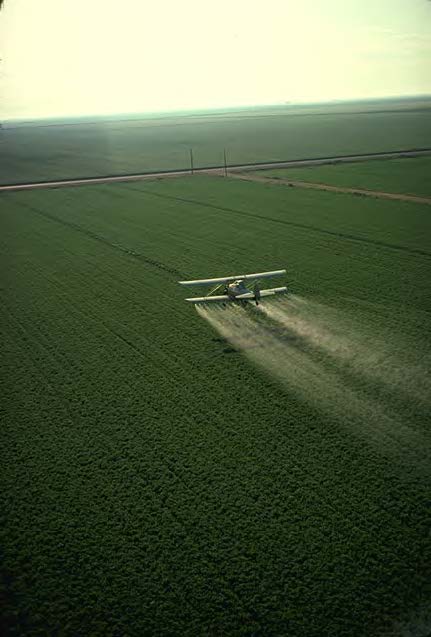
Figure 3.4 :
Pesticides are highly regulated. The primary federal statute regulating pesticides is the Federal Insecticide, Fungicide, and Rodenticide Act (FIFRA). Primary responsibility for implementing FIFRA is assigned to the Environmental Protection Agency (EPA). Under FIFRA, EPA may delegate certain parts of the program to the states and federally recognized Indian tribes. EPA retains primarily responsibility for evaluating applications for pesticide registrations by manufacturers or importers of pesticides.
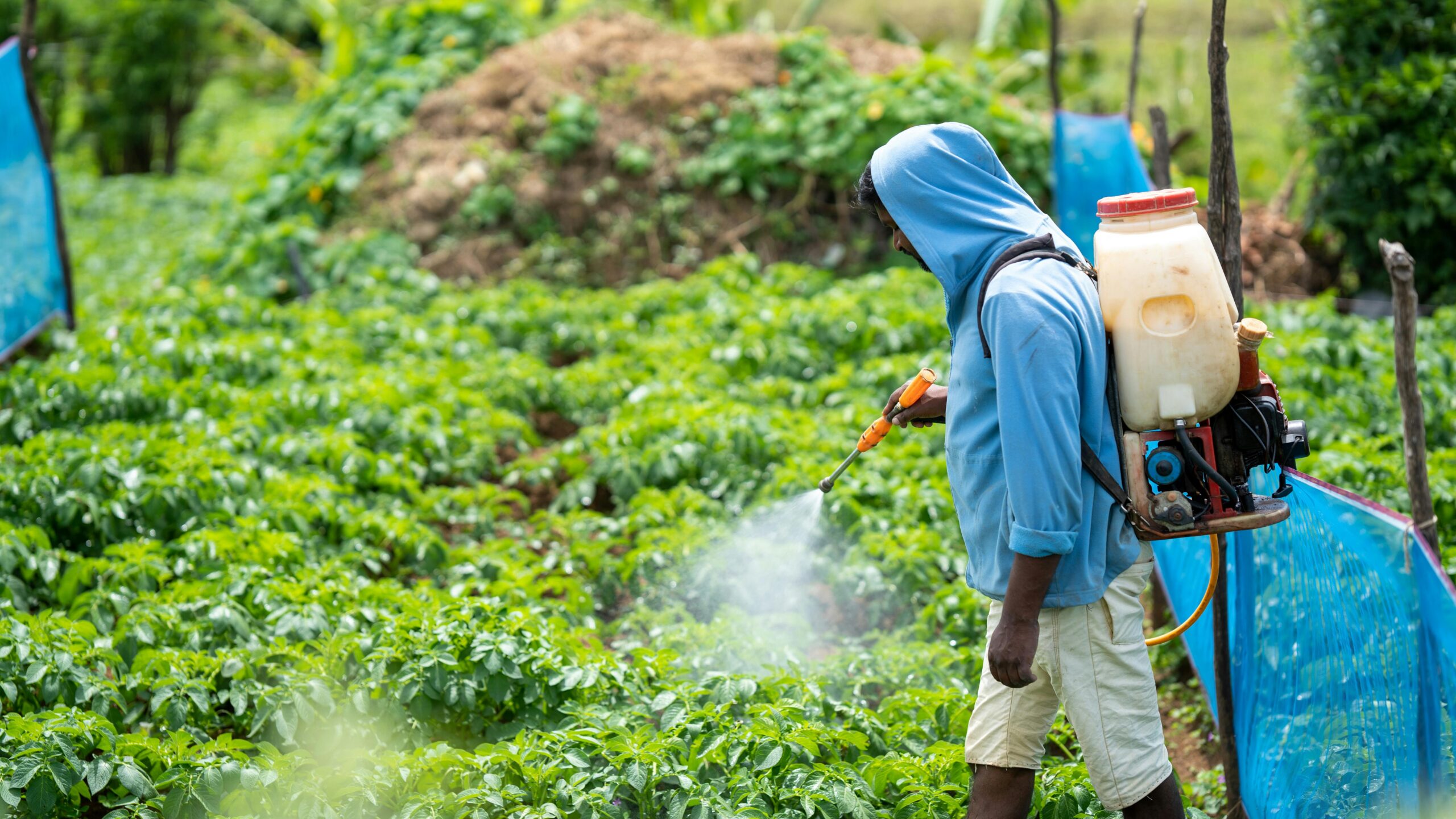
Figure 3.5 :
Registrants must prove to EPA that the pesticide’s composition is such as to warrant the proposed claims for it. The registrant must prove to EPA that the pesticide, when used in accordance with commonly used practice, will perform its intended function without unreasonable risks to people and the environment. As to the efficacy of the product, EPA does not verify the claims made by the registrant. This was one of the factors that the Supreme Court considered when it held in Bates v. Dow Agrosciences LLC that state tort law was not entirely preempted by FIFRA. Farmers continue to have the ability to sue pesticide manufacturers for damages when a pesticide fails to work as the manufacturer claimed.
The labeling must comply with FIFRA. The label is key to the whole scheme for the regulation of pesticide use. Users of pesticides must comply with the label. Off-label uses are violations of FIFRA. A commonly heard statement heard in pesticide training for applicators is “The label is the law.” Uses not listed on the label are not allowed. It is not uncommon for manufacturers to avoid the cost of adding low volume uses to the label. This is a serious problem for farmers raising minors crops such as more obscure fruits and vegetables. To solve this problem, section 24c of FIFRA authorizes states to issue supplemental labels to allow pesticides to be used for minor crops that the registrant chose not to include on the national label.
Section 24(c) labels are valid only within the state that issued the label. EPA may disapprove a state’s 24(c) supplemental label. Such labels are valid for only 90 days from the date of issue if EPA disapproves the supplemental label. EPA may withdraw a state’s 24(c) authority if it determines that the state is not exercising adequate controls. States may not add additional labeling requirements. States may not issue supplemental labels for pesticides for which EPA has revoked the registration. States may require more from pesticide applicators than FIFRA requires so long as those requirements are not inconsistent with FIFRA. These additional applicator requirements are imposed by state regulation, not through the label.
FIFRA-registered pesticides are classified as general use or restricted use. Typically, general use pesticides pose less danger the humans, animals, and the environment than restricted use pesticides. General use pesticides may be purchased by the public without restriction. Restricted use pesticides may be purchased only by certified applicators. Restricted use pesticides must be used under the supervision of a certified applicator. Everyone who handles a restricted use pesticide, from the manufacturer to the end user, must keep and retain records. For the applicator these records must include information about where and when the pesticide was applied and the weather conditions that existed at the time of application.
Applicator certification programs are managed by the states under delegation from EPA. EPA sets the minimum standards for delegated programs. Two basic categories of certification, private and commercial, are required. Most of these programs are operated by state departments of agriculture. States are free to add additional subcategories within the two basic categories of certification. Private applicators may not apply pesticides for hire and are generally restricted to property that they own or lease. Commercial applicators may apply pesticides for hire. The person who physically applies the pesticide need not be certified; however, such a person must be working under the supervision of a certified applicator. Many farmers purchase their pesticides as a package that includes both the chemical and the application under the supervision of a commercial applicator. The extent to which custom application is the norm varies by crop and region.
States are primarily responsible for monitoring the compliance of pesticide applicators with FIFRA and applicable state laws. These monitoring programs are conducted by the states and Indian tribes under cooperative agreements with EPA. State actions against farmers and other pesticide users for violations of pesticide laws constitute the single largest category of environmental violation.
Example 3.2. aryl and Art have neighboring farms. Both hold private applicator certification. Daryl got behind in his work and hired Art to apply herbicide to his soybeans. The state pesticide regulator cited Art for violating the conditions of his applicator certification and fined him. Private applicators are prohibited from applying pesticides for hire. There are no exceptions to this rule.
FIFRA has the potential to be used as a price discrimination tool. EPA does nothing to prevent a manufacturer from registering the same chemical under two different labels for two different crops, with the result that the manufacturer can charge different prices for the different labels based upon the differing ability of farmers of the different crops to pay. Whether this is an antitrust violation that could be addressed by the federal Trade Commission (FTC) or a provide lawsuit is an open question.
If an agricultural product contains too much pesticide residue, it can be deemed adulterated. Adulterated food and feed products cannot be marketed and generally must be destroyed. Maximum levels of pesticides in food and feed are called tolerances. Pesticide tolerances are established under the Federal Food, Drug, and Cosmetics Act (FDCA). EPA establishes tolerances for pesticide residues found in food and feed. The U.S. Food and Drug Administration (FDA) is responsible for testing food samples and enforcing tolerances. Although states may conduct monitoring and enforcement programs, states may not set more stringent tolerances than those established by EPA. In 1996 Congress amended FIFRA to recognize that carcinogenic synthetic chemicals are not the only or even the greatest risk posed to the food supply. Congress directed the EPA and FDA to regulate risks to the food supply through the use of risk assessment by considering all known, significant risks. Lack of scientific certainty has led to continuing disagreement about what constitutes an acceptable risk.
Monitoring of pesticide levels in foods is the joint responsibility of the FDA, EPA, and the U.S. Department of Agriculture (USDA). FDA analyzes thousands of samples annually to monitor compliance with pesticide tolerances. Despite these efforts, only a tiny fraction of all the food and feed consumed every year has been monitored for pesticide residues.
Water and land
Land is an essential input for agriculture. Approximately 52% of US land is devoted to agriculture (Callahan, 2021). Land is about 80% of total farm sector assets. Renting or leasing farmland is a significant part of the supply of farmland. Non-operator landlords own slightly less than a third of all US agricultural land. Federally owned land that is leased to ranchers is a significant portion of the grazing land in some western states.
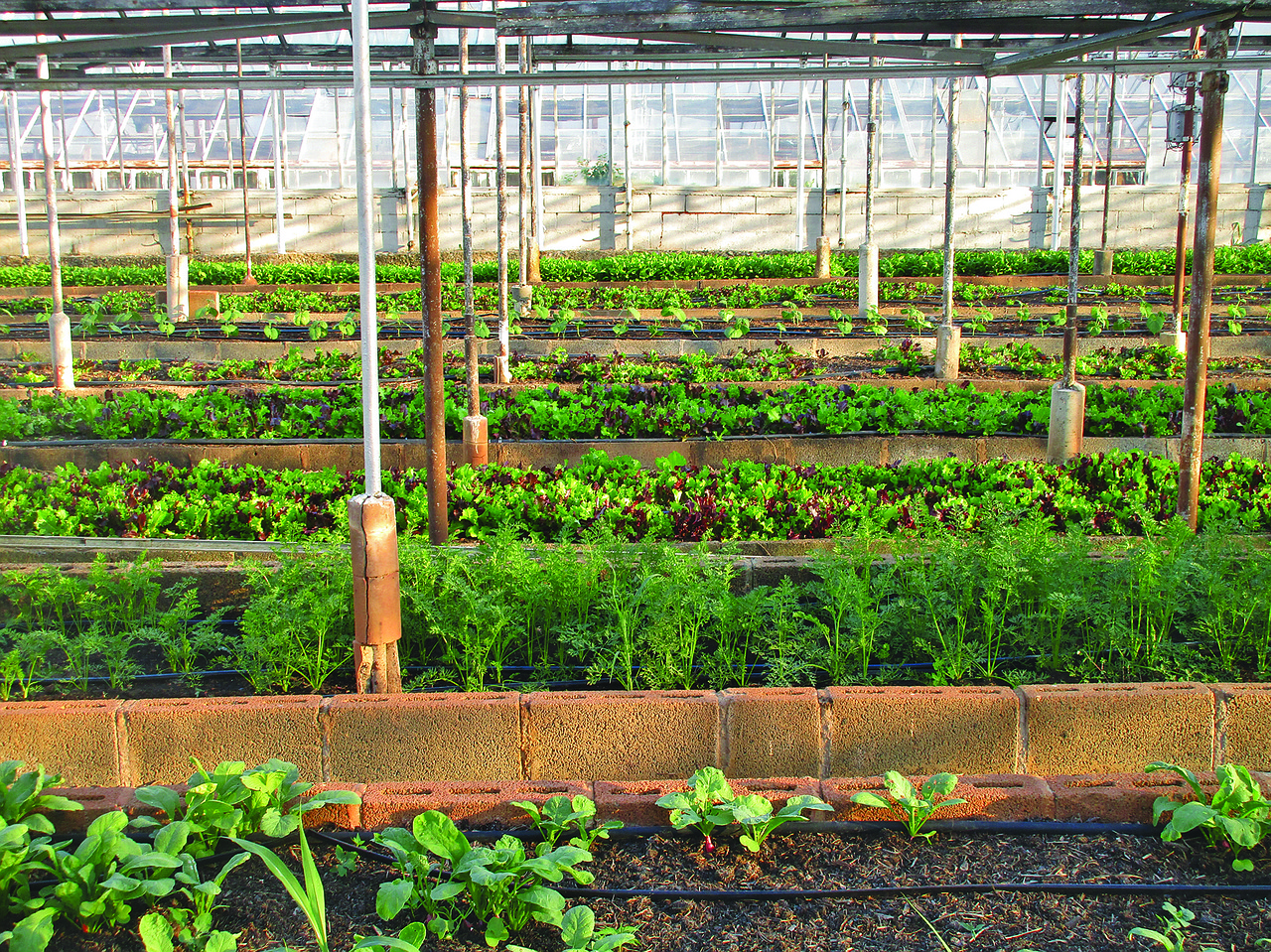
Figure 3.6 :
The commodity support programs tend to limit the land available for other types of agriculture, i.e., fruits and vegetables. To participate fully in the commodity support programs a farmer must have base, i.e., a history of producing those crops. To avoid losing base, land used for supported commodities is usually unavailable for growing fruits and vegetables. This tends to increase the prices that existing fruit and vegetable producers can demand for their products; however, it is a barrier to entry for those that would like to enter the fruit and vegetable business.
Eastern states from the Atlantic Ocean west to the tier of states on the western side of the Mississippi River use a system under which water rights are attached to the land. Eastern US agriculture is heavily rain dependent; however, irrigation is becoming increasingly important. Irrigation in eastern states relies upon a mix of surface and ground water. Given the legal system that ties surface and ground water to the land, the market for agricultural water in eastern states is rudimentary.
Western states use a system whereby the right to use surface and ground water can be severed from the land. For that reason, the market for water in western states is more robust than markets in the east. The right to use water in western states is defeasible which means that an owner of water rights may lose them if the water allocation is not put to beneficial use, generally every year.
A great deal of the surface water of the United States is in impoundments (constructed lakes) that are under the control of various Federal, state and local authorities, as well as private power companies. Rules allowing for use of that water for agriculture are varied and complex. The Colorado River Basin is one of the most important as well as most of the complex. It involves two countries, seven states, and other entities too numerous to list here. Allocations are in excess of the river flow, a situation exacerbated by prolonged drought (Stern and Sheikh, 2022).
Equipment and supplies
The market for some categories of farm equipment is highly concentrated. Deere & Co. is the world’s largest farm equipment manufacturer. It sells twice as much farm equipment as its two largest competitors (American Economic Liberties Project, 2021). It controls 53% of the U.S. market for large tractors and 60% of the market for combines. It is one of the leaders in precision agriculture (Schimmelpfennig, 2016).
As equipment gets more complicated and more farmers adopt precision agriculture, the importance of the software without which the equipment cannot operate has become of central importance. The software is copyrighted. Any repair of the equipment that involves the software (which is everything except minor repairs) can only be done with the permission of the software owner. To repair without permission is to subject oneself to civil and criminal liability. Deere & Co. has recently signed a memorandum of understanding (MOU) with the American Farm Bureau Federation that allows farmers to repair their own John Deere equipment (Gilmore and Duvall, 2023). The MOU is voluntary, applies only to Deere & Co., and may actually increase Deere’s dominance in the equipment business because independent repair facilities will have to buy tools from Deere in order to work with the Deere software.
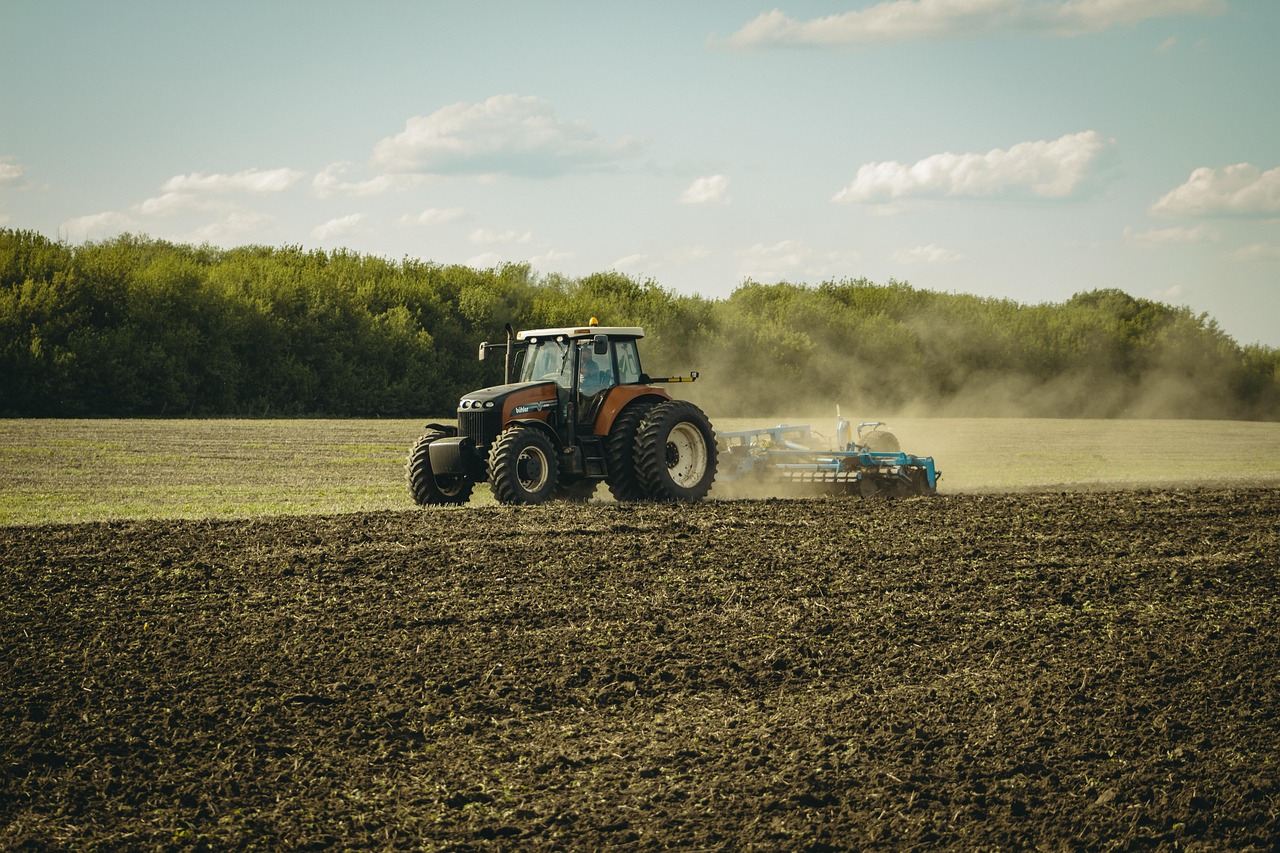
Figure 3.7 :
There are many independent retailers of gasoline, diesel, and other petroleum products. However, there are only a few large refiners and a smaller number of companies that own those refineries (eia. (2022, June 21). There are many retailers that sell farm supplies that include tools and other required products.
Inputs for livestock and poultry production
Almost all of the broiler and turkey production is vertically integrated. Much of pork production is vertically integrated. In a vertically integrated industry, the entire production process from beginning to end is owned or controlled by a single company. Beef production is not vertically integrated and has many producers that buy their own inputs. The shell egg industry is more concentrated, with 68 companies producing most of the conventional eggs (Van de Braak, 2021).
Almost all broilers produced in the United States are produced by companies that are vertically integrated. About 95% of these broilers are produced on independently owned farms with contracts, with the remaining 5% produced on company-owned farms (National Chicken Council, 2022). There are about 30 federally inspected companies in the vertically integrated industry in the United States. Three companies, Tyson, Pilgrim’s and Perdue, account for about half of U.S. broiler production, with the top 20 companies accounting for 96% of production (RAFI-USA, 2023). These companies are called integrators. The contract farmers are usually called growers.
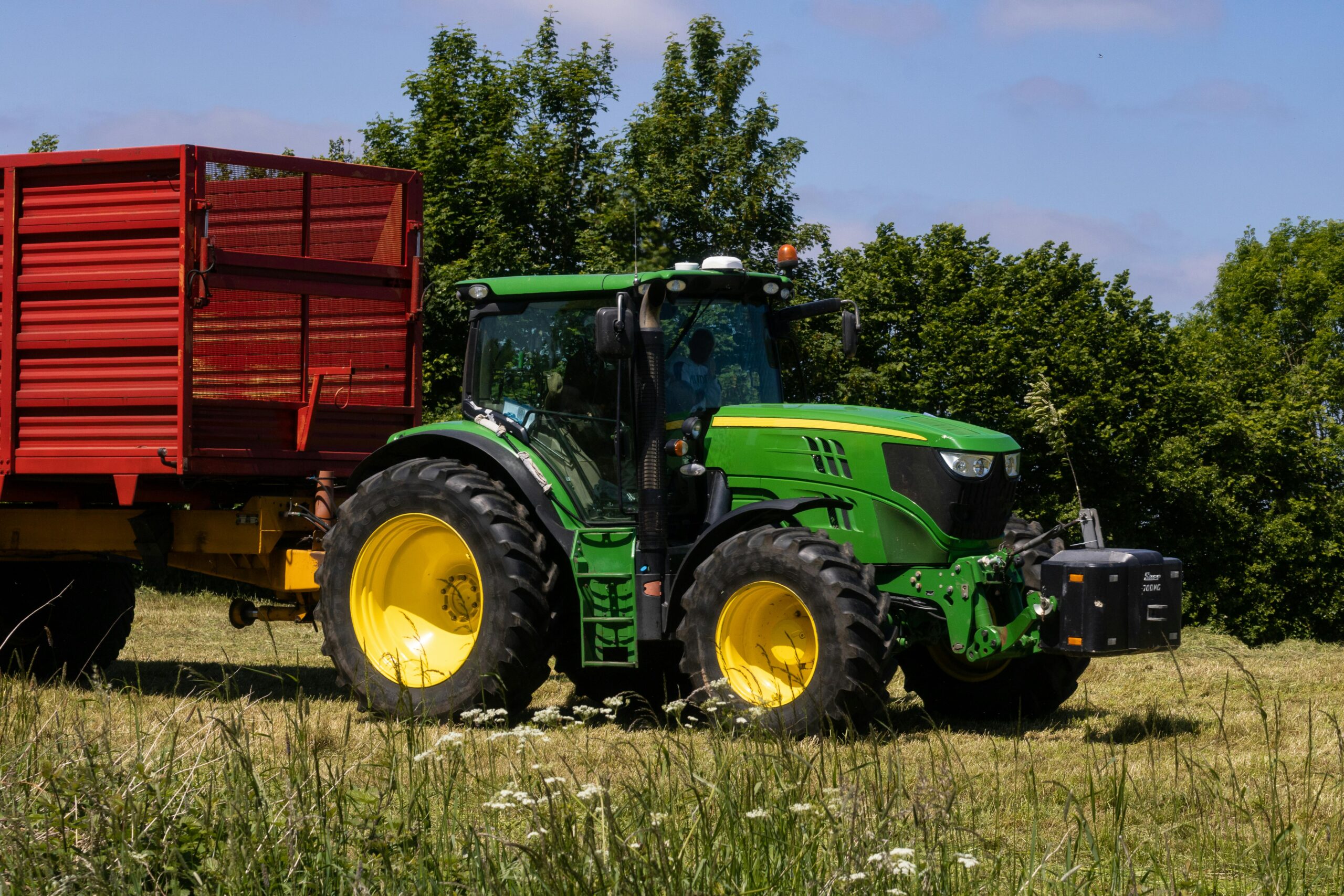
Figure 3.8 :
Integrators usually own the hatcheries where the chicks are hatched although production of hatching (fertilized) eggs is often done on independently owned farms under contract to the integrator. Most of the integrators supply their own genetics, employing geneticists that improve the genetics of hens used to supply hatching eggs. The chicks are shipped by the integrator to the grower that raises them. The integrator maintains ownership of the chickens unless the chicken dies (becomes a mortality).
The integrator determines when to catch the flock, provides the catch crew and shipping to the slaughter house. The integrator owns and operates the slaughter house. The integrator provides all feed, usually produced in a feed mill either owned by the integrator or under contract to the integrator. The integrator determines the feed formulation. The integrator provides other services such as flock health related services and some advice on production management. The integrator determines when (or if) the next batch of chicks will be provided.
Mortalities are the property of the contract farmer that has the responsibility for proper disposal of all mortalities. The contract farmer provides the chicken house and the labor required to operate it. The contract farmer also provides and owns any equipment necessary for the operation of the house and the equipment for disposal of waste (chicken litter) at the end of each production cycle. The contract farmer is solely responsible for compliance with environmental and land use regulations related to waste disposal (litter and mortalities) and operation of the house. There have been some attempts through co-permitting to make integrators responsible along with contract farmers for environmental violations; however, those attempts have failed (Smith, H., 2009).
Contract farmers are generally paid on a per pound of chicken produced basis. The tournament system, with some variations, is employed by most integrators. The growers, for each flock cohort, are rated against their peers based upon various metrics, the most important of which is the feed conversion ratio (FCR) (Alltech, 2018). The FCR is measured as the total pounds of feed used to raise a flock divided by the pounds of chicken produced. The cohort of growers (those that received chicks about the same date) are then divided into three tiers. The middle tier receives the base per pound rate. The upper tier receives a bonus per pound. The money that is used to pay the bonus to the top tier is subtracted from the per pound rate paid to the bottom tier. This method of compensation has been controversial (Hauptle, 2022). Contracts with growers are on a per flock basis. The integrator’s contractual responsibility is solely for the current flock for the 7 to 9 weeks that it is in the grower’s chicken house. The integrator has no contractual responsibility to provide a subsequent flock. Growers that find themselves in the bottom third are likely to see greater times between flocks and risk being dropped entirely by the integrator.
Growers are responsible for raising the capital to build the chicken house. Initial construction loans are for a term of up to 15 years. Many of these loans are issued by private lenders that are protected by a federal loan guarantee. Integrators often require upgrades to equipment in the chicken house over the life of the house. The grower is responsible for the costs of making these upgrades. Failure to make the upgrades will usually result in the integrator declining to deliver additional flocks to the grower; however, making the upgrades does not create any contractual obligation on the part of the integrator to deliver flocks.
Example 3.3. Jones Jorgensen owns two poultry houses that are about 5 years old. The integrator, with whom he contracts, told him that he would have to make over $100,000 of upgrades to continue in the business. He took out a federally guaranteed loan from his bank to make the upgrades. Since he already owed money for the construction of the houses, no lender would make the loan for upgrades without a federal guarantee. In addition the bank required that he pledge his entire farm as collateral for the loan as he had done with the construction loan. Soon after he completed the upgrades, the integrator informed him that he would receive no more flocks. The integrator gave him no reason for its decision. A lawyer that Jones consulted told him that it would be futile to sue the integrator because it had no contractual obligation to continue providing him with flocks. The lawyer referred him to a bankruptcy lawyer. He said that bankruptcy was the best way to save his farm from foreclosure.
Contract farmers are generally paid on a per pound of chicken produced basis. The tournament system, with some variations, is employed by most integrators. The growers, for each flock cohort, are rated against their peers based upon various metrics, the most important of which is the feed conversion ratio (FCR) (Alltech, 2018). The FCR is measured as the total pounds of feed used to raise a flock divided by the pounds of chicken produced. The cohort of growers (those that received chicks about the same date) are then divided into three tiers. The middle tier receives the base per pound rate. The upper tier receives a bonus per pound. The money that is used to pay the bonus to the top tier is subtracted from the per pound rate paid to the bottom tier. This method of compensation has been controversial (Hauptle, 2022). Contracts with growers are on a per flock basis. The integrator’s contractual responsibility is solely for the current flock for the 7 to 9 weeks that it is in the grower’s chicken house. The integrator has no contractual responsibility to provide a subsequent flock. Growers that find themselves in the bottom third are likely to see greater times between flocks and risk being dropped entirely by the integrator.
Growers are responsible for raising the capital to build the chicken house. Initial construction loans are for a term of up to 15 years. Many of these loans are issued by private lenders that are protected by a federal loan guarantee. Integrators often require upgrades to equipment in the chicken house over the life of the house. The grower is responsible for the costs of making these upgrades. Failure to make the upgrades will usually result in the integrator declining to deliver additional flocks to the grower; however, making the upgrades does not create any contractual obligation on the part of the integrator to deliver flocks.
Example 3.3. Jones Jorgensen owns two poultry houses that are about 5 years old. The integrator, with whom he contracts, told him that he would have to make over $100,000 of upgrades to continue in the business. He took out a federally guaranteed loan from his bank to make the upgrades. Since he already owed money for the construction of the houses, no lender would make the loan for upgrades without a federal guarantee. In addition the bank required that he pledge his entire farm as collateral for the loan as he had done with the construction loan. Soon after he completed the upgrades, the integrator informed him that he would receive no more flocks. The integrator gave him no reason for its decision. A lawyer that Jones consulted told him that it would be futile to sue the integrator because it had no contractual obligation to continue providing him with flocks. The lawyer referred him to a bankruptcy lawyer. He said that bankruptcy was the best way to save his farm from foreclosure.
Integrated turkey production works in a similar manner to that employed in broiler production. Turkey production is more concentrated than broiler production; however, it has much lower production than the broiler industry. Only part of the pork industry is vertically integrated. Smithfield Foods/WH Group (a Hong Kong based company) is by far the largest pork integrator in the United States (Genesus, 2021). There remains a substantial independent hog producer sector, particularly in the Midwest. These producers sell directly to slaughter houses. Independent producers purchase their own supplies, including some breeding stock to improve their genetics. It is a typical practice of many independent producers to raise corn for their hog production and manufacture their own feed. They purchase soybean meal and other feed ingredients including supplements. Smaller producers may purchase feed although that is increasingly not a competitive practice.
To date cattle production has not been vertically integrated; however, slaughter is concentrated in a few companies. There are many small cow-calf producers in the United States. These operations usually raise the animals to feeder cattle weights and sell them at local auction markets. Some larger ranches contract directly with feedlots. Inputs for both cow calf operations and ranches include all of the fertilizer and pesticides needed for maintaining pasture and producing hay. Veterinary supplies, supplements and feed, fencing and equipment for managing cattle are all inputs required by these operations. Larger ranches often require horses and vehicles for managing free ranging cattle over large acreages. These operations are mostly in the western United States. Both large and small operations purchase some breeding stock to maintain genetic diversity. This may be done by purchasing bulls, cows, or semen for artificial insemination.
Feeder cattle are shipped to feed lots, most of which are located in the Midwest and Southwest. These feedlots feed grain intensively to produce cattle of slaughter weight. Feedlots require grain, soybean meal, and supplements to feed cattle. They buy substantial amounts of veterinary supplies. Antibiotics and hormone implants are widely used to promote growth. Feedlots may contract for veterinary services. Feedlots require specialized equipment for managing feed and waste.
Shell egg producers typically own and control the entire production process although there is some contract production, such as for pullet production. Most egg production is in company owned chicken houses. Inputs include specialized equipment for layer operations, veterinary supplies, feed ingredients for feed production, and packaging for shipping and displaying eggs. Genetics are an important input as egg production companies endeavor to continuously improve the genetics of their layers. The number of eggs that a hen will produce is closely tied to heredity.
Integrated turkey production works in a similar manner to that employed in broiler production. Turkey production is more concentrated than broiler production; however, it has much lower production than the broiler industry. Only part of the pork industry is vertically integrated. Smithfield Foods/WH Group (a Hong Kong based company) is by far the largest pork integrator in the United States (Genesus, 2021). There remains a substantial independent hog producer sector, particularly in the Midwest. These producers sell directly to slaughter houses. Independent producers purchase their own supplies, including some breeding stock to improve their genetics. It is a typical practice of many independent producers to raise corn for their hog production and manufacture their own feed. They purchase soybean meal and other feed ingredients including supplements. Smaller producers may purchase feed although that is increasingly not a competitive practice.
To date cattle production has not been vertically integrated; however, slaughter is concentrated in a few companies. There are many small cow-calf producers in the United States. These operations usually raise the animals to feeder cattle weights and sell them at local auction markets. Some larger ranches contract directly with feedlots. Inputs for both cow calf operations and ranches include all of the fertilizer and pesticides needed for maintaining pasture and producing hay. Veterinary supplies, supplements and feed, fencing and equipment for managing cattle are all inputs required by these operations. Larger ranches often require horses and vehicles for managing free ranging cattle over large acreages. These operations are mostly in the western United States. Both large and small operations purchase some breeding stock to maintain genetic diversity. This may be done by purchasing bulls, cows, or semen for artificial insemination.
Feeder cattle are shipped to feed lots, most of which are located in the Midwest and Southwest. These feedlots feed grain intensively to produce cattle of slaughter weight. Feedlots require grain, soybean meal, and supplements to feed cattle. They buy substantial amounts of veterinary supplies. Antibiotics and hormone implants are widely used to promote growth. Feedlots may contract for veterinary services. Feedlots require specialized equipment for managing feed and waste.
Shell egg producers typically own and control the entire production process although there is some contract production, such as for pullet production. Most egg production is in company owned chicken houses. Inputs include specialized equipment for layer operations, veterinary supplies, feed ingredients for feed production, and packaging for shipping and displaying eggs. Genetics are an important input as egg production companies endeavor to continuously improve the genetics of their layers. The number of eggs that a hen will produce is closely tied to heredity.
REFERENCES
American Economic Liberties Project. (2021, October 14). Cheat to win: the John Deere story.
https://www.economicliberties.us/our-work/cheat-to-win-the-john-deere-story/
Bates v. Dow Agrosciences LLC, 544 U.S. 431 (2005).
Bowman v. Monsanto Co., 569 U.S. 278 (2013).
Broiler chicken industry key facts 2021. (2022). National Chicken Council.
https://www.nationalchickencouncil.org/statistic/broilerindustry-key-facts/
Callahan, S. (2021, May 21). Land use, land value & tenure. USDA Economic Research Service.
https://www.ers.usda.gov/topics/farm-economy/landuse-land-value-tenure/
Colorado River basin water supply and demand study. (2012, December). U.
S. Department of Interior Bureau of Reclamation.
https://www.usbr.gov/watersmart/bsp/docs/finalreport/ColoradoRiver/
CRBS_Executive_Summary_FINAL.pdf
eia. (2022, June 21). Oil and petroleum products explained. U.S. Energy Information Administration.
https://www.eia.gov/energyexplained/oil-andpetroleum-products/refining-crude-oil-refineryrankings.php
Fritz Haber’s synthesis of ammonia from its elements, hydrogen and nitrogen, earned him the 1918 Nobel Prize in Chemistry. (n.d.). Science History Institute.
https://www.sciencehistory.org/historical-profile/fritz-haber#
Genesus. (2021, June 17). Top 40 pork producers worldwide 2021. Large Scale Agriculture.
https://www.largescaleagriculture.com/home/news-details/top-40-pork-producersworldwide-2021/
Gilmore, D. and Duvall, Z. (2023, January 8). Memorandum of Understanding. American Farm Bureau Federation.
https://www.fb.org/files/AFBF_John_Deere_MOU.pdf
Hauptle, B. and Johnson, A. (2022, September 28). RAFI-USA comments on “Poultry growing tournament systems: fairness and related concerns”. Rafi-USA.
https://www.rafiusa.org/blog/comments-on-poultry-tournament-system/
How do you measure performance in the poultry industry?. (2018, March 7). Alltech.
https://www.alltech.com/blog/how-do-you-measureperformance-poultry-industry
Impression Prods. v. Lexmark Int’l, Inc., 137 S. Ct. 1523 (2017).
Kaiser, D.E. and Pagliari, P. (2018). Understanding phosphorus fertilizers. University of Minnesota Extension.
https://extension.umn.edu/phosphorus-and-potassium/understanding-phosphorusfertilizers#chemical-composition-620261
Livestock grazing on public lands. (n.d.). U.S. Department of Interior Bureau of Land Management.
https://www.blm.gov/programs/natural-resources/rangelands-and-grazing/ livestock-grazing
MacDonald, J.M. (2017, April 3). Mergers and competition in seed and agricultural chemical markets. amber waves. Amber Waves.
https://www.ers.usda.gov/amber-waves/2017/april/mergers-and-competition-in-seed-andagricultural- chemical-markets/
National Organic Program. (n.d.). USDA Agricultural Marketing Service.
https://www.ams.usda.gov/about-ams/programs-offices/national-organicprogram
Patent basics. (n.d.). U.S. Patent and Trademark Office.
https://www.uspto.gov/patents/basics
Permitted livestock grazing. (n.d.). U.S. Forest Service.
https://www.fs.usda.gov/rangelandmanagement/grazing/index.shtml
Phelps, M.E. (2013, July 1). Find organic gardening supplies. Mother Earth News.
https://www.motherearthnews.com/organicgardening/find-organic-gardening-supplieszb0z1307zhla/
This brief article provides a nice overview of the process of finding organic supplies, including seed, fertilizer and plants.
Pistilli, M. (2022, September 22). 10 Top phosphate countries by production. Investing News Network.
https://investingnews.com/daily/resourceinvesting/agriculture-investing/phosphateinvesting/top-phosphate-countries-byproduction/
Plant variety protection. (n.d.). USDA Agricultural Marketing Service.
https://www.ams.usda.gov/services/plant-variety-protection
Potash facts. (2022, October 31). Government of Canada.
https://www.nrcan.gc.ca/our-naturalresources/minerals-mining/minerals-metalsfacts/potash-facts/20521
Primer on nitrogen. (n.d.). The University of Chicago Marine Biological Laboratory.
http://ecosystems.mbl.edu/Research/Clue/nitrogen.html
Projects and facilities. (n.d.). Bureau of Reclamation.
https://www.usbr.gov/projects/facilities.php?type=Project
RAFI-USA. (2023). Understanding contract agriculture.
https://www.rafiusa.org/programs/contract-agriculture-reform/understandingcontract-agriculture/
Rosenzweig, L.F. (2020). A framework for patent exhaustion of self-replicating technologies. Berkeley Technology Law Journal, 35, 917.
Sellars, S. (2021, February 17). Synthetic nitrogen fertilizer in the U.S. University of Illinois farmdocdaily.
https://farmdocdaily.illinois.edu/2021/02/synthetic-nitrogen-fertilizer-inthe-us.html
Shan, M. (2022, December 8). US crop protection market 2022 insights: Multinationals’ market share decline; ″onshoring″ and advance procurements secure supply chain. Agropages.
https://news.agropages.com/News/NewsDetail—44831.htm
Schimmelpfennig, D. (2016, October). Farm profits and adoption of precision agriculture. USDA Economic Research Service.
https://www.ers.usda.gov/webdocs/publications/80326/err-217.pdf?v=7650.7
Smith, H. (2009, April 21). Poisoned waters: interview Jim Perdue. Frontline.
https://www.pbs.org/wgbh/pages/frontline/poisonedwaters/ interviews/perdue.html
Stern, C.V. and Sheikh, P.A. (2022, September 7). Management of the Colorado River: water allocations, drought, and the federal role. Congressional Research Service.
https://crsreports.congress.gov/product/pdf/R/R45546
Van de Braak, T. (2021, February 3). The 2021 U.S. top egg company survey estimates have been released by egg industry (WATTPoultry). Hendrix Genetics.
https://layinghens.hendrix-genetics.com/en/news/The-2021-US-Top-Egg-Company-Survey-estimates-have-been-released-by-Egg-Industry-WATTPoultry/Vegetables
United States. (2021). Bayer.
https:// www.vegetables.bayer.com/us/en-us/products. html
Welcome to the Organic Materials Review Institute. (n.d.). OMRI.
https://www.omri.org/
Zhang, J. (2019, November 7). Top 20 global seed companies in 2018. Agropages.
https://news.agropages.com/News/NewsDetail—32780.htm