


Chapter 09: Markets for Agricultural Commodities: Grades and Standards
Markets for Agricultural Commodities: Grades and Standards
Grain standards act as commercial measures of quality and condition. They help in the efficient marketing of grain by reducing risks and promoting definite agreements buyer and seller.
Duane Foote, Extension Agronomist, University of Nebraska – Lincoln Extension
Grades define the characteristics of a particular commodity that allow a buyer to know what they are receiving. Standards are broader than grades and govern the production and handling of the commodity. Standards cover a wide variety of topics ranging from food safety to net carbon emissions. Both are important to ensure that buyers are receiving the value for which they paid.
Use of grades and standards allow buyers to know what they are buying even though they do not know the producer of the product. Grades and standards reduce the need for individual inspections. By making it easy for buyers and sellers to determine quality, grades and standards reduce supply chain costs.
Although the essence of grades and standards can be simply stated, the details are exceedingly complex. There are both governmental and private non-governmental standards. Governmental standards discussed in this chapter will be limited to those created primarily by the Federal government with input from the states. There are many private standards. The discussion in this chapter will be limited to the most widely used private standards.
Governmental standards
The USDA Agricultural Marketing Service (AMS) is responsible for establishing standards for grades of cotton, tobacco, meat, dairy products, eggs, fruits, and vegetables. It also provides some grading and inspection services. AMS is responsible for the National Organic Program that establishes standards for certified organic products. The AMS Federal Grain Inspection Service is responsible for standards for barley, canola, corn, flaxseed, oats, rye, sorghum, soybeans, sunflower seed, triticale, wheat, mixed grain, rice, and pulses. State marketing boards or other state agencies play an important role jointly with the federal government in establishing grades and standards.

Figure 9.1 : USDA-Agricultural Marketing Service logo
The remaining 14 seed companies in the top 20 seed companies are in specialty seed businesses that include grass seed, including turf; vegetables; flowers; and rice. Outside of the top 20 companies are hundreds of small companies that produce specialty seeds including those for certified organic production.

Understanding Food Quality Labels (AMS)
The AMS is responsible for standards that ensure fair trade practices. These include the Country of Origin Labeling (COOL) standard and the National Bioengineered Food Disclosure Standard (BE Standard).

Complete list of AMS grades and standards.
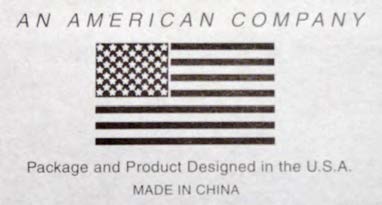
Figure 9.2 : Country of origin label for a product designed in the United States, but manufactured in China
1. The authority of the FDA is based on the Commerce Clause of the Constitution which limits FDA’s authority to interstate commerce. The Supreme Court has interpreted the Commerce clause very broadly to include wholly intrastate activities that may influence interstate commerce. Its 1942 decision in Wickard v. Filburn, In the Supreme Court concluded that a farmer growing wheat in Ohio for on-farm consumption was subject to federal regulation because the total of all the farmers doing that reduced the national demand for wheat. The goal of Congress in enacting the Agricultural Adjustment Act of 1938 was to reduce supply to increase the price that farmers received for their wheat. Acts by farmers that reduced demand undercut the goal of Congress to increase the price of wheat. To translate this into common language, Congress can force you to buy wheat rather than grow your own!
2 Federal Food, Drug and Cosmetics Act, 21 USC §§301, et seq. (2022).
Among the most important of these standards is the Produce Safety Rule created under the authority of the Food Safety Modernization Act, a 2011 amendment to the Federal Food, Drug and Cosmetics Act. The Produce Safety Rule applies to all fruits and vegetables that are likely to be consumed raw. Meat, poultry, eggs, and siluriform fish (catfish and related species) are primarily regulated under standards created and enforced by USDA. Fish that are not siluriformes are regulated under standards created and enforced by NOAA (National Oceanic and Atmospheric Administration) through its Seafood Inspection Program.
On the road with Jim Jones. This video is a brief introduction to the Produce Safety Rule.
Without regard to which agency establishes the standard, FDA retains authority to act in the event of an adulterated food or feed product that has entered the chain of interstate commerce. It is rare, however, for the FDA to act where it does not have primary authority. It usually defers to other federal agencies or the states. Much of the inspection and enforcement under the Produce Safety Rule has been delegated by FDA to states that have adopted programs that meet minimum FDA standards. In states that have established delegated programs, the FDA usually defers to the states. This cooperation between federal agencies and the states ensures that scarce enforcement resources are used efficiently. It allows particular agencies to become specialists in certain areas.
In addition to mandatory standards (regulations, the FDA has for the last 30 years produced the Food Code. It is a manual of best practices that contains current FDA guidance for state, local, and tribal regulatory authorities. Best practices are those practices that FDA has, based upon current science, that are most likely to protect the public from food borne illnesses and other hazards found in food. Other hazards include broken glass and metal fragments, and a wide variety of toxins that include those naturally occurring as well as those synthesized through human activity. What constitutes a best practice is vigorously debated and opinions on what constitutes a best practice differ among agricultural and food professionals. Scientific advances mean that best practices are subject to continual revision. If state, local, or tribal authorities to which participants in the food system are subject adopt provisions of the FDA Food Code, those provisions then become mandatory.

2022 Food Code. This is a model code that was created by the FDA. It provides guidance for all aspects of food production and handling.
Even if FDA guidance is not adopted by a regulatory authority, participants in the US food industry should take them seriously. In any litigation that involves an injury caused by adulterated food, FDA guidance serves as the base line for acceptable practices. It may be that there were good reasons to follow a different practice; however, any entity that chooses a different practice should be able to document and defend that decision.

FDA Good Guidance Practices. Please read the factsheet on the practices that the FDA has determined to be good practices.
The genius of the American federal system is that it tends to push decision-making to the level at which the production, handling, manufacturing, transit, and retailing of food occurs. FDA guidance practice seeks to incorporate this experience and knowledge into the guidance development process. This is done through a public comment process. FDA issues over 100 guidances per year. It behooves those in the food industry to make detailed comments about those practices that have provided the best results. If industry participants fail to comment, the FDA cannot have the information needed to provide the best possible guidance.
The FDA is primarily responsible for establishing the standards for nutritional labeling of food. Labeling standards are complex. Providing the details of those standards is beyond the scope of this book. What goes on a food label can be broken down into what must be on the label, what may be on the label, and what must not be on the label. Statements on labels must not be false. Statements of therapeutic benefits of food generally may not be on the label. Other federal and state agencies also have roles in determining labels. For example, USDA sets the standards for certified organic products. Many states offer voluntary labels that indicate that the product was grown in that state.
FDA coordinates with USDA and the states on food and feed safety. EPA establishes rules for using pesticides and FDA sets tolerances for pesticide residues in food. FDA coordinates with the Food and Agriculture organization of the United Nations (FAO) and the World health Organization (WHO) on international food standards. The Codex Alimentarius is the compilation of these standards. International standards are critical to international trade in agricultural products. The Codex Alimentarius is a collection of guidelines and codes of practice that promote the quality, safety, and fairness of the trade in food. The Codex is referenced in the World Trade organization’s Agreement on Sanitary and Phytosanitary measures (the SPS Agreement). This topic will be addressed in greater detail in Chapter 19 (Export markets – international agreements).
What follows are three examples of the application of grades and standards to specific topics. Two are commodity specific (beef and grains) and one is process specific (organic standards).
Example 9.1. Beef. The USDA Food Safety and Inspection Service (FSIS) is granted primary responsibility for inspection of beef slaughter under the authority of the Federal Meat Inspection Act of 1906 (FMIA). FSIS established standards for beef slaughter and handling. The Humane Methods of Slaughter Act (HMSA) requires that standards for the humane slaughter of cattle be used.

Participate in Creating Standards. FSIS invites the public to participate in creating standards.
Some states have cooperative agreements with USDA under which states conduct federal inspections of beef. Beef from these facilities (called TA (Talmadge-Aiken) Plants after the enabling act) may be sold in interstate commerce. USDA also has oversight over facilities under state inspection programs. Operating standards in these state inspected facilities must be at least as stringent as federally inspected facilities. Beef inspected under state inspection programs may be sold only within the state that conducts the inspection. Due to this limitation only sales, these facilities are small facilities. There are in many states custom slaughter facilities that operate under neither federal nor state inspection. Beef produced in such a facility must be marked as “not for sale”.
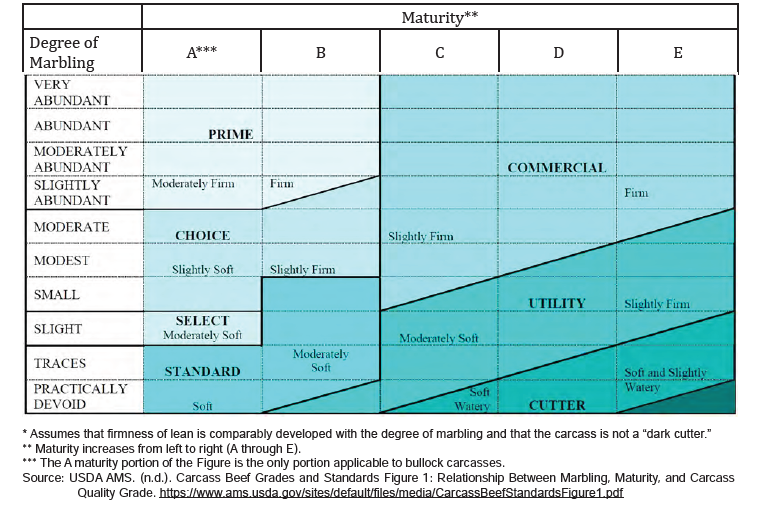
Figure 9.3 : Relationship Between Marbling, Maturity, and Carcass Quality Grade*
Voluntary yield and quality grading of beef carcasses is available through the USDA Agricultural Marketing Service (AMS). This service must be requested through an application process. Fees are charged for this service.
Yield grades are a measure of the portion of the carcass likely to be saleable meat. The more external fat that a carcass has the lower the yield grade. Yield grades run from Yield Grade 1 to Yield Grade 5, with Yield Grade 1 being the highest grade. All other factors being equal, a carcass that grades Yield Grade 1 will sell for more than a carcass with a lower yield grade.
There are 8 quality grades for steers, heifers, and cows, and 5 quality grades for bullocks. Quality grades are 1. Prime, 2. Choice, 3. Select, 4. Standard, 5. Commercial, 6. Utility, 7. Cutter, and 8. Canner. Only five grades, Prime, Choice, Select, Standard, and Utility apply to bullocks. Grades are based upon maturity and marbling. Marbling is intramuscular fat. The greater the marbling the higher the grade. Maturity refers to the age of the animal and is measured by proxy with reference to certain carcass conditions associated with age. Since tenderness declines with maturity, greater maturity is associated with a lower grade. Figure 9.3 illustrates the relationship between marbling, maturity, and carcass grade. Prime is the highest quality grade. It is usually sold through high end restaurants or specialty butchers. Choice grade beef is typically what is sold fresh in retail grocery stores. The Select grade is often found in precooked beef where cooking can mitigate the toughness. Lower grades are typically incorporated into manufactured beef products.

USDA Beef Quality Grading by Dan Hale, Associate Director for Ag and Natural Resources, Texas A&M AgriLife Extension Service
Example 9.2. Grain.
National standards for grain began in 1916 when Congress passed the U.S. Grain standards Act. Initially it was only for corn. Those standards became effective on December 1, 1916. Currently there are standards for barley, canola, corn, flax, mixed grain, oats, rye, sorghum, soybeans, sunflowers, triticale, and wheat. The USDA Agricultural Marketing Service is responsible for both grading grain and setting standards for grain handling.
A high level of skill required to be a grader. Wheat illustrates the complexities associated with this effort. The first step is to determine that the grain being graded is wheat. The legal definition of wheat is:
“Grain that, before the removal of dockage, consists of 50 percent or more common wheat (Triticum aestivum L.), club wheat (T. compactum Host.), and durum wheat (T. durum Desf.) and not more than 10 percent of other grains for which standards have been established under the United States Grain Standards Act and that, after the removal of the dockage, contains 50 percent or more of whole kernels of one or more of these wheats.
Source: U.S. Standards: Subpart M — United States Standards for Wheat (May 2014).
Before one can begin grading, the grader must determine the class of the wheat to be graded. There are eight classes of wheat: Durum wheat, Hard Red Spring wheat, Hard Red Winter wheat, Soft Red Winter wheat, Hard White wheat, Soft White wheat, Unclassed wheat, and Mixed wheat. There are then subclasses for each of these categories as follows: three for Durum wheat, three for Hard Red Spring wheat, three for Soft White wheat, and no subclasses for the remaining five classes. The grader must assess the amount of damaged kernels in a sample of a lot of wheat. Damaged kernels include pieces of wheat kernels, and other grains that are badly grounddamaged, badly weather-damaged, diseased, frost-damaged, heat-damaged, insect-bored, mold-damaged, sprout-damaged, or otherwise materially damaged. Damaged kernels along with foreign matter, and shrunken and broken kernels. Shrunken and broken kernels are defined as those that will pass through a specific size of sieve. The sum of each of these three factors cannot exceed the limit for each grade.
Grading Wheat, Kim Anderson, Oklahoma Cooperative Extension Service.
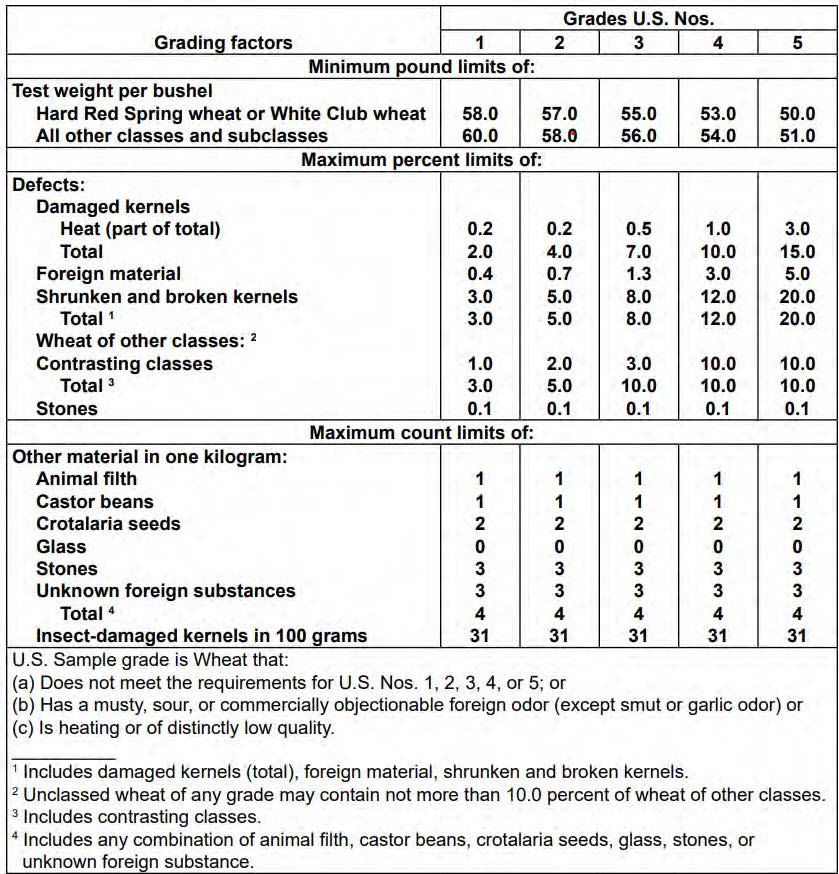
Figure 9.4 : Grades and grade requirements for wheat, except Mixed wheat.
Source: USDA AMS Federal Grain Inspection Service. (2014, May). U.S. Standards: Subpart M — United States Standards for Wheat. https://www.ams.usda.gov/sites/default/files/media/WheatStandards.pdf
There are also special grades and grade requirements for Ergoty wheat, garlicky wheat, Light smutty wheat, Smutty wheat, and Treated wheat. These conditions typically result in rejection of loads of wheat by buyers.
Example 9.3. Organic standards.
At its simplest, the organic standard supports a labeling term that means that the producer of food or other agricultural products has complied with approved methods. It was founded by Sir Albert Howard (December 8, 1873, to October 20, 1947) in the early Twentieth Century a way to restore and maintain soil health. He was British but did most of his most important work in India.

Figure 9.5 : Sir Albert Howard
Howard came to India in 1905 as an Imperial Economic Botanist employed at the Imperial Agricultural Research Institute (IARI) in Bihar. The early Twentieth Century saw increasing use of manufactured fertilizers and toxic chemicals to promote crop growth and control pests and diseases. For example, compounds of arsenic were commonly used to control pests. He noticed that India farmers achieved better results without these chemicals that the British employed on their plantations in India. He began experimenting with employing the methods used by Indian in plantation agriculture. He found his efforts blocked by bureaucratic constraints of the imperial system. In 1924 he accepted an offer from Maharaja Tukojirao Holkar III to head an institute (at Indore) set up by the Maharaja to allow Howard to continue his work. It was there that he developed the Indore Method described in his book, An Agricultural Testament. J.I. Rodale (August 16, 1898, to June 8, 1971) popularized Howard’s work in the United States.
Organic standards began as private standards. With multiple certifiers there was no uniform organic standard within the United States. Without a national standard there was no uniformity within the United States and little possibility of international trade in organic products. With the enactment of the Organic Foods production Act of 1990 (OFPA) that created the National organic program (NOP), local and regional private standards were superseded and replaced with a single national federal standard. It took a decade of contentious debate for USDA to write regulations and establish working standards. The final rule that established the NOP was not issued by USDA Agricultural Marketing Service until December 21, 2000.
Included in the NOP are Crop Standards, Livestock and Poultry Standards, and Handling Standards. Farmers that wish to be certified organic for products generally hire consultants to help with the transition. Many Land Grant University extension services and some state departments of agriculture provide technical support and grants to small producers to establish organic practices. Converting to organic production is a multi-year process – usually 3 to 4 years. Certification is done by third party certifiers that have been approved for this role by USDA AMS. Farmers must generally pay the certifier for this work. Once certification has been completed, farmers can use the certified organic labels approved by USDA AMS.
Private standards
There are many private standards. Some have a narrow focus such as protecting rain forests or ensuring that farmers have been fairly compensated for their products. The gold standard for private certification is the ISO: the International Organization for Standardization. It is a nonprofit organization based in Geneva, Switzerland. It has 162 constituent members. Each one of these constituent members is the sole representative in its home country. The American National Standards Institute is that nonprofit in the United States. The following examples illustrate the two most important ISO standards for agriculture.
ISO Standard Explained | What is ISO | Benefits of getting ISO certified | How to get ISO certified?
Example 9.4. ISO 9000
The ISO 9000 and 10000 series of standards is designed to improve quality management. These series focus on the processes that a company uses. It helps assure customers that a provider can consistently deliver products of the required quality. The different standards in the series include codes of conduct for organization, guidelines for complaint handling, guidelines for dispute resolution with external organizations, guidelines for monitoring and measuring, and guidelines for quality plans as well as others. External auditing is required. Those wishing to adopt this series will generally hire consultants to assist them. This is a generally applicable series. There are also industry specific quality management standards to be used in addition to these series.
Example 9.5. ISO 14000
The ISO 14000 series are the Environment, Health, and Safety Management System Standards. The purpose of these standards is to enhance an organization’s environmental performance. As with the ISO 9000 series this is a process-based standard.
Conclusion
The world of grades and standards can be confusing. A sane way to approach this is to determine what your customers want. Often, they will tell you. If they don’t you should ask. Once you know what your customers want you must ask if you can profitably adopt the standard.
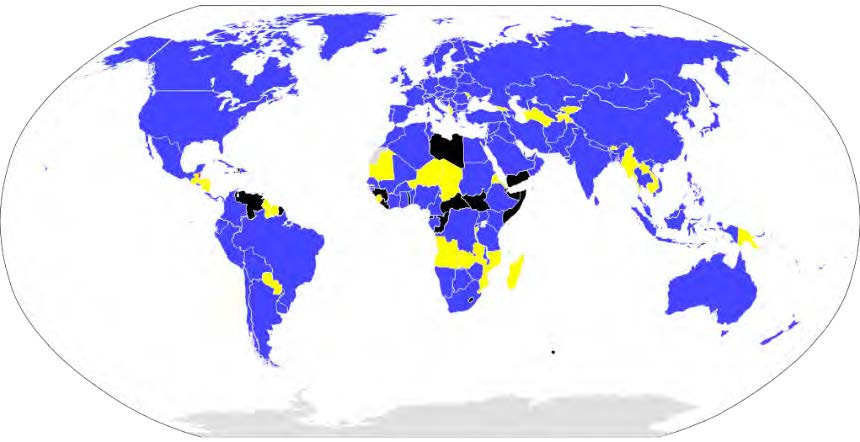
Figure 9.6 : A map of ISO members as of November 2020
ISO member countries with a national standards body and ISO voting rights Correspondent members (countries without a national standards body) Subscriber members (countries with small economies)
The market for certified organic products has for some time been among the fastest growing agricultural markets. Despite the time frame and the cost of certification, many farmers have found that it opens valuable new markets. Meeting standards required for export to countries such as those in the European Union can be expensive and time-consuming but is often worthwhile if domestic markets do not offer growth opportunities.
Grades differ from standards in that grades are usually independently verifiable whereas standards are often not. A buyer may do their own grading. If the grade is lower than the seller stated, they should certainly inquire and may reject the load if not satisfied. Once a buyer establishes a working relationship with a seller, it may not be necessary to do one’s own grading on a regular basis.
Standards usually depend upon third party verification. There is an inherent conflict in the process because the seller is usually the party that pays the third-party verifier. For established standards such as ISO standards, verification is usually of high quality. If a buyer is going to rely on a standard it is often a good idea to make a site visit to a supplier. If the buyer is planning to buy a large quantity of product, most sellers will be eager to offer a site visit. The refusal to offer a site visit is important information in itself. Grades and standards are an important part of the marketing effort but are certainly not all of it.
Example 9.6. Variation within grade
Benson operated a feed mill in Florida. He sought to produce the highest quality cow-calf feed in Florida. He found that the amount of grain dust varied within a grade of corn. Due to environmental conditions, grain grown in southern states tended to have more dust than that grown farther north. He found that grain dust reduced the palatability of his feed. Benson solved the problem by finding a grain dealer in Minnesota who would set aside low dust corn for him and ensure that the rail cars were cleaned prior to loading. For this service he paid the dealer a little above the market price for corn of top grade.
References
Addison, K. (n.d.). Albert Howard. Journey to Forever. https://journeytoforever.org/farm_library/ howard.html
Bickell, E. G. (2020, February 7). The National Bioengineered Food Disclosure Standard: Overview and Selected Considerations. Congressional Research Service. https:// crsreports.congress.gov/product/pdf/R/ R46183
Chite, R. M., Buck, E. H., Canada, C., Cody, B. A., Copeland, C., Corn, M. L., Cowan, T., Foote, B. E., Gorte, R. W., Hanrahan, C. E., Jurenas, R., Lister, S. A., McCarthy, J. E., Monke, J., Porter, D. V., Richardson, J., Schierow, L., Schnepf, R., Tiemann, M., and Yacobucci, B. D. (2005, June 16). Agriculture: A Glossary of Terms, Programs, and Laws, 2005 Edition. Congressional Research Service. https://crsreports. congress.gov/product/pdf/RL/97-905
Doctor, V. (2023, October 8). How 19th-century British botanist Albert Howard changed the world with an Indian secret in soil health. The Economic Times. https://economictimes. indiatimes.com/magazines/panache/how- 19th-century-british-botanist-albert-howard- changed-the-world-with-an-indian-secret- in-soil-health/articleshow/104252085. cms
FDA. (2023, November 7). 2022 Food Code. U.S. Food and Drug Administration. https://www.fda.gov/food/fda-food-code/foodcode- 2022
FDA. (2023, December 18). Chemical Contaminants & Pesticides. https://www.fda.gov/food/ chemical-contaminants-pesticides
FDA. (2017, December 4). Fact Sheet: FDA Good Guidance Practices. https://www.fda.gov/ about-fda/fda-transparency-initiativeoverview/ fact-sheet-fda-good-guidancepractices
FDA. (2023. September 27). The Nutrition Facts Label. https://www.fda.gov/food/nutritioneducation- resources-materials/nutrition-factslabel
FDA. (2024). Food. https://www.fda.gov/food
Federal Meat Inspection Act (FMIA). 34 Stat. 1260 (21 U.S.C. §§ 601 – 695 (2023)).
FAO/WHO. (2024). Codex Alimentarius. https:// www.fao.org/fao-who-codexalimentarius/ en/
Humane Methods of Slaughter Act (HMSA). Pub. L. 95-445 (7 U.S.C. §§ 1901 et seq. (2023)).
International Standards Organization. (2024). Standards. ISO. https://www.iso.org/standards. html
NOAA. (n.d.). Seafood Inspection Program. https:// www.fisheries.noaa.gov/insight/noaasseafood- inspection-program
Rodale Institute. (n.d.). About Rodale Institute. https://courses.rodaleinstitute.org/p/about
USDA AMS. (n.d.). Carcass Beef Grades and Standards. https://www.ams.usda.gov/ grades-standards/carcass-beef-grades-andstandards
USDA AMS. (n.d.). Grades and Standards. https:// www.ams.usda.gov/grades-standards
USDA AMS Federal Grain Inspection Service. (2023, July 19). Directive: grain handling practices. https://www.ams.usda.gov/sites/ default/files/media/FGIS9070_5.pdf
USDA AMS Federal Grain Inspection Service. (1998, April). U.S. Standards: Historical compilation of Changes in the Grain Standards of the United States. https://www.ams.usda.gov/sites/default/ files/media/GrainHistory.pdf
USDA AMS Federal Grain Inspection Service. (2014, May). U.S. Standards: Subpart M — United States Standards for Wheat. https:// www.ams.usda.gov/sites/default/files/media/ WheatStandards.pdf
USDA AMS. (Various dates for individual standards). Grain Standards. https://www.ams. usda.gov/grades-standards/grain-standards
Wickard v. Filburn, 317 U.S. 111 (1942) https:// www.law.cornell.edu/supremecourt/ text/317/111