


Chapter 17: Local Food Markets
Local Food Markets
Generally speaking, local food is food that travels the entire supply chain (from production to consumption) in the same locality. What is considered local is highly dependent on geography. In cities like New York, food may be considered local only if it is grown and sold within a certain neighborhood, whereas Alaskans may consider food local if it was grown within a couple hundred-mile radius. Because there is no federally established definition, the meaning of “local food” can vary substantially between state and local governments, nonprofit organizations, and the private sector.
From The National Agricultural Law Center website
In recent years there has been renewed interest in local agriculture. There are a variety of reasons for this. USDA’s website lists benefits to communities that include “support for local farmers, job creation, economic diversification, attracting reinvestment and growth, keeping food dollars within the local economy, and reducing food insecurity.” For the individual consumer, benefits include fresher, better tasting food, access to varieties and foods not commercially available, a reduced carbon footprint, recreational opportunities, and participation in efforts to support the aesthetic benefits of open land by keeping land in their communities in farming. Better food safety and more nutritious food are often cited by consumers as reasons for seeking local food. Whether or not local food is safer or more nutritious than commercially produced food is a contentious issue. Each of these issues deserves more discussion that is set forth briefly in the paragraphs below.
There remains in the United States a romantic notion that contributes to support for local farmers. This support is subjective and often highly selective, e.g., it does not extend to large hog farms. There are practical reasons for supporting local agriculture. Land in farming is often more aesthetically pleasing than a few more blocks of houses or commercial development. Farmland, depending upon the type of farming, offers benefits to water quality when compared with typical urban hard surfaces. Local farms can contribute to food resiliency, discussed further below.
Local agriculture, at least those farms near urban areas, tend to focus on high value crops that are labor intensive. Many of these jobs are seasonal and suitable for teenagers. It is not hard to find people with fond memories of working on farms when they were high school students. Parents see this as a more wholesome activity than many of the other activities in which high school students engage. There are off-farm jobs created among suppliers, processors, farmers markets and other players in the chain of commerce that bring fam products to the consumer.
People want to invest in communities that are attractive. To the extent that local agriculture contributes to this, it can be an important part of attracting reinvestment in communities and promoting growth. To the extent that a community is dependent on few or even a single industry local agriculture can provide some, albeit probably limited, economic diversification. Keeping dollars in the community works well as a slogan. That it has economic substance is a more dubious proposition. Economic theory does not support it. Economic theory suggests that specialization and trade promote greater wealth.
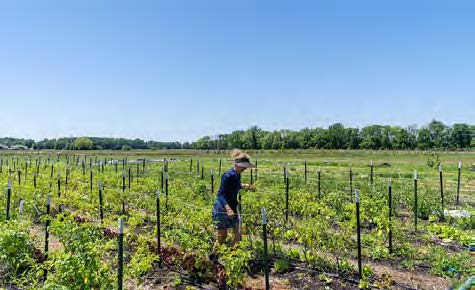
Figure 17.1 : A US Local Farm
Reducing food insecurity can be an important benefit of local agriculture. This was evident during the COVID-19 pandemic when supply chains were disrupted. Local agriculture can contribute fresh fruits and vegetables which are lacking in the diets of many people. More recently the summer of 2024 saw near starvation conditions on some Indian reservation due to a breakdown in the system that the federal system for delivering food to the needy on tribal lands.
Locally produced food is often better tasting than commercially available food. Without the need to travel great distances it may taste better simply because it takes less time to reach the consumer. It is also possible to provide the consumer with varieties and products that do not ship well. Interstate commerce in agricultural products depends on varieties that can travel great distances and not spoil or look bad. The compromise in focusing on stability in transit is that some flavor is inevitably given up.
Example 17.1. Barry and Edith went to Hilo on the island of Hawai’i for a vacation. They were astounded at the variety and flavors of bananas available in the local farmers’ market. The farmer from whom they bought bananas told them that they should eat the bananas in a day or two because they would not keep. He explained that he picks the bananas that he plans to sell in the morning before he comes to the market. He explained that the variety of banana that they buy in the mainland is almost entirely the Cavendish type. It is valued because it can be picked unripe, shipped long distances, and then allowed to ripen.
Reductions in carbon footprint associated with local agricultural are closely related to the reduced distance that the food must travel. Local agriculture offers recreational opportunities in the form of agritourism. The forms that agritourism takes are varied. Examples range from pick-your own operations to ‘dude’ ranches that provide an encompassing experience that includes overnight facilities.
There is no evidence that local agriculture improves food safety. There have been outbreaks of foodborne illness that arose from eating local food. Because a single outbreak typically affects few people it is harder to track than outbreaks caused by products of large producers.
Since local food is generally fresher than food produced on larger farms, it has less opportunity to lose nutrients. Whether it is inherently more nutritious than food produced on large conventional farms is an open question. That question has been debated since the days of Sir Albert Howard (who pioneered organic agriculture in the early 20th Century).
DEFINING LOCAL FOOD
There is no federal statutory definition of local food. Section 105 of the Food Safety Modernization Act (FSMA) provides a conditional exemption from on-farm regulation for farms engaged in direct sales. The farms must sell less than $500,000 in farm products in any of the previous three years and customers must be in the same state or within 275 miles of the farm. This definition is limited to FSMA and likely does not encompass some activities that many would see as encompassed in local foods. Some states do have statutory definitions of local food; however, there is significant variation in these definitions from one state to another.
LOCAL FOOD POLICY COUNCILS
There are over 300 food policy councils at the state and local levels of government. These councils work in three areas: programs, policy, and partnerships. The Johns Hopkins Center for a Livable Future has established the Food Policy Networks to connect the many local food councils.
THE STRUCTURE OF LOCAL AGRICULTURE.
There are a variety of structures that support local agriculture. Individual producers may use one or more of these structures.
Pick Your Own Farm Tour
This is one of the oldest and simplest structures for local agriculture. It is a form of direct marketing. The pick-your-own operations can range from honor system operations with a single crop to large operations with multiple products that include pre-picked options. The former includes a sign with the price and a jar for payment. This is not uncommon in rural areas. The larger operations have multiple crops and staff that direct customers to the areas to be picked. The staff will assist novices with the proper way to pick the crop. There is usually a weighing station and cashier. These operations typically take credit cards. Some take SNAP EBT cards. For those customers short of time or otherwise not inclined to pick their own there is sometimes an option to buy product that has been pre-picked for their convenience.
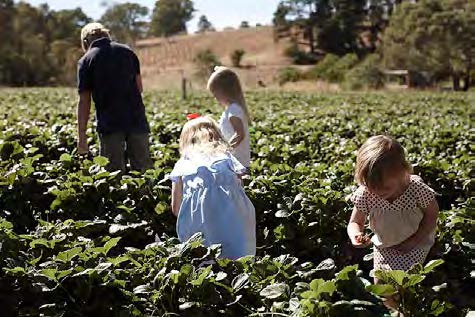
Figure 17.2 : A Pick Your Own Farm
COMMUNITY SUPPORTED AGRICULTURE (CSA)
CSAs are organizations that provide risk sharing between farmers and consumers. It, like pick-yourown, is a form of direct marketing.
AGRITOURISM
Agritourism combines agriculture and tourism. There are a wide range of activities that constitute agritourism. Farms that serve as wedding venues are an example. Corn mazes are another example. There are many more. Agritourism can convert a farm that is unprofitable in conventional agriculture to one that can support a family and the families of employees.
Location is very important. Farms near urban areas are ideal for agritourism. Farms in isolated rural areas do well only if they have something unique to offer. That might be the location, e.g., in a mountainous area, or an activity that attracts people, such as a ‘dude’ ranch or big game hunting experience. Owners of agritourism businesses must work well with people and have tolerance for a complex regulatory environment.
Many of the regulatory exemptions applicable to agriculture do not apply to agritourism. This is true in every area of regulation. Areas of particular concern are land use and zoning, treatment of animals, food and lodging, taxation (property, income, business, sales, and others), labor, and Figure 17.2: A Pick Your Own Farm tort liability.
Example 17.2. SK Noel owned a Christmas tree farm in western North Carolina. SK was able to buy land in Tennessee bordering his North Carolina farm. It was already planted in Christmas trees that were ready to sell. That Christmas season was one of his best. SK added tours of the farm free to any customer that bought a tree. It worked extremely well as a promotion.
SK was able to hire the seasonal labor that he needed although everyone still had to work many hours of overtime. He was grateful that the federal Fair Labor Standards Act (FLSA) exempted farmers like himself from paying time and a half for overtime.
In late January, he received a letter from a Nashville lawyer demanding that he pay his temporary laborers for their overtime during the Christmas season. He went to show the letter to his own lawyer. His lawyer asked to see SK’s records. SK was able to provide his records to his lawyer. When his lawyer looked at the records he asked, “Do you have anything more than this weekly record of hours worked and amounts paid?” “No.” said SK. “That’s not good” his lawyer replied. His lawyer explained that the exemption applies to Christmas tree farms only in the 4th Circuit as the result of a 4th Circuit opinion. In the rest of the United States, overtime rules apply to Christmas tree workers because they are not considered engaged in agriculture. His lawyer further explained that for purposes of determining overtime pay, if any time worked is nonexempt then all of the work in that calendar week is nonexempt. His attorney advised paying the amount demanded. He also suggested that SK set up a system for tracking where his seasonal labor was working.
Tort liability is a thorny issue for agritourism businesses. Most states have statutes designed to reduce the liability of agritourism businesses. Agritourism operators should do what is necessary to be covered by the statute, e.g., posting the statutorily required signage. Some states have separate statutes that cover equestrian activities. Agritourism operators should not rely on these statutes. Adequate insurance coverage is essential. Since coverage of agritourism is a specialty insurance, most insurance companies do not write coverage in the area. State and local agritourism associations can be a good source of information about which brokers provide the coverage.
URBAN FARMING
Urban farming is not new but is having a resurgence. Provisions in the 2018 Farm Bill have helped. Eleanor Roosevelt promoted Victory Gardens during World War II. It is probably the most famous example of urban agriculture. Farm to school programs have urban agriculture and agritourism components that include school gardens. These gardens have an educational benefit. They help students understand where their food comes from and how fresh food tastes.
PERMACULTURE
Permaculture fits well in a local agricultural system; however, it can be used in other agricultural systems. It has the advantage that it minimizes soil disturbance. Benefits include reduced soil loss and improvement in soil tilth. For urban agriculture it can be combined with aesthetic benefits that make it suitable for use in urban areas where appearance is important.
There is work to make it suitable for larger scale agricultural systems. Work on perennial grain crops being done by the Land Institute as well as others has shown promise.
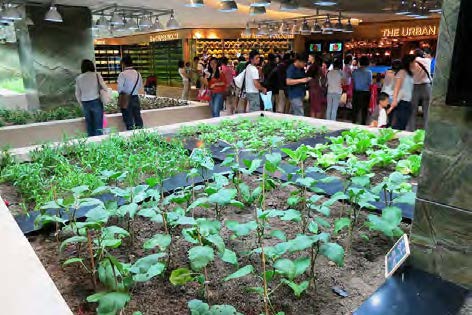
Figure 17.3 : Shanghai Urban Farming Demo
REFERENCES
Brasch, B. (2024, September 5). ‘Indian Country is hurting:’ How feds failed Native American food program. The Washington Post. https://www.washingtonpost.com/nation/ 2024/09/05/native-american-foodfdpir- shortage/
Condra, A. (2013, August). Cottage Food Laws in the United States. Harvard Law School Food Law and Policy Clinic. https://chlpi.org//wpcontent/ uploads/2013/12/FINAL_Cottage- Food-Laws-Report_2013.pdf
Food and Nutrition Information Center (FNIC), Agricultural Law Information Partnership, and Alternative Farming Systems Information Center (AFSIC). (n.d.) Local Foods and Communities. USDA National Agricultural Library. https://www.nal.usda.gov/humannutrition- and-food-safety/local-foods-andcommunities
Food Policy Networks. (n.d.). Johns Hopkins Center for a Livable Future. https://foodpolicynetworks. org/about-the-food-policy-networks
King, R.P., Hand, M. S., DiGiacomo, G., Clancy, K., Gómez, M. I., Hardesty, S. D., Lev, L., and McLaughlin, E. W. (2010, Jume). Comparing the Structure, Size, and Performance of Local and Mainstream Food Supply Chains. ERR 99, U.S. Department of Agriculture, Economic Research Service. https://www.ers.usda.gov/ publications/pub-details/?pubid=46407
Martinez, S., Hand, M. S., Da Pra, M., Pollack, S., Ralston, K., Smith, T., Vogel, S., Clark, S., Lohr, L., Low, S., and Newman C. (2010, May). Local Food Systems: Concepts, Impacts, and Issues. ERR 97, U.S. Department of Agriculture, Economic Research Service. https://www.ers.usda.gov/webdocs/publications/ 46393/7054_err97_1_.pdf?v=0
Minnesota Institute for Sustainable Agriculture (MISA). (2024). Come & Get It: What You Need to Know to Serve Food on Your Farm. https:// misa.umn.edu/publications/come-get-itwhat- you-need-know-serve-food-your-farm
The Land Institute. (2024). Transforming Agriculture, Perennially. https://landinstitute.org/
The National Agricultural Law Center. (n.d.). Local Food Systems: An Overview. https://nationalaglawcenter. org/overview/local-food/
The National Agricultural Law Center. (2023). Publications: Local Food Systems. https://nationalaglawcenter. org/center-publications/ localfood/
National Agricultural Library. (n.d.). Agritourism. https://www.nal.usda.gov/human-nutritionand- food-safety/local-foods-and-communities/ agritourism
National Agricultural Library. (n.d.). Community Supported Agriculture. https://www. nal.usda.gov/farms-and-agricultural-production- systems/community-supportedagriculture
National Agricultural Library. (n.d.). Food Composition. https://www.nal.usda.gov/humannutrition- and-food-safety/food-composition
National Agricultural Library. (n.d.). Food Security. https://www.nal.usda.gov/human-nutritionand- food-safety/food-security National Agricultural Library. (n.d.). Local Foods and Communities. https://www.nal.usda. gov/human-nutrition-and-food-safety/localfoods- and-communities
National Agricultural Library. (n.d.). Nutrition Security. https://www.nal.usda.gov/humannutrition- and-food-safety/nutrition-security
NCAT ATTRA. (2024). Farm to School. https://attra. ncat.org/topics/farm-to-school/ NCAT ATTRA. (2024). Local Food Systems. https:// attra.ncat.org/local-food-systems/
NCAT ATTRA. (2024). Permaculture. https://attra. ncat.org/topics/permaculture/
NCAT ATTRA. (2024). Urban Agriculture. https:// attra.ncat.org/topics/urban-agriculture/