


Chapter 20: Export Markets – Export Promotion and Support
Export Markets – Export Promotion and Support
I think what was important is a new opportunity that we created as a result of a creative use of the Commodity Credit Corporation resources we’ve established a regional agricultural promotion program, and it’s really designed to focus on maybe some of the second-tier ag market opportunities. You know we do a lot of trade with China, with Mexico and Canada but there’s the other opportunity to diversify as you well know. You’ve traveled and you talked to the many, many countries – tremendous opportunity in Southeast Asia, tremendous opportunity in other parts of the world so establishing this billion-dollar commitment to provide resources to expand promotion, expand presence, expand opportunities in these second and third tier countries I think would probably be the most important thing that happened in 2023 from our perspective … (edited for clarity)
Secretary of Agriculture Tom Vilsack (Secretary Vilsack and Ambassador Tai Talk Ag Trade. April 2, 2024)
Federal departments involved with agricultural trade include USDA, the Department of Commerce, and the Department of State. This chapter discusses the various federal and state agencies involved in the promotion of international trade in agricultural products. The above quote from the video provided illustrates the high-level support in the Federal government for promotion of U.S. agricultural exports. The chapter focusses on federal departments and agencies followed by a brief discussion of the state role in promoting agricultural trade.
Secretary Vilsack and Ambassador Tai Talk Ag Trade
AGENCIES OF THE U.S. DEPARTMENT OF AGRICULTURE (USDA)
This section examines the export promotion activities of USDA agencies. These activities including operating export promotion programs, providing education about necessary certifications and in some instances providing the certifications, compiling and analyzing trade data, and providing inspections within foreign countries prior to export to the U.S.
The Foreign Agriculture Service (FAS) collects market intelligence through its relationships with groups abroad. FAS embassy staff in embassies around the world are uniquely placed to develop these relationships that facilitate information gathering. FAS employees in U.S. embassies benefit from having diplomatic status. FAS staff work with the staff of the USDA Economic Research Service (ERS) to develop reports of use to the U.S. agricultural export community. FAS and ERS jointly publish the quarterly Outlook for U.S. Agricultural Trade. The FAS publishes many country reports that are useful to U.S. agricultural exporters. More information on the FAS is provided in a separate section later in this chapter.
The ERS provides analysis of crop situations domestically and in export markets in conjunction with the FAS. Data on crop conditions is collected domestically by the USDA National Agricultural Statistics Service. Data on crop conditions abroad is collected by the U.S. Central Intelligence Agency (CIA) through its extensive network and through analysis of satellite photographs. The CIA’s The World Factbook is a comprehensive source of information on countries and entities outside of U.S. territory.

Please view The World Factbook.
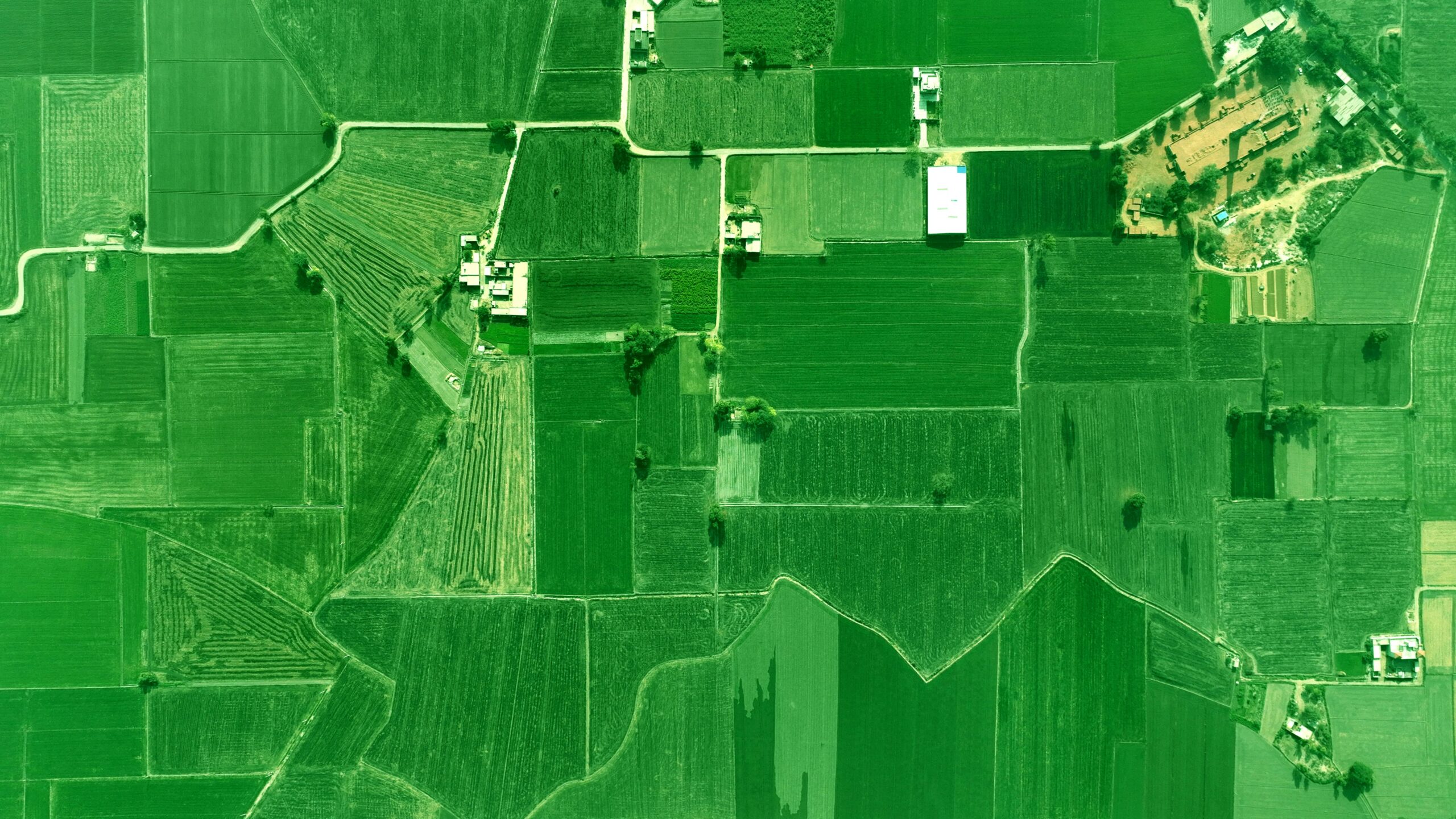
Figure 20.1 : Satellite imagery of crops
The USDA’s World Agricultural Outlook Board (World Board) coordinates the above efforts. The World Board staff includes meteorologists as a result of the 1972 ‘Great Grain Robbery’. The Great Grain Robbery motivated the creation of the CIA’s capacity to produce crop reports on foreign countries. The so-called Great Grain Robbery refers to the enormous purchases of grain that the former Soviet Union made in 1972. The Soviet Union had a major crop failure that year that was caused by drought. The drought was unknown to the rest of the world. By making purchases in secret through intermediaries the Soviet Union was able to purchase an enormous amount of grain at low prices. The Soviets outsmarted both the private grain trade and the governments of the world’s major grain producing countries. These purchases left both private users of grain and governments without adequate reserves. The U.S. government initiated the effort to develop better intelligence on foreign production. The CIA’s satellite data analysis began modestly with a joint project with USDA. Initial work was done at the at the USDA Agricultural Research Service (ARS) facility at the Beltsville Agricultural Research Center. The ARS has done work including development of varieties suitable for export that have contributed to promoting U.S. agricultural exports.

Listen to the USDA podcast on the Great Grain Robbery.
The initial satellite work involved taking pictures of crops under various conditions using a camera and a step ladder.1 These pictures could then be compared to satellite images taken at the same time and of the same fields. From that modest beginning a database was developed that could be used to interpret the information in satellite images. The country crop reports that the CIA develops are often better than the information that the surveilled countries themselves have.
The USDA Agricultural Marketing Service (AMS) provides both import and export certifications that importers and exporters require. The AMS National Organic Program (NOP) provides NOP Import Certificates to importers of certified organic products. AMS administers the ‘Section 8e Import’ regulations that ensure certain fruits, vegetables, and specialty crops entering the United States meet quality standards. It inspects shell egg imports to ensure that imports meet U.S. quality standards.
For exports, AMS administers Export Apple Act and Export Grape and Plum Act standards that apply to covered fruits. The AMS Marketing Order & Agreements Division (MOAD) administers these regulations and others related to the export of products subject to marketing orders. AMS MOAD ensures that exports of products subject to marketing orders meet quality standards. This is important to support export matters because it ensures that U.S. exports meet high quality standards, an important aspect of maintaining a healthy export market.
1 Author’s personal knowledge.
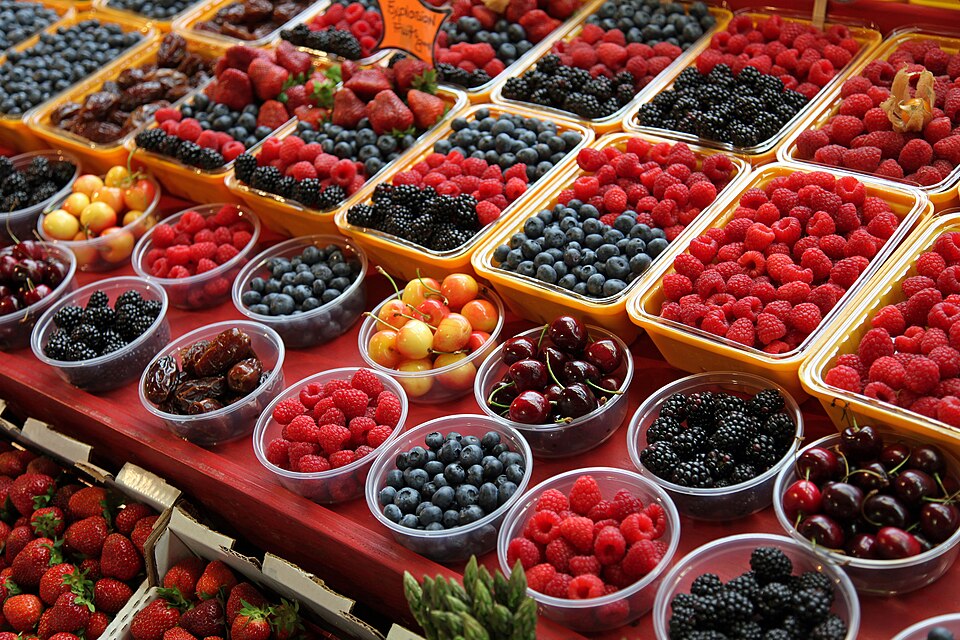
Figure 20.2 : Specialty crops

Please view this page for a review of USDA marketing orders that were first discussed in Chapter 8.

This webinar discusses the application process for those interested in exporting products subject to marketing orders. The webinar runs for about an hour and a half.
For exporters of certified organic products, AMS provides auditing and accreditation services. This ensures that products meet the standards of recipient countries. The program is based on ‘International Organization for Standardization (ISO) Standards and/or Hazard Analysis and Critical Control Point (HACCP) Principles and Guidelines.
The USDA Animal and Plant Health Inspection Service (APHIS) provides a variety of essential international services. Some of these relate to imports. Most of these services are designed to protect U.S. agriculture from diseases and invasive species. The four categories related to exports include: live animal exports, animal product exports, plant and plant product exports, and opening new markets for U.S. plant commodities.
In addition to live animals, APHIS offers assistance with exporting hatching eggs, and germplasm (semen, embryos, oocytes). The APHIS website has a tool that allows exporters to easily find recipient country’s regulations governing imports of live animals.

Pick a country and a type of live animal that you wish to export. Use the APHIS tool to find the requirements for export to that country.
APHIS has a similar web-based service for exports of animal-based products. Since the importing country’s regulations can change without notice, it is best to check certification requirements with the Ministry of Animal Health in the importing country prior to shipment. Sometimes shipments are held in port in importing countries. If the required certificate was not obtained prior to shipment, most countries will not accept certificates after the product has been received in port. If there are questions about the certificate, APHIS can sometimes help. Many countries have preclearance programs. Use of these programs can avoid costly holdups at the border.
For plant and plant product exports, APHIS provides information about exporter responsibilities and certifications. APHIS also maintains a database of importing country requirements. APHIS provides a service to help exporters open new markets. APHIS’ Plant Protection and Quarantine (PPQ) program is the recognized National Plant Protection Organization (NPPO) for the United States. NPPOs are available in each country that is a member of the International Plant Protection Convention (IPPC). The IPPC is another example of a multilateral treaty. Multilateral treaties (also called conventions) were discussed in Chapter 19.
FAS PROGRAMS
This section discusses the various programs that FAS operates to promote U.S. agricultural exports. It is a popular misconception that only large agribusinesses or large farms have the resources to export. Even the smallest farm can export. All of these programs depend upon annual funding from Congress, unless authorized to receive funding from the Commodity Credit Corporation (CCC). FAS programs fall into the following categories: market development, food security, fellowships and exchanges, export financing, and export monitoring. FAS also operates several programs that focus on imports. FAS operates the program that limits sugar imports as part of the effort to support domestic sugar producers that is discussed in Chapter 7. It operates a program that helps support domestic milk producers (domestic milk support is discussed in Chapter 8).
Market Development
The Agricultural Trade Promotion Program (ATP) provides export promotion support to all agricultural sectors including producers of fish and forest products. It is a cost-share program that distributes funds to eligible organizations for activities that include consumer advertising, public relations, point-of-sale demonstrations, participation in trade fairs and exhibits, market research, and technical assistance.

The Unified Export Strategy (UES) allows applicates applicants to submit one application to multiple FAS market development programs with a single application.
The Assisting Specialty Crop Exports (ASCE) initiative is designed to break down non-tariff barriers to U.S. exports of specialty crops such as fruits and vegetables, tree nuts, and horticultural crops. The ASCE initiative includes responding to new regulations restricting plastics and packaging. The ASCE initiative seeks to help U.S. exporters understand the mechanics of exporting and navigate foreign standards, certifications, and import requirements, including maximum residue limits (MRLs) for pesticides used on specialty crops. The ASCE initiative assists importing countries with adopting international standards and harmonizing import regulations.
The Emerging Markets Program (EMP) helps develop markets in countries with existing or developing market-oriented economies. Costshare is provided to support activities that include feasibility studies, market research, sectorial assessments, orientation visits, specialized training and business workshops.
Under the Foreign Market Development (FMD) Program FAS partners with the non-profit commodity or trade associations that represent producers and processors. The purpose is to expand and maintain U.S. export markets for agricultural products. The funds provided by FAS may support reducing infrastructural or historical market impediments, improving, processing capacity, modifying codes and standards, and identifying new markets or new uses for U.S. agricultural products.
The Market Access Program (MAP) provides cost-share funds to organizations that help support consumer advertising, public relations, point-of-sale demonstrations, participation in trade fairs and exhibits, market research, and technical assistance. The Regional Agricultural Promotion Program (RAPP) seeks to expand markets beyond the traditional base of countries that purchase U.S. agricultural products.
The Quality Samples Program (QSP) is designed to help U.S. producers and processors with putting samples of their products in the hands of foreign processors and manufacturers. The QSP makes it possible for even small volume specialty exporters to get samples of their products to potential foreign users.
Fellowships And Exchanges
The Borlaug Fellowship Program, the Embassy Science Fellows Program and the Cochran Fellowship Program provide training to those in importing countries. The Faculty Exchange Program supports university-level visiting faculty from developing countries participateion in programs at U.S. universities. The International Agricultural Education Fellowship Program helps U.S. citizens with assisting developing countries with establishing school-based agricultural education and youth extension programs.
The Scientific Cooperation Exchange Program supports exchanges of scientific and technical teams of experts between the United States and China. The Scientific Cooperation Research Program supports joint research, education and extension projects between U.S. agricultural professionals and agricultural professionals from other countries. This program is not limited to specific countries. The Scientific Exchange Program supports training opportunities between U.S. scientists and foreign agricultural professionals.
Food Security
The Bill Emerson Humanitarian Trust provides a reserve to help countries facing food emergencies. The Food for Progress program supports donations of U.S. commodities to developing countries. It provides indirect support to producers by expanding the use of U.S. products. The hope is that the countries that receive donations will eventually be able to import U.S. commodities. The Food Safety for Food Security Partnership is designed to help countries improve the health of animals and plants and improve systems that support food safety. The Local and Regional Food Aid Procurement Program is designed to provide emergency food assistance where needed abroad. The McGovern-Dole Food for Education Program is focused on primary education to reduce hunger and improve literacy.
Export Financing
Export financing is critical to the success of most exporters, including the very largest. Export financing is considered risky for lenders. It is a highly specialized business. What export lenders are doing is taking on the risk of buyers’ default on their obligation to pay the exporter. The tool for doing this is often a specialized (irrevocable) letter of credit. The exporter pays a fee to the lender to issue the letter of credit. If the importer fails to pay the exporter, the lender pays the exporter under the terms of the letter of credit. The exporter’s right to sue the importer is subrogated to the issuer (the lender) of the letter of credit. The lender then seeks payment from the importer through various means including legal action.
The GSM-102 program (Export Credit Guarantee Program) provides guarantees to reduce export lender risks. It is available to exporters of high-value, consumer-oriented, processed products such as frozen foods, fresh produce, meats, condiments, wine and beer; intermediate products such as hides, flour and paper products; and bulk products such as grains, oilseeds and rice.

Figure 20.3 : Export Credit Guarantee Program Team FAS
The Facility Guarantee Program (FGP) provides loan guarantees to improve infrastructure in countries where inadequate infrastructure limits the ability to import U.S. agricultural products. The USDA Commodity Credit Corporation (CCC) is the source of funds that back these guarantees.
Export Monitoring
The Export Sales Reporting Program provides timely information on U.S. exports. Exporters are required to report quantities exported of the following commodities: barley, cottonseed oil, soybeans, beef, flaxseed, soybean cake and meal, cattle hides and skins, grain sorghum, soybean oil, cattle wet blues (chrome-tanned leather), linseed oil, sunflower seed oil, corn, oats, wheat (by class), cotton (by type), pork, wheat products, cottonseed, rice (by class), cottonseed cake and meal, and rye. FAS publishes these statistics every Thursday by 8:30 ET, except when a federal holiday falls on a Monday or Friday. In that case, the publication of the report is on the following Friday. The FAS compares and reconciles its data with that published by USDA’s Federal Grain Inspection Service, the U.S. Census Bureau, and trade report

Both current and past FAS weekly export sales reports can be viewed at this site.
U.S. DEPARTMENT OF COMMERCE
The International Trade Administration (ITA) of the United States Department of Commerce provides comprehensive trade statistics and promotes U.S. exports. The ITA provides export solutions including training and assistance with resolving export problems.
U.S. SMALL BUSINESS ADMINISTRATION
The U.S. Small Business Administration (SBA) is an independent federal agency that can help qualifying small businesses with exporting. It can provide export and trade assistance, help with finding international buyers, and export financing. It provides up to a 90% guarantee on export loans from private lenders.

Please view the SBA Office of International Trade.
THE OFFICE OF THE U.S. TRADE REPRESENTATIVE (USTR)
The Office of the U.S. Trade Representative (USTR) is part of the Executive Office of the President. The USTR is charged with coordinating all of the other agencies and departments involved in supporting and promoting U.S. trade. It plays a key role in negotiation of all treaties involving trade.
U.S. DEPARTMENT OF STATE
The U.S. Department of State issues passports and visas and engages in other activities critical to U.S. exports. The State Department is responsible for coordinating various clearances involving issues such as national security required before exports can be made. It is involved in the process of negotiating treaties. It maintains the embassies in foreign countries that house and support FAS staff.
STATE GOVERNMENTS
State governments, usually but not always, through their departments of agriculture issue phytosanitary certificates and other documentation necessary to support agricultural exports. States governments through their departments of agriculture, commerce departments and other agencies provide technical assistance to exporters and identify potential markets. Some states send delegations to potential buyers in foreign markets. While states do not have constitutional authority to negotiate treaties, their delegations are often very helpful in promoting agricultural and other exports.
References
ISO. (2024, November 28). ISO: Global standards for trusted goods and services. https://www. iso.org/home.html
International Trade Administration. (2024). The International Trade Administration (ITA) is your U.S. government resource for competing in the global marketplace. https://www. trade.gov/
Kenner, B., Jiang, H., Kaufman, J., and Williams, A. (2024, November 26). Outlook for U.S. Agricultural Trade: November 2024. AES- 130, Economic Research Service and Foreign Agricultural Service. https://www.ers.usda. gov/webdocs/outlooks/110521/aes-130. pdf?v=8333.2
Small Business Administration. (2024, October 31). Export products. https://www.sba.gov/businessguide/ grow-your-business/export-products
Myers, L. (2024, September 20). Researching Treaties and International Agreements. Library of Congress Research Guides. https://guides.loc.gov/researching- treaties-and-international-agreements
The Office of the U.S. Trade Representative (USTR). (2024). Mission of the USTR. https://ustr. gov/about-us/about-ustr
Trager, J. (1975, January 12). The Great Grain Robbery. Ballantine.
U.S. Central Intelligence Agency. (2024). The World Factbook. https://www.cia.gov/the-worldfactbook/
USDA Animal and Plant Health Inspection Service. (2024). Trade Contacts. https://www.aphis. usda.gov/contact/trade?filter=ask+about+e ndorsing+an+animal+product+export+certi ficate%2C+schedule+an+animal+product+e xport+facility+inspection%2C+or+related+ questions#comp-21256
USDA Animal and Plant Health Inspection Service. (2024). Trade. https://www.aphis.usda.gov/
USDA Agricultural Marketing Service. (2024). Auditing and Accreditation. https://www.ams. usda.gov/services/auditing
USDA Agricultural Marketing Service. (2024). Import/ Export Certificates. https://www.ams.usda.gov/ services/imports-exports
USDA. (2022, May 12). Podcast: USDA – Now You Know. https://www.usda.gov/oce/podcasts
USDA Agricultural Research Service. (2024). Beltsville Agricultural Research Center: Beltsville, MD. https://www.ars.usda.gov/ northeast-area/beltsville-md-barc/beltsvilleagricultural- research-center/
U.S. Department of State. (2024). About the U.S. Department of State. https://www.state.gov/ about/
USDA Foreign Agricultural Service. (2024). Secretary Vilsack Highlights Historic Investments in U.S. Agriculture and Four Years of Climate Progress at COP29. https://fas.usda.gov/
USDA National Agricultural Statistics Service. (2024, Dec. 5). Today’s Reports. https://www. nass.usda.gov/