

Chapter 04: PercePtion APPeArAnces
PercePtion APPeArAnces
PART 1
You cannot discuss listening without also mentioning perception because listening is closely linked to perception. The ratio of the mental to the physical in the preparation and execution of a speech is about 65% mental and 35% physical. Perception is part of that mental/psychological weapon you wield that could get you a standing ovation or booted off the stage.
Perception in public speaking is being able to understand through what lens the audience views you, and your perspective of that audience. It is akin to a two-way mirror that feeds images off of verbal and nonverbal appearances; real or perceived. Feedback is the final stage in the communication process, and how you are perceived by your audience is an important determinant to how your speech is received, and once you have thoroughly prepared and rehearsed, the perceptions that you gather from observing your audience will provide you with the necessary adjustments you can or need to make during the speech itself.
Defined, Perception is the process of assigning meaning to sensory information you have selectively paid attention to and organized, the meaning assigned is based on experience.
Perception is, therefore, subjective, ongoing, or active, and requires creativity in order for you to assign meaning to what you see, hear, and feel. The end result of the process is your feedback.
The result of the perceptual process is the appearance of what has happened or did happen. Sensory information gathering requires the sensory organs to be functioning effectively; otherwise; distortion will occur, and of course, distortion will result in ineffective communication and feedback, as well as in poor environments.
The current information age and proliferation of technology and social media have given rise to an era where everyone is plugged in some way or another, to the extent that students readily admit their addiction to the cell phone. But, the cell phone is not to blame; the onus is on the user who has somehow lost control of how the instrument is to be used, and is now faced with a barrage of information which must be consumed, sorted, analyzed, interpreted, and discarded, making the user addicted and overwhelmed.
Between perception and reality, there is a chasm (void); a blank space we constantly attempt to fill in because we often find ourselves there. If you look around the room you now fill, there is much more occupying the spaces that you cannot see. This is due to your limited vista, and because you cannot see most of what’s there, you don’t even bother to fill the void because you don’t believe there is a void.
Your perception lies somewhere between your vision of what you can see and the reality of what is really there. Interpretation is the port that would take you from one end to the other.

Figure 4.1 :
PART 2
Perceptual Process
The perceptual process occurs in 3 stages. It begins with first focusing your attention so that you are able to select what you wish to attend to at the moment, the next stage is to organize the information you have selected, and the third stage would be to interpret that information you have focused on and organized.
ATTENTION AND SELECTION
In order to perceive, you must first focus your attention on the stimuli; the same requirement is invested in the first step of the listening process in order to hear. The barriers presented to you perceptually are similar to the barriers presented in listening; physiological and psychological factors.
Physiological barrier
As humans, we are limited physically by the information we can see and/or hear; this is considered a natural limitation. For example, you cannot physically be in Japan and in the U.S. simultaneously, although you may be able to achieve this act virtually with our current technology.
There are times you limit yourself physiologically because you perceive that physical feat as unattainable. In these scenarios, you have set a perceived boundary, mainly because you have never attempted to cross that threshold.
For example, if you have consistently done 25 push-ups in one set and then one day decide to do 26, one more than your previous limit, which you were able to successfully complete, you’ve just crossed the threshold and have now set a new perceived boundary or limitation that you have the power to change again and again, thereby constantly breaking down your physiological boundaries or barriers.
So what has just happened. You had a belief and limited yourself to that belief which then became a barrier preventing you from physically exploring beyond the limitation you had set for yourself. Then, through inspiration, encouragement or self-motivation, you experienced something new when you recognized that your limitation was a perceived one. By adjusting your personal belief, you were able to experience something new.
Some physiological barriers are beyond your control at the moment while others are not. The barriers within your control you can demystify by first recognizing whether your limitation is perceived or real; “if it’s perceived, then it can be achieved”.
Psychological barrier
Your needs, interests, and expectations change from moment to moment, and in some instances, the change is necessary simply because of information overflow and the flood of ideas requiring your attention to be analyzed and prioritized in order to be executed coherently.
Needs
Abraham Maslow, a Humanistic American psychologist, advanced the theory of human motivation (1943), which suggests that people are motivated to fulfill basic needs before attempting to fulfill more advanced ones. The five needs Maslow advanced is displayed as a pyramid of needs, beginning with the most basic your survival- food, safety and self-esteem, to the most advanced need of self-actualization. Watch the following video.
If you are working on a homework assignment but feel hungry, you may be drawn to the refrigerator to look for something to eat before continuing your homework project. Your needs, are therefore, the primary factor that determines which stimuli reach your senses and which you will pay attention to.
Interests
The human tendency is to attend to stimuli that is engaging to us.
A study that was conducted by South Korea’s Department of Education to determine the predictive relationship between interest, effort cost and effort avoidance showed that the more interest there was in the subject matter, the greater the effort and perception and the less a student would avoid that engagement.
The study investigated students’ engagement in mathematics. However, it is useful in this discursive because of its consistency to other studies regarding interest being a strong predictor of persistence and cognitive engagement.
Academic engagement theory rests on the premise that students must use cognitive strategies and persistent effort in order to produce meaningful learning. Persistency and effort increases when students are engaged and interested.
As an example, people who are interested in music have a tendency to pay more attention to music in general and are therefore more aware of it in situations and contexts where it is not quite that obvious; it, therefore, takes that interested person less effort to observe the presence of the music. Interest equals effort, equals engagement, equals outcome.
Expectations
Neuroscientists have discovered brain activity patterns that encode our beliefs and affect how we interpret the world around us (Jazayeri, Sohn, Narain, Meirhaeghe 2019).
The Bayesian integration of using prior experience to guide our decisions when faced with uncertainty which is believed to impact our perceptions, thoughts, and actions, has now been taken a step further with the discovery of distinctive brain signals that encode these prior beliefs.
In the new study, neuroscientists have found out how the brain uses these signals to make decisions in the face of uncertainty, providing further proof that perceptions of the world are influenced by expectations. These expectations or prior beliefs help us make sense of what we are perceiving in the present based on similar past experiences (Trafton, MIT News Office, 2019).
Our perception is shaped and affected by the stimuli we select to attend to, how we organize the stimuli we have selected, and what we expect to happen. If you don’t expect to see something, you can miss what is really there.
The question you might be asking is, how do need, interest, and expectation; potential psychological barriers in the first step of the perceptual process of attention, fit into public speaking?
Based on the above discursive, your performance and the outcome of your speech are shaped by your needs (priorities of the assignment) to the selection of your topic (your interest), which would also determine the amount of time you commit to the speech, and prior success or failure at doing speeches (your expectations), which could affect the final outcome of that speech. The urge is to be more excited and less fearful of public speaking, or at least turn that adrenaline rush of fear into excitement.
ORGANIZATION
Organization is the second step of the perceptual process and happens to be the third phase in planning a speech presentation.
If you recall the mnemonic, C.R.O.P, mentioned in Chapter 2; the C is Choosing a topic, the R is doing Research, the O is Organizing the data researched, and the P is processing /presenting the speech.
As you research information for your speech, your perceptions will determine the choices you make on evidence, and other forms of support and reasoning you will utilize and apply.
The information you gather will be organized in an almost predictable way depending on who you are, which includes your biases and prejudices.
Gestalt’s principles of perceptual organization attempt to explain the way the human brain interprets information about relationships and hierarchy and the states we organize information into. These states include proximity, similarity, closure, continuity, good form, and common region. Other ways also include simplicity and difference.
For example, for simplifying information you have researched, you may utilize a chronological, spatial, or order of importance method of organization.
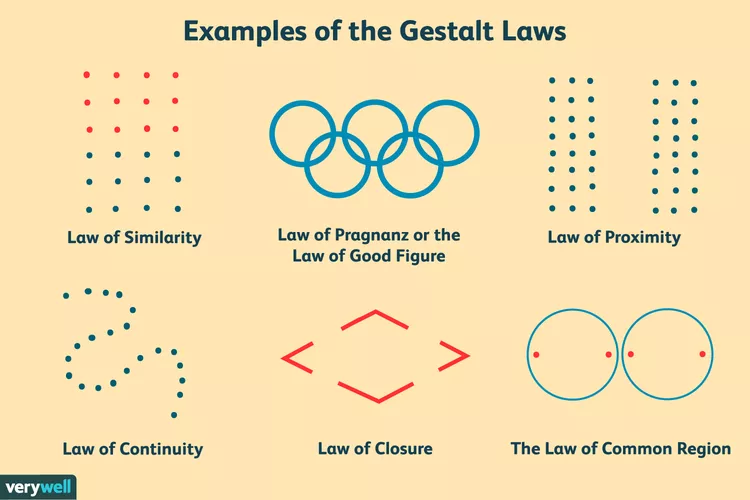
Figure 4.2 : Examples of the Gestalt Laws
Proximity
Proximity is nearness in place, time, order, or occurrence Gestalt’s law of proximity states that we have a tendency to group together information that is close to each other. This helps us to gain an understanding of information very quickly. The distance for each person is subjective.
Choices in activities such as where you go to school, shop, and which restaurants you frequent are generally determined by how close that particular place is to where you live or work.
Students will choose to attend to specific homework assignments based on when they are due; the closer the deadline, the more urgent and immediate that assignment becomes.
So as to make sense of the information you have gathered, the they are then organized into an order, pattern, or process. For speeches, this helps your speech transitionally and simplifies the content.
Similarity
Items sharing similar visual characteristics are perceived as more related than items that are dissimilar. The similarity principle states that shared items can unite elements regardless of where they are placed within a field.
A speaker who is able to establish commonality or shared interest with the audience early in a speech will be more relatable to that audience, both emotionally and psychologically. Similarity will be perceived as familiarity.
Simplicity
The organization of the information researched will be done in ways so that it makes sense or in a way you can make sense of it. Therefore, it will be simplified into some recognizable form.
Humans prefer concrete to abstract images, language, and materials. The concrete allows for the creation of complete and strong visual images; less work is involved in figuring things out.
When your speech is simplified, the points are clearer and the message is undiluted. A speech filled with unnecessary information will draw the audience’s attention away from the main points, purpose, and core ideas of the speech. Become masters of exclusion.
“Less is more”, I often tell my students this, “you cannot tell us everything about anything”. If you try to tell the audience that everything is important, then nothing is important because the audience will be mired in details from which they cannot extract the core idea or salient points being made.
John Wooden, legendary former UCLA basketball coach, used profound simplicity and wisdom when he redefined success in his message on the difference between winning and succeeding, but his words did not only pertain to basketball, the advice offered pertains to every aspect of life.
Continuity
Gestalt’s principle of continuity states that our brains tend to see objects as smooth, continuous, and complete, rather than disjointed or discontinuous.
Water, in reality, is separate droplets of fluid and not the continuous liquid we perceive it to be. What gives water its cohesion is its hydrogen bonds.
The water molecules are so attracted to each other that it allows water to be sticky while perceptively appearing to be fluid. The positive and negative hydrogen ions are so attracted to each other that hydrogen bonds form between neighboring hydrogen and oxygen atoms of adjacent water molecules, thereby creating the fluidity of water.

Figure 4.3 :
I’ve just demystified water for some of you. Water is really tiny droplets of billions of molecules (the water molecule has three atoms; 2 are hydrogen and 1 is oxygen, H2O) bonded together by its adjacent molecules of H2O.
Your speech is made up of three parts. However, when done well, it should flow like water in form, having continuity in its content, delivery, and organization.
Closure
The end game is closure for all human beings involved in all spheres of life; “every one of us will hear, at some point in our lives, finally…”
Gestalt’s principle of closure states that people will fill in blanks to perceive a complete object, image, shape, statement, word, or even experience. This will happen whenever an external stimulus partially matches.
Our tendency to perceive segmented visual elements as being complete or whole, even when information is missing, is what truly describes closure or good form and puts us at ease.
We do not read each word in a sentence separately, but the sentence as a whole therefore, we are able to skip some words and still retain a sense of the entire statement’s meaning. One form of speed reading uses the process of rapidly recognizing and absorbing sentences and/or phrases rather than identifying individual words, although speed readers sometimes trade off accuracy and comprehension for speed.
The principle of closure is implemented in logo designs (NN/g 2021) as seen below.

Figure 4.4: The logo for Public Broadcasting Service (PBS), Applied the principle of closure to communicate 3 heads (2 in positive space and 1 in negative space).


Figure 4.6: The “E” and “x” in the FedEx logo create an arrow within the negative space between them
When doing a speech, closure is involved in the audience’s interpretation of the speaker’s message. The question is, how much do you wish the audience to add, assume, or interpret about your core idea and message, and how much accuracy/ specificity do you wish for?
As a speaker, clarity should be your foremost mission. At the conclusion of your speech, leave nothing to chance, recap and summarize your main points, and during the speech, use connectives to provide your audience with landmarks so that they can clearly identify the journey to your points and overall message. This will provide closure, especially in the negative spaces audiences tend to fill in with their own interpretations.
INTERPRETATION
The third and final step in the perceptual process is interpretation, which is perhaps the most difficult step.
Defined, Interpretation is the process of assigning meaning to information that we have selected and organized, so as to make sense of it.
Interpretation involves using mental structures or schemata, which are like viewfinders or lenses containing our lived knowledge and experiences, that enables us to make sense of the stimuli we encounter. Problems occur when we try to use old schemas as cues to new experiences and realize that it does not work. Competent communicators update their schemata to adapt to new experiences they encounter.
Profiling is using schema to determine criminal intent or a threat, and research has shown that certain prejudices using racial schema can lead to perceptual errors. For example, mistakenly perceiving that a black suspect is carrying a weapon far more often than a white suspect. Therefore, part of the training police officers must undergo, is to update their schemas so as to enable them to adapt to the new experiences of working in cultural settings quite different from what some of them were previously exposed to and/or trained to handle.
The accuracy of your senses, what you (hear, taste, see, touch, and smell) may be at variance from your perception, thereby affecting your social perception of self – your self-concept and self-esteem.
Stimuli are interpreted subjectively because our experiences are subjective. The question, therefore, becomes, what would determine accuracy in interpretation if perception is subjective. The simple answer seems to be to examine the facts, but first, we also must examine self in order to accurately interpret stimuli reaching our senses.
Self-Concept
Defined, self-concept is the mental image or idea you have about yourself, which would include your skills, personality, knowledge, competency, likes and dislikes, social traits, physical condition, talents, limitations, and intellectual capacity.
Your self-image begins to be molded quite early in life and behaviors begin to be programmed and reprogrammed. However, because this book is about public speaking, we will not delve too deeply into the construction of self-concept, but instead will discuss self- concept as it relates to perception and improved speaking ability.
What can be acknowledged based on research is that self-concept is multidimensional and multifaceted, and is involved in every aspect of our social information processing.
From your choice of topic, main idea, and arguments, to the way the speech is structured and the evidence of support you provide, all point to your self-concept. These things are not disconnected from your speech, and neither are they disconnected from you.
PART 3
TO LEARN, FORM AND MAINTAIN SELF CONCEPT
You learn about self through three primary means; your experiences, others, and comparisons.
Experiences – a culmination of your experiences, good and bad, begin to determine who you are. There is no one person who has enjoyed only good experiences or only bad ones; it is always a combination of the two.
In the processing of your experiences is where you come to find out who you really are, by how you handle both your good and bad experiences. If it caused you pain, more than likely, you won’t do it again; on the other hand, if satisfaction was derived from the experience, you will most likely revisit to relive it, and with each experience, the formation of self-concept becomes fashioned and imprinted.
Overcoming in spite of challenges and setbacks, provides resiliency and builds strong character and a self-concept which recognizes that effort and determination can overcome most, if not any, challenge. In this case, the challenging experience helps to build a stronger, more positive character.
Reaction of Others – feedback from others is their reaction to things you say and do. Positive reactions tend to make us feel good about our actions and, therefore, good about ourselves, and the opposite occurs when the reaction from others is negative.
We seek approval initially from those closest to us, like family members. The consistency of their reactions instills in us ideas and impressions on how we should view our behavior, and the culmination of those reactions over time provides us with the mental images or ideas about who we are and what is expected of us in various contexts.
Other people react to us based on the effect of our behavior on their well-being; if the things you do and say provide support, relief, enhancement, and comfort to the lives of those with whom you interact, they would most likely let you know by reacting positively, and in turn, the feedback would encourage you to continue to do and say those things in order to continue to receive the same or similar types of positive reaction.
Positive reactions produce positive self-concepts, and a positive self- concept is a strong predictor of “long-term mental health and overall wellbeing” (positiveaction.net).
Comparisons – we are constantly comparing ourselves to others and this is because we are constantly evaluating our self-worth.
The social comparison theory (Festinger, 1954) describes the comparison processes people utilize to describe their actions, accomplishments, and opinions in contrast to others. A benchmark by which individuals can make accurate evaluations of themselves is then established.
The two kinds of social comparisons used are upward social comparisons, where you evaluate your traits, skills, and/or status with those who you believe are better or better off than you are, and downward social comparisons, where you compare yourself with those you believe are worse off than you are.
In the first comparison with those who you believe are better than you are, you may be inspired to seek ways to measure up and achieve similar results. With the comparison to those who are worse off, you will use that as a way of feeling better about yourself, even though you may not feel as good as you’d like to about your current status.
In public speaking classes, while students often make comparisons of their speech performances with others, they are instructed and encouraged to avoid competing against each other because, in reality, they are not competing with each other. Instead, students are provided with guidelines which serve as standards they must strive to achieve, and their speeches are viewed based on them achieving those benchmarks.
Major speeches are videotaped and the tapes serve as a way for each student to track their speech performances. Feedback is provided by an assigned peer and the instructor.

Figure 4.7 :
Instead of students making comparisons between each other, the videotaped speech serves as a tool for each student to track and compare each speech they deliver, thereby measuring their progress and ability based on the outcome of each of their speeches and whether or not the benchmarks were achieved.
Self Esteem
Defined, Self-esteem is the degree to which you feel negative or positive regarding your self-concept or the measurement of your self-concept. Similar to self-respect, self-esteem is the overall value or worth you place on yourself. This value, in turn, affects your motivation, mental stability, and way of life.
TO LEARN, FORM AND MAINTAIN SELF CONCEPT
Personal successes and failures determine your self-esteem. More success in your life raises your self-esteem, while failures lower it. Individuals with high self-esteem would evaluate themselves more favorably than those with low self-esteem, even in situations where the performance level is similar.
The accuracy of both your self-concept and self-esteem depends in large part on the accuracy of your perceptions and how you process others’ perceptions of yourself.
You cannot ignore objective criticism and choose to concentrate only on responses that are positive or favorable, This could result is an inflated self- esteem, and the gap between your reality and perception can be distorted, thereby magnifying the inaccuracy of a distorted picture of yourself.
Ignoring objective criticisms about your speech from a peer or instructor would not help you improve that speech performance, and may instead lead you to think that your speech was better than it really was. On the other hand, being overly critical in providing feedback could harm and hamper your future speech performances.
PROMOTION OF ACCURACY & INACCURACY
Accurate self-concept and self-esteem are difficult to assess because they both can change from hour to hour and day to day and are dependent on the specific situation and even the context encountered.
There are two overwhelming factors that seem to loom over the question of what assists the accuracy or inaccuracy of your self-concept and esteem, and these are self-fulfilling prophecies and message filtering.
Self-fulfilling Prophecies
Events that happen as a result of being predicted, foretold, expected, or talked about is a self-fulfilling prophecy. These results are either self-created or imposed by others; either way, the end result is usually a reinforcement of your self-concept.
When your own expectations influence your behavior, it is a self-created, self-fulfilling prophecy. For example, if you predicted that you would do exceedingly well in your speech, and you planned, prepared, and practiced in advance, spending a tremendous amount of time on the development and structure of the speech, and consequently, as a result of the work you put in, the speech was a resounding success, your success was a self-created, self-fulfilling prophecy.
On the other hand, if your classmates and the instructor saw your potential, and told you that they expected you to do well in your speech, their expectations can unknowingly cause an adjustment in your attitude and behavior. Even though, initially, you may not have had full confidence in your speech, their positive attitudes and words of encouragement created an imposed change in your attitude and behavior, subsequently resulting in your speech being successful. This is other-imposed self-fulfilling prophecy.
The placebo effect of medicine on patients who were unknowingly administered a concoction of saline water instead of the real drug and responded favorably in healing as if they had taken the real drug, is the perceptual consequence of the brain convincing the body that a fake treatment is real.
A Harvard Medical School Health Publishing study (2021) offers that your mind can be a powerful healing tool, and “the placebo effect is more than just positive thinking” (Kaptchuk 2021).
Like the placebo effect, demystification of public speaking is the physio- psychological step towards creating a stronger and more natural connection between the brain and the body, in an effort to enable both to work together in dispelling glossophobia.
Filtering Messages
You filter messages, we all do, especially those messages that you don’t agree with, and as a consequence, the accuracy of the message heard is quite different from the perceived one. You are prone to listen to messages that reinforce your current self-image, regardless of the state of your self-image.
Perceptual filtering is the process of taking new information acquired and interpreting it according to prior experiences and cultural norms. (Sage Knowledge). If there is no stored experience of the information acquired, the information is usually ignored this prevents self-concept and self-esteem from undergoing change, thereby keeping perceptual inaccuracies in place.
PERCEPTUAL INACCURACIES/ERRORS
When communicating, whether it’s interpersonally or to a larger audience during a speech, there are certain perceptual inaccuracies to be careful of. These perceptual inaccuracies may occur in your language and/or ideas, which in turn could lead to misinterpretations, misrepresentations, and ambiguity on the audience’s part. This could lead to undesirable outcomes based on your audience’s perceptual interpretation of your message.
Here are a few common perceptual errors-
Faulty Attribution
This is witnessed in most communication situations but especially in persuasive speeches, where you or others may attribute reaction or behavior (actions) and reasoning (cognitive processing) to either an external situation or to an internal disposition.
The external blame would be attributed to the situation or circumstance if the ideas of the speaker and audience are in agreement, or if the parties are friendly towards each other. The behavior is considered a situational attribution, blame for the misunderstanding is placed on the situation and not on the individual.
The internal blame would be attributed to the individual’s internal disposition if the ideas of the speaker and the audience are at odds or if the parties are in conflict with each other. The behavior in this case would be considered a dispositional attribution; blame for the misunderstanding is placed on the individual rather than on external factors.
In a public speaking situations, it is wise to know your audience by conducting research regarding your audience’s disposition towards your topic. In interpersonal interactions, you should choose language and behavior that is appropriate to your listener and this all depends on how well you know that individual.
Self-Serving Biases
A poor speech might be attributed to external forces, such as the conditions in the classroom or the fact that the topic of the speech was not the choice of the speaker but was chosen by the instructor. A successful speech, on the other hand, would be attributed to the speaker’s abilities, preparation, and personal characteristics.
Social psychologists’ research shows that blaming external factors or others for your failures is a way of protecting your self-esteem. Hence, they refer to this as a self-serving bias. You must strive to improve your self-esteem by increasing your successes and decreasing your failures. An idea that seems to work in my public speaking classes is having the students select their own speech topics for starters.
Selective Perceptions
You tend to pay attention to only what you expect or wish to hear and see, and ignore what you don’t expect. You are in charge of setting expectations for your speech with the understanding that not everyone in the audience is going to like you, your topic, or your speech.
Therefore, you will have to decide what you believe needs to be modified prior to and even during your speech. Therefore, don’t make the incorrect assumption that the audience knows, understands, and trusts you, your opinions, as well as certain other cultural identities you bring to the speech and will be perceive the speech as you would like them to.
There are personal things you cannot modify prior to your speech, such as your race and your voice. There are other physical attributes that you can modify, which you may decide to tone down so as to gain a more favorable approval, such as your appearance (dress style and makeup) and unfavorable mannerisms.
Prior to your speech, acquiring demographic information regarding your audience, such as their intellect, knowledge, and expectations, as well as information about the environment in which the talk will occur, will definitely help you to anticipate and plan for certain audience tendencies and reactions.
Understanding that physical and environmental cues like clothing, grooming, and material objects worn or present within the space do influence the impressions people form, would enable you to adjust not only your expectations but also the selective perceptions the audience brings to the event. Expect the unexpected.
Halo Effect
You may inaccurately perceive that someone (a speaker) has a whole set of related personality traits or characteristics when only one trait was actually observed. This is the halo effect which is a powerful influence on your efforts to sway an audience in your persuasive speech.
Because of the halo effect, you may perceive an individual differently depending on the situation, or you might perceive the situation differently depending on the individual. Therefore, for presentations, the first 30 seconds to 1 minute of your introduction is vital. If the introduction is dynamic, the audience will use that perceptual impression to evaluate or color almost everything else about your speech.
The halo effect reinforces the primacy/recency effect of perception, where you or the audience may remember the first (primacy) information and/or impression you receive or form, or the last (recency) information or impression you form when making a final decision about the content of the speech or vital information.
First impressions are long-lasting and tend to be change-resistant. You must, therefore, begin your speech exuding confidence and creating a most favorable impression.
Even then, you must still consider the fact that some audience members may have deeply rooted beliefs and attitudes. Engrained over the years, and nothing that you say or do would sway them, even though they may have listened to you politely. Therefore, proceed slowly, accept any gains you have made, and expect those gains to be in very small increments.
PART 4
CHANGE IN SELF-CONCEPT & SELF-ESTEEM
Change in self perceptions (self-concept and self-esteem) occurs when you listen with an open mind. Comments must be able to get past your filter to begin to ferment change and acquire a new self-perception. Certain situations lend themselves to expediting this process.
An Inhersight.com blog (Hutto, 2021) and https://beboldpsychnc.com suggest several traits that could expedite the process of promoting and affirming self-perception change. I’ve added some content to these suggestions which I believe you may find useful in public speaking.
- Don’t dwell on the past – the past is history, the future is really non- existent, and the present is now; focus on the “now”. Learn from your past mistakes and project a vision for the future, but live in the now with no regrets. Your last speech was your past speech.
- Reframe how you talk to yourself – individuals with negative perceptions indulge in negative self-talk; so listen to your thoughts and how you express You feed your psyche either positive food for growth or negative food that stunts your growth. Change “I’m tired” to “I’m in need of energy” and “My last speech was horrible” to “My last speech taught me how to succeed in the next one”.
- Clog your feedback filter – listen to feedback with your defenses down and focus on the positive aspects of what is being said. Remind yourself that the comments are to help you improve your speech and are not meant to destroy you as a person.
- Trust yourself and your decisions – remind yourself that you did not get this far without believing in each step you made along the way, even though some of those steps may have taken you off your path temporarily. Therefore, trust in the preparation you have made for your speech and believe it will produce your desired outcome.
- Set your own standards and targets – it is okay to toot your own horn sometimes, especially after a win or Remind yourself with each small victory that you’re one step closer to your goal. You can choose how you celebrate each win, but remember it’s not over until completed.
- Internalize your comparisons, do not externalize them – compare yourself with where you are presently in relation to your target or goal and not where you are in relation to someone else’s accomplishment. It is your current presentation in comparison to your next presentation that matters.
- Perfection is a dream, achievement is real – stop dreaming and be for There is no such thing as a perfect speech or a perfect anything. If there were, then there would be no need to improve your speech, do another one, or do anything else. Do not frustrate yourself with perfection, it is the enemy of great effort.
- Know your truth and your vision – your truth is knowing who you are and what you’re capable of, and that includes knowing your weaknesses as well. Do your presentation based on that truth. The vision you created for that speech is what you would like to achieve over time, therefore, understand that what you may consider a failure, is really an opportunity for growth in your public speaking.
PART 5
ENVIRONMENTAL EFFECTS ON SPEECH PERFORMANCE
Research has shown that the timing, frequency, and structure of an environment can affect your speech and the outcome in both negative and positive ways (NLM 2021).
A room’s dimensions, content, and wall decors can affect the sound being produced and how that sound is reproduced. For example, church buildings, such as cathedrals with their high ceilings or mosques with their oval domes, have been specifically designed to enhance echoes. The strength of an echo depends on the rooms contents and dimensions. Speaking in that type of environment creates Delayed Auditory Frequency (DAF).
If a speaker uses a microphone to amplify the sound of their voice, the equipment can alter the frequency of the sound produced, and that is because some frequencies can pass easily into a room, while others do not.
Your vocal intensity during a speech will depend on whether there are extraneous sounds, in other words, whether you are hearing your own speech, other voices, or other noises.
The reason the environment is an important consideration when planning and delivering a speech is because the environment in which the speech takes place affects the listening the listener will receive the altered sound the speaker makes, which is produced by the environment, and simultaneously, the environment will affect how the listener processes that sound.
Additionally, researchers discovered that altering speech timing was found to affect fluent speakers adversely but can improve the speech of speakers who stutter.
While most speakers seldom consider the environmental structure before delivering a speech, perhaps more careful consideration of the venue’s structure should be considered with similar importance as the lighting, seating arrangement, equipment, time of day, length of speech, subject matter, and message.
There are things within your control that would produce perceptual pluses when planning a speech, like the way you are dressed, how familiar you are with the speech material, and generally how prepared you are to deliver the speech. Then there are things you can adjust, like the timing of the speech, which would include the speech length, time of day and where your speech occurs on the program, although sometimes this cannot be adjusted based on several other considerations which the organizers and producers of the program have planned in consideration of things such as show pacing etcetera.
What you, the speaker, have little control over is the listener’s attitude and behavior. Although, as the speaker, you can attempt to influence the audience by adjusting your speech structure and delivery, this control is quite limited. The venue, structure of the space, seating arrangements, décor, and other environmental factors are beyond your control, but they can be taken into consideration in the planning stages of your speech.
PART 6
TO IMPROVE SOCIAL PERCEPTION OF OTHERS
Improving your social perception of others is well within your control, but it will require you to make some adjustments in your cognitive processing. This is important to consider when delivering a speech because delivering a speech to a perceived hostile audience requires a different approach than delivering that speech to a welcoming audience.
- Consider the demographic make-up of the audience – the audience demographics include age, ethnicity, gender, income, and disposition (which includes qualification and intellect).
Advertisers, when planning message campaigns, gather demographical data which would allow the message to be targeted more precisely to the audience so as to enhance the success of the message that could betranslated into positive acceptance and increased sales. If you know the demographic make-up of your audience/listeners, your message can be designed and focused to move that audience into action. Do proper research.
- Consider the culture of the audience – culture greatly influences an audience’s acceptance of a message because it encompasses attitude, behavior, beliefs, values, likes, and dislikes. If the audience’s tastes and values are similar to yours, then your thesis consideration and points positioning of the speech could be adjusted so as to enhance the positive response of the audience and dilute the possible negative effects and/or responses the speech may produce on that audience.
- Consider biases – before and while planning your speech, locate your biases and make sure they do not seep into the planning of your speech to the extent where they unduly influence how you provide your arguments or point-of-view.
While we are all subjective to cognitive biases, all of us are not influenced the same way by these biases. However, your biases will affect you, the speaker, and your audience, and here’s how. (Dlugan, 2018)
Ways biases affect Speakers
- Poor presentation, structure, and content choices
- Distorted perceptions about the speech content and points being made
- Poor judgment on the success and/or failure of the presentation
- Overestimating your effectiveness as a speaker
- Not paying attention to or disregarding feedback
Ways biases affect the audience
- Irrational conclusions about you, before, during, and after your speech
- Irrational resistance to your efforts to be persuaded
- Unintended interpretations of your message
- Non-participatory behavior
- Non-attendance
- Actively question and verify your perceptual accuracy
We do not actually experience sensation; instead, what we really experience is the outcome of our perception, an image of what we hear, feel, smell, taste, and touch, which the brain assembles. Speech is influenced by both what is heard and seen, and if the two conflict, perceptual error can and will occur.
The McGurk experiment on the link below makes this point more clearly.
McGurk Effect, Auditory Illusion, BBC Horizon
To improve your speech, become more aware of your perceptual limitations and what is required of you to enhance your speech, thus ensuring that your audience receives your message as accurately as they possibly can.
SUMMARY
After this discussion on Perception, you are now able to define Perception, which is the process of assigning meaning to sensory information you have selectively paid attention to and organized. The meaning is based on experience.
The perceptual process occurs in 3 stages. It begins with first focusing your attention so that you are able to select what you wish to attend to at the moment, then organize the information you have selected according to proximity, similarity, closure, continuity, good form and common region, and finally, interpret that information you have focused on and organized, using mental structures and schemas.
There are physiological barriers which limit the information you can see or hear, and psychological barriers dictate your needs, interests, and expectations.
Self-concept is the mental image or idea you have about yourself, which you learn, form, and maintain through experiences, reactions of others, and comparisons you make.
Self-Esteem is the degree to which you feel negative or positive regarding your self-concept or the measurement of your self-concept, which you learn, form, and maintain based on your life successes and failures.
Two factors assisting the accuracy of self-concept and esteem are self-fulfilling prophecies; events that happen as a result of being predicted, and perceptual filtering; the process of taking new information acquired and interpreting it according to prior experiences.
To change your self-concept & self-esteem
- Don’t dwell on the past
- Reframe how you talk to yourself
- Clog your feedback filter
- Trust yourself and your decisions
- Set your own standards and targets
- Internalize your comparisons, do not externalize them
- Perfection is the enemy of great effort
- Know your truth and your vision
Environmental Effects on speech performance are timing, frequency, and the structure of an environment.
To Improve Social Perception of Others,
- Consider the demographic make-up of the audience
- Consider the culture of the audience
- Consider biases and the ways biases affect speakers and the audience
- Actively question and verify your perceptual accuracy
To improve your speech, become more aware of your perceptual limitations and what is required of you to enhance your speech.
DISCUSSION QUESTIONS
- Can you recall a situation where a perceptual error in judgement on your part, or on someone else that you know, resulted in a conflict? How was it resolved?
- Describe an experience where you believed that your self-concept and/or self-esteem may have been impacted in either a positive or negative way at the time by what had happened. In what ways has that experience affected your current self-perception?
- Could you identify one or two biases you had or may still possess? Discuss how those biases have or may have affected your personal relationship with someone else or others.