Chapter 06 – Part 01: STRENGTH DEVELOPMENT & LIFTING TECHNIQUES
06
CHAPTER
STRENGTH DEVELOPMENT & LIFTING TECHNIQUES
Tim Dornemann, Ed. D., CES, PES, CSCS, OS Pro
Exercise Science Program & Kinesiology Director, Barton College
Associate Professor of Exercise Science, Barton College
Part 1: Lower Body Exercises
SQUATS ARE A primary lower body exercise. Lunge variations, deadlift and lower level squat variations can be used as secondary lower body movements. The Romanian deadlift and good morning exercises are used to train posterior chain musculature.
Squat Series
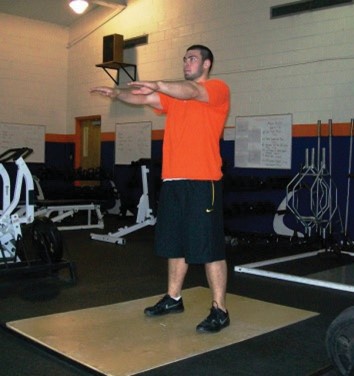
Body Weight Squat
Start with feet slightly wider than shoulder width, toes angled slightly out and arms extend in front at shoulder height for balance
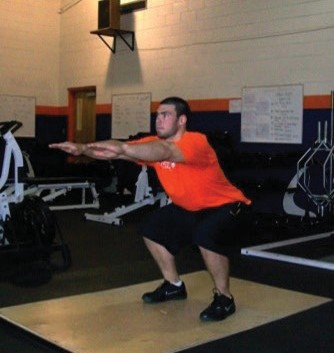
Push the hips back sticking the butt out, keeping chest forward to balance out body
Lower the hips down and back with the feet flat and the pressure on the heels
Lower the hips down and back until the hips are lower than the knees (or top of the thigh parallel to the ground)
Upon reaching the lower point of the descent, drive back up through the heels while also driving the hips forward to keep the chest up
Figure 6.1: Body Weight Squat Top Position
Figure 6.2: Body Weight Squat Bottom Position
Video 6.1
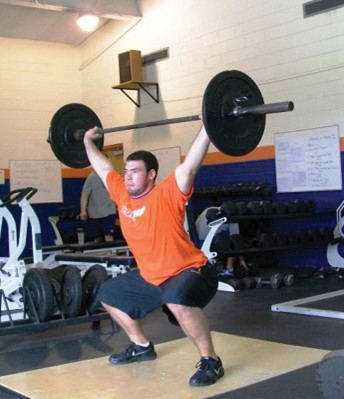
Overhead Squat
Start with dowel, stick or light weight bar to learn and practice good form
With a snatch width grip, place the bar overhead slightly behind or directly above the ears
Raise arms to shoulder height
Bend elbows to 90-degrees
Maintaining that hand width, grab bar with over hand grip
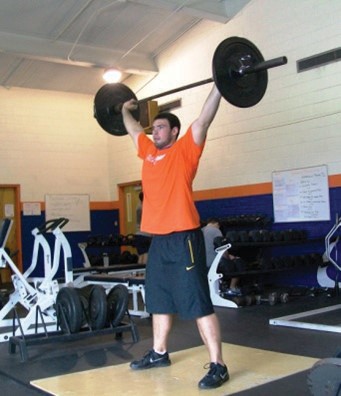
Extend arms as bar is raised overhead
While performing the lower body squatting movement, gradually rotate the bar back as you go down
Overhead squat can build flexibility and reveal tightness in shoulder, ankle and hip joints
Figure 6.3: Overhead Squat Top Position
Figure 6.4: Overhead Squat Bottom Position
Video 6.2
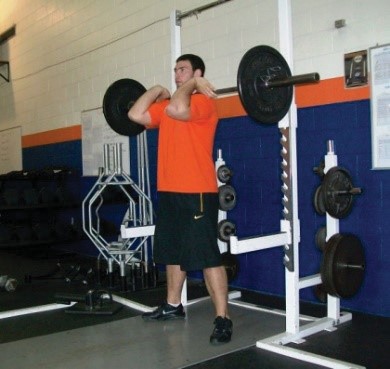
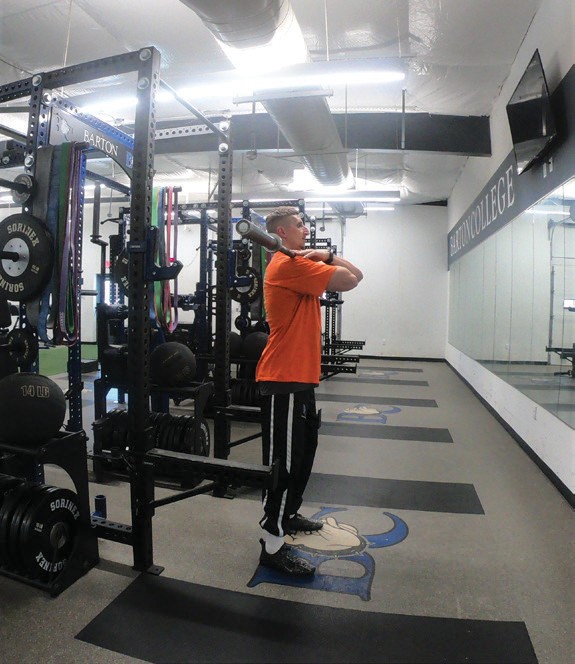
Front Squat
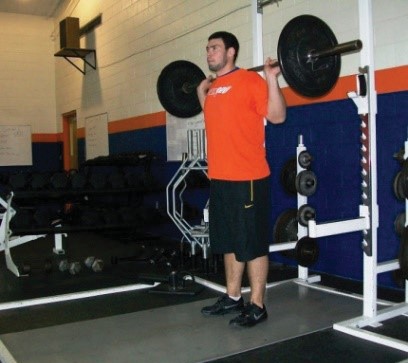
Hands are placed with a grip slightly wider than shoulder width
Barbell should rest on the upper chest and shoulders
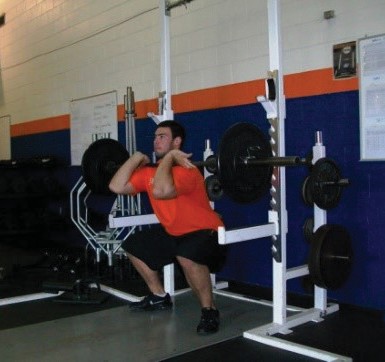
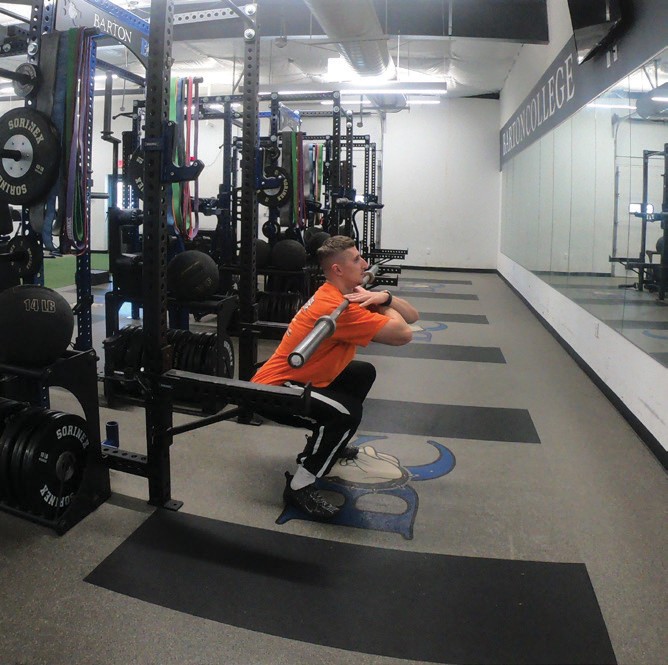
Pushing the elbows up and inward will form a rack on which the bar will rest while also keeping the chest up during the movement
Clean grip or crossover grip
While performing the lower body squatting movement, focus on keeping the elbows up the entire time and therefore keeping the chest up.
Figure 6.5: Clean Grip Front Squat Top Position
Figure 6.6: Crossover Grip Front Squat Top Position
Figure 6.7: Overhead Squat Top Position
Figure 6.8: Crossover Grip Front Squat Bottom Position
Video 6.3
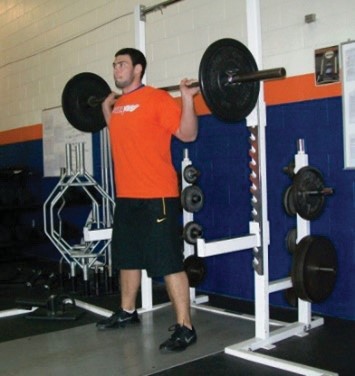
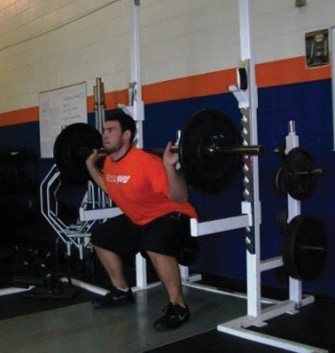
Back Squat
Squeeze the shoulders back and place the bar high on top of the shoulder muscles
Perform the squatting movement
While coming up, push through the heels and drive the hips forward, keeping the chest up
Figure 6.9: Back Squat Top Position
Figure 6.10: Back Squat Bottom Position
Video 6.4
Deadlift
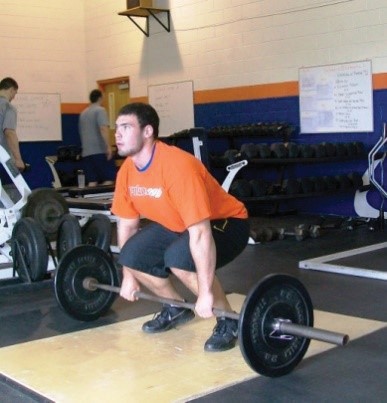
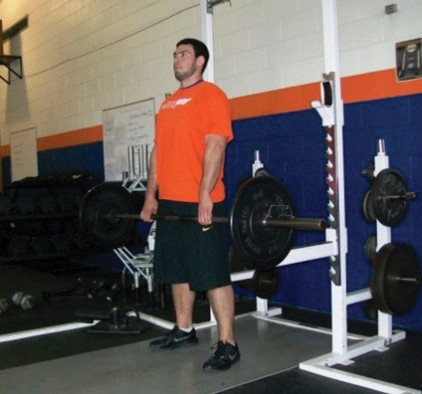
Clean Deadlift (Deadlift from Clean starting position)
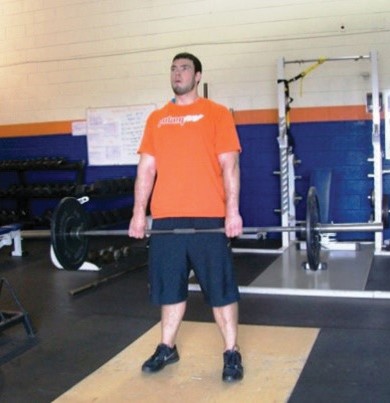
Feet at hip width, hands should be placed on the bar just outside of legs (using overhand or alternating grip)
Barbell in close to the body with arms straight and elbows rotated out
Shoulder blades should be squeezed back with the chest as high as possible
Hips are higher than the knees, but lower than the shoulders
Eyes straight ahead
Raise up hips slowly, pulling bar off ground
Maintain consistent back angle as you extend your hips and legs, pulling the bar to hip height
Finish lift with slight back hyperextension and shoulders pulled back (retracted)
Figure 6.11: Deadlift Bottom Position
Figure 6.12: Deadlift Top Position
Video 6.5
Lunge Series
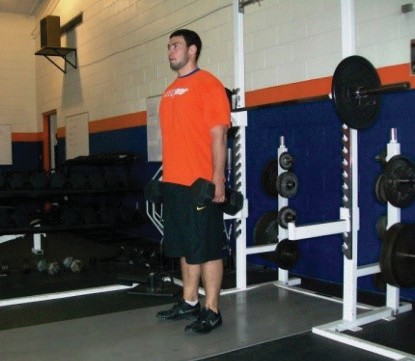
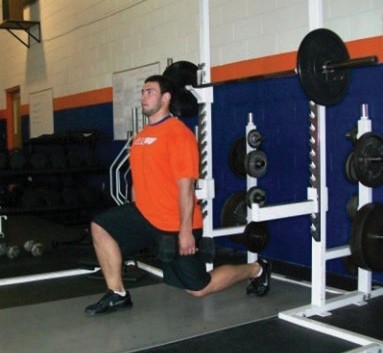
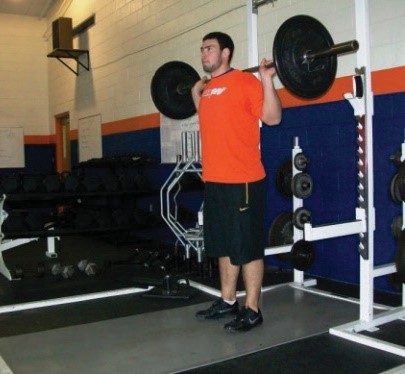
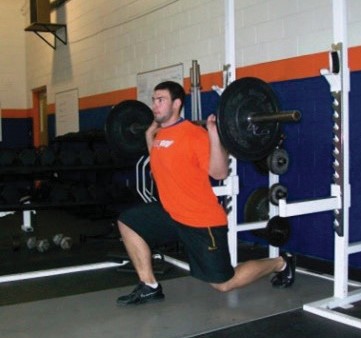
Front Lunge
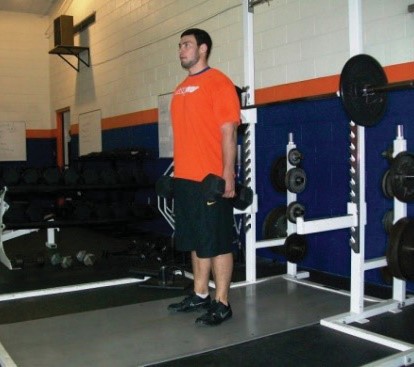
Start with the feet underneath the hips and lined up evenly with each other
Take an over-exaggerated step forward
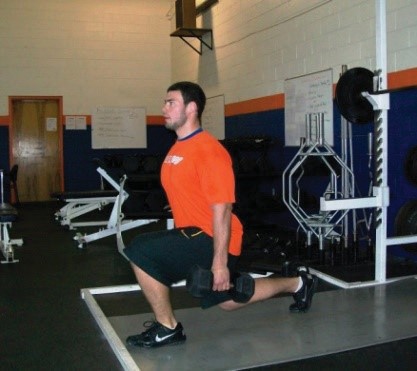
Drop the hips straight down into 90-degree bend of both front and back legs
Proper stride length places front knee over the ball of the foot
Too long of a stride places knee over heel or back leg is extended past 90 degrees
Too short of a stride places front knee in front of toes
Drive through the front heel and pull with the back foot to return to the starting position
Alternate legs throughout the set
Figure 6.13: Front Lunge (DB) Top Position
Figure 6.14: Front Lunge (DB) Bottom Position
Figure 6.15: Front Lunge (Bar) Top Position
Figure 6.16: Front Lunge (Bar) Bottom Position
Video 6.6
Video 6.7
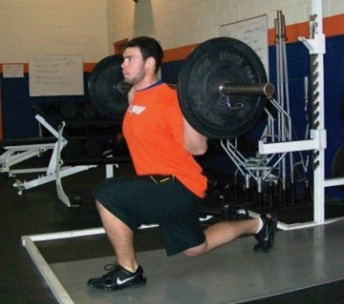
Back Lunge
Start with the feet underneath the hips and lined up evenly with each other
Take an over-exaggerated step back, sitting back into the front heel until both front and back knees are bent at 90 degrees
Same stride length cues apply as front lunge
Push through the front heel driving the hips forward and returning the back foot to the starting position
Figure 6.17: Back Lunge (DB) Top Position
Figure 6.18: Back Lunge (DB) Bottom Position
Figure 6.19: Back Lunge (Bar) Top Position
Figure 6.20: Back Lunge (Bar) Bottom Position
Video 6.8
Video 6.9
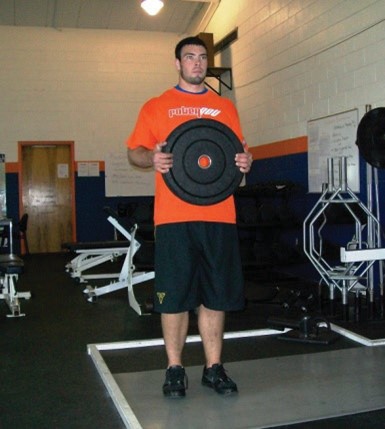
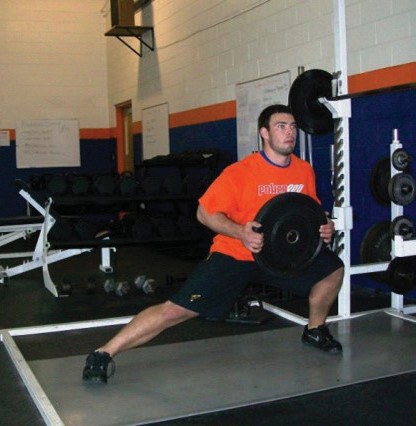
Side Lunge
Start with feet shoulder width apart
Take an exaggerated step out to the side keeping toes pointed forward
Drop hips down bending knee of lead leg to 90 degrees
As you drop down, sit hips back, leaning chest forward to balance body
Trail leg is extended with slight knee bend
Push off lead leg back to standing position
Alternate movement to both sides
Figure 6.21: Side Lunge Top Position
Figure 6.22: Side Lunge Bottom Position
Video 6.10
Posterior Leg Exercises
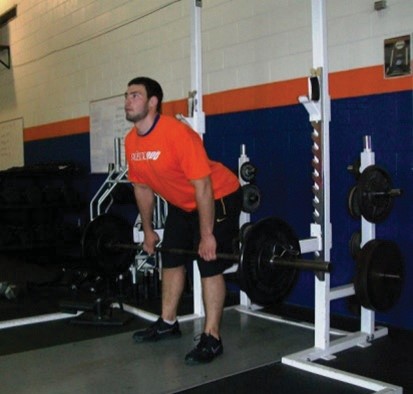
Romanian Deadlift (RDL)
Stand upright, holding the barbell with the hands at the hip width
Place a slight bend in the knees (knees straight but not locked)
Stick chest out and squeeze the shoulders back with an over-exaggerated posture
In a controlled manner, lower the bar down, keeping the bar behind the toes
When lowering the bar, keep the shoulders squeezed back (with over-exaggerated posture) and the knees straight but not locked, lowering the bar by sticking the butt out (NOT bending the knees or rounding the back)
Figure 6.23: Romanian Deadlift Top Position
Figure 6.24: Romanian Deadlift Bottom Position
Video 6.11
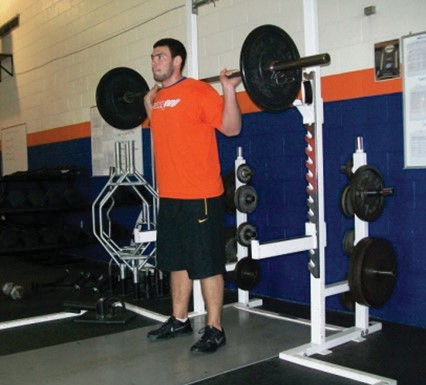
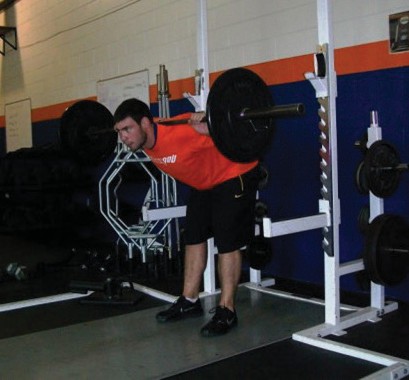
Good Morning Exercise
Squeeze the shoulders back and place the barbell high on top of shoulders
Place a slight bend in the knees (knees straight but not locked)
Squeeze the shoulders back with an over-exaggerated posture
In a controlled manner, lower the bar down, keeping the bar behind the toes
When lowering the bar, keep the shoulders squeezed back (with over-exaggerated posture) and the knees straight but not locked, lowering the bar by sticking the butt out (NOT bending the knees or rounding the back)
Figure 6.25: Good Morning Top Position
Figure 6.26: Good Morning Bottom Position
Video 6.12
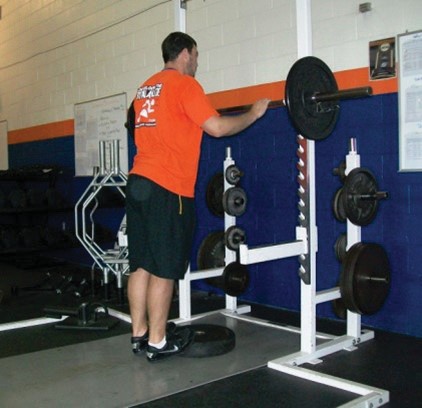
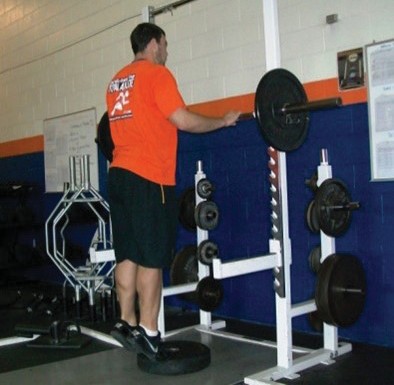
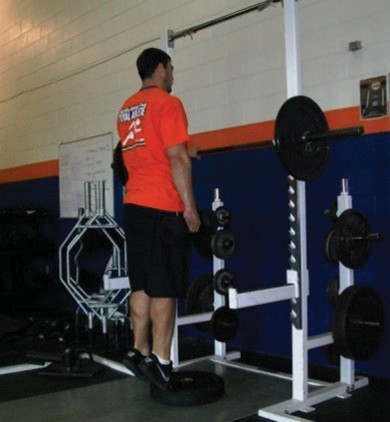
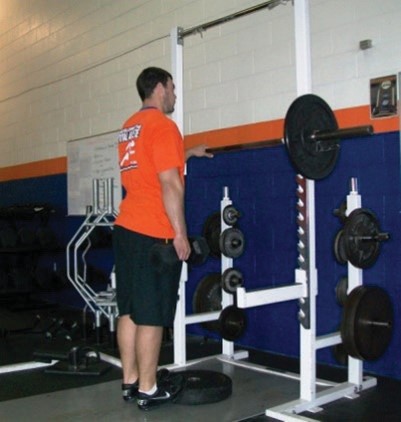
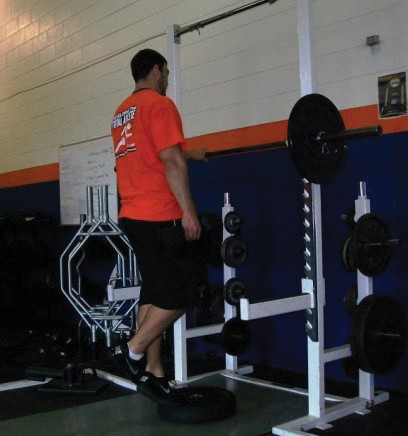
Calf Raise
Use a step or platform, feet shoulder width apart (can use a stable block of wood that allows your heel to be off the ground, if no step or platform)
Place balls of feet securely on edge
Placing too much of foot on edge limits range of motion
Putting too little of foot on edge increases risk of slipping off edge
Use a wall or railing for balance (in front with two hands or to the side with one hand)
Dorsiflex, dropping heels down
Then plantarflex, raising up on balls of feet
To add resistance, work one leg at a time or balance with one hand and hold a dumbbell or weight in the other hand