Chapter 06 – Part 06: STRENGTH DEVELOPMENT & LIFTING TECHNIQUES
06
CHAPTER
STRENGTH DEVELOPMENT & LIFTING TECHNIQUES
Part 6 : Manual Resistance Exercises
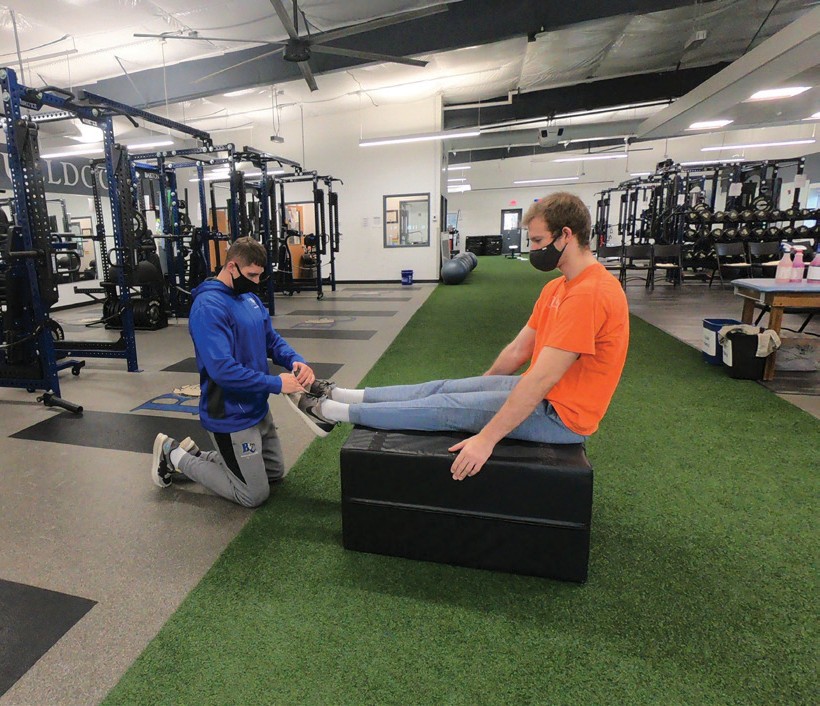
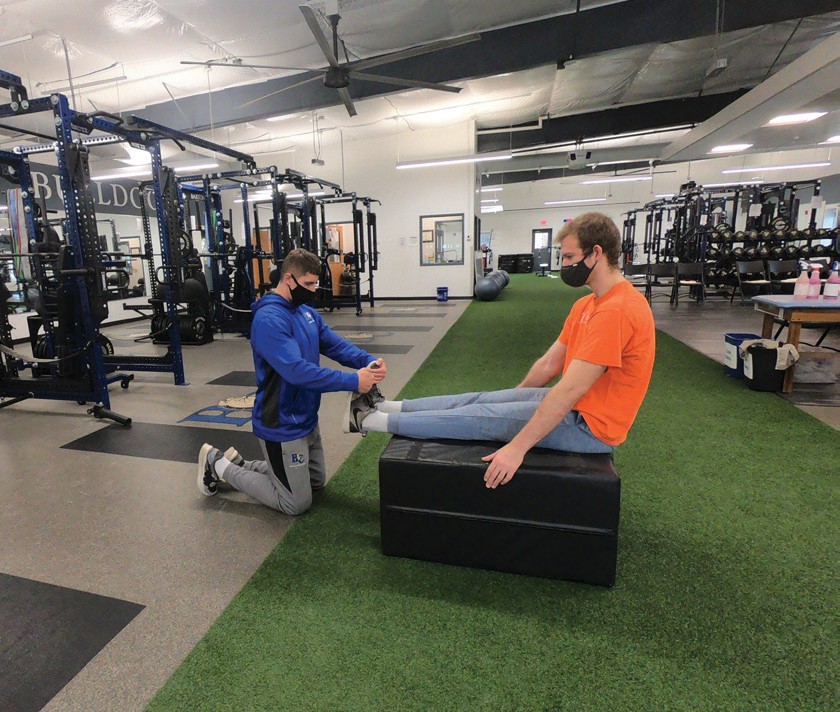
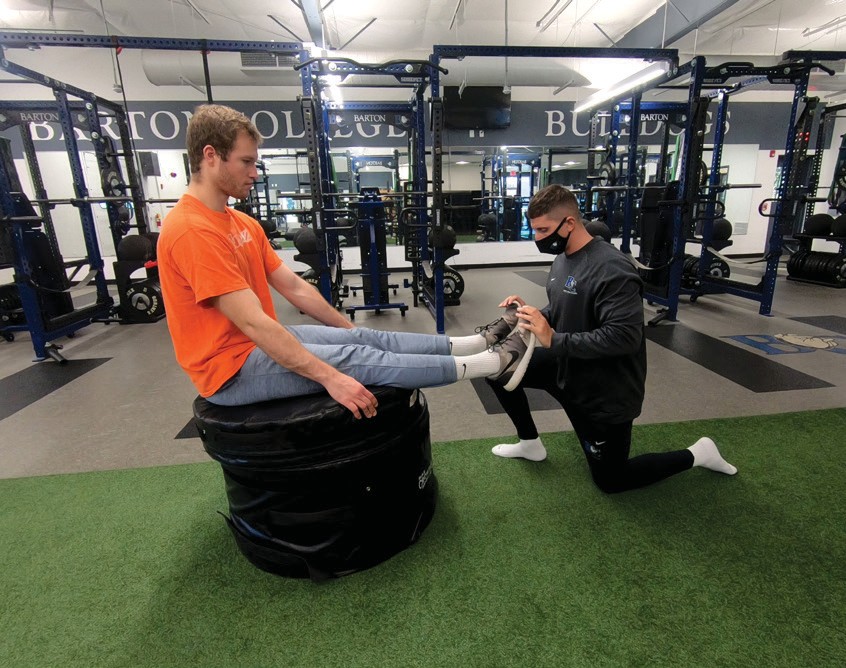
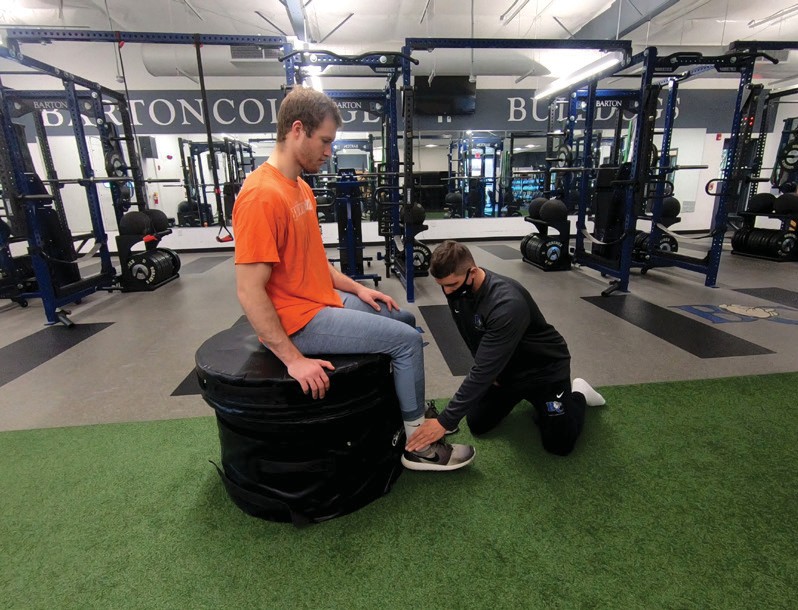
Resisted Ankle Dorsiflexion
Position the person performing the exercise with the leg outstretched, sitting on the ground or supported in some way.
The person supplying the resistance places one hand above the ankle to stabilize the leg so that movement only occurs at the ankle joint.
With the foot fully plantarflexed, place the other hand below the toes to provide resistance.
Provide steady resistance as the person exercising pulls their toes back towards their shin into a fully dorsiflexed position.
The person exercising and the person applying resistance must communicate properly to apply appropriate resistance.
Too much resistance and the foot cannot move; too little resistance and the muscle will not be overloaded.
Good communication is needed so that injury will not occur, movement should be slow and steady through the full range of motion.
Figure 6.212: Resisted Ankle Dorsiflexion Starting Position
Figure 6.213: Resisted Ankle Dorsiflexion Finishing Position
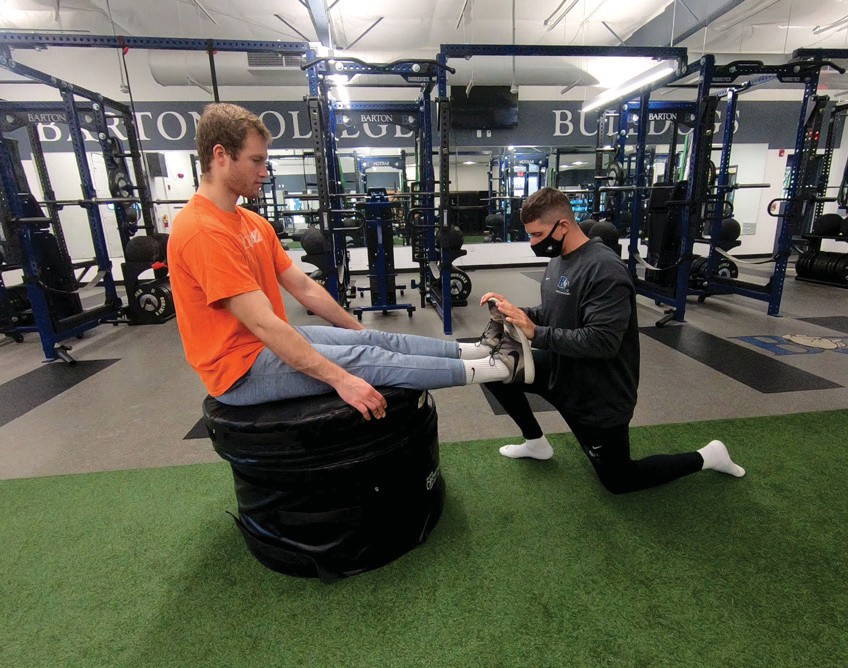
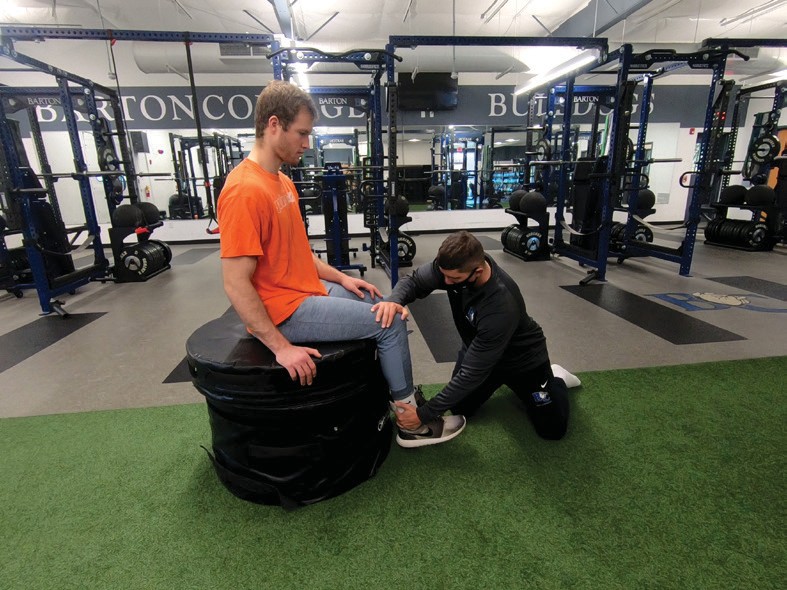
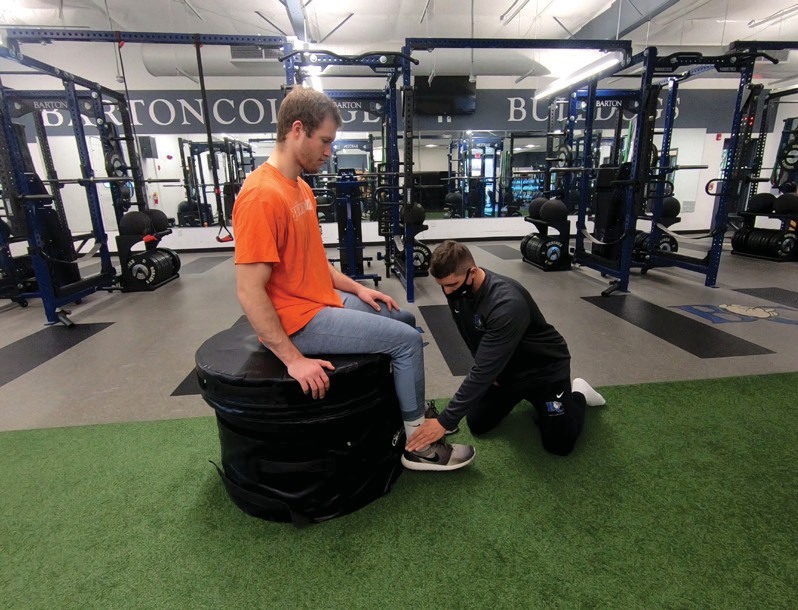
Resisted Ankle Plantar Flexion
Position the person performing the exercise with the leg outstretched, sitting on the ground or supported in some way.
The person supplying the resistance places one hand above the ankle to stabilize the leg so that movement only occurs at the ankle joint.
With the foot fully dorsiflexed, place the other hand on the ball of the foot to provide resistance.
Provide steady resistance as the person exercising extends their foot, pointing their toes towards their shin into a fully plantarflexed position.
The person exercising and the person applying resistance must communicate properly to apply appropriate resistance.
Too much resistance and the foot cannot move; too little resistance and the muscle will not be overloaded.
Good communication is needed so that injury will not occur. Movement should be slow and steady through the full range of motion.
Figure 6.214: Resisted Ankle Plantar Starting Position
Figure 6.215: Resisted Ankle Plantar Finishing Position
Resisted Hamstring Curl
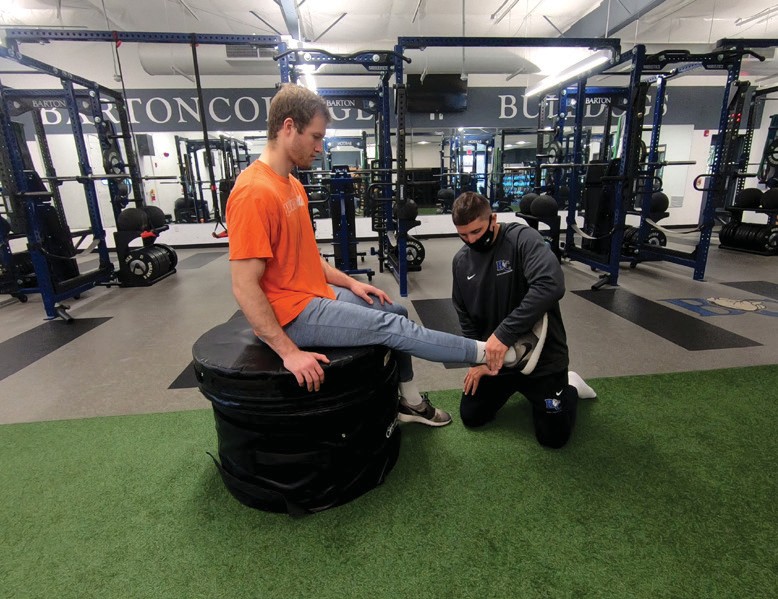
Position the person performing the exercise on a chair with the bend of the knee against the end of the chair.
Two chairs can be stacked or an object like a towel can be placed behind the knee so that the foot stays above the floor.
The person supplying the resistance places one hand above the knee to stabilize the leg so that movement only occurs at the knee joint, with the person exercising extending the leg straight.
Place the other hand above the ankle on the Achilles tendon to provide resistance.
The hand is placed above the ankle to take pressure off the ankle joint while maximizing the axis of rotation.
Provide steady resistance as the person exercising flexes at the knee, as they pull their foot towards the ground.
The person exercising and the person applying resistance must communicate properly to apply appropriate resistance.
Too much resistance and the foot cannot move; too little resistance and the muscle will not be overloaded.
Good communication is needed so that injury will not occur. Movement should be slow and steady through the full range of motion.
Figure 6.216: Resisted Hamstring Curl Starting Position
Figure 6.217: Resisted Hamstring Curl Finishing Position
Resisted Leg Extension
Position the person performing the exercise on a chair with the bend of the knee against the end of the chair.
Two chairs can be stacked or an object like a towel can be placed behind the knee so that the foot stays above the floor.
The person supplying the resistance places one hand above the knee to stabilize the leg so that movement only occurs at the knee joint, with the person exercising letting the other leg relax.
Place the other hand above the ankle on bottom of the shin to provide resistance.
The hand is placed above the ankle to take pressure off the ankle joint while maximizing the axis of rotation.
Provide steady resistance as the person exercising extends at the knee, as they extend their leg to straighten the leg.
The person exercising and the person applying resistance must communicate properly to apply appropriate resistance.
Too much resistance and the foot cannot move; too little resistance and the muscle will not be overloaded.
Good communication is needed so that injury will not occur. Movement should be slow and steady through the full range of motion.
Figure 6.218: Resisted Leg Extension Starting Position
Figure 6.219: Resisted Leg Extension Finishing Position
Resisted Shoulder Press
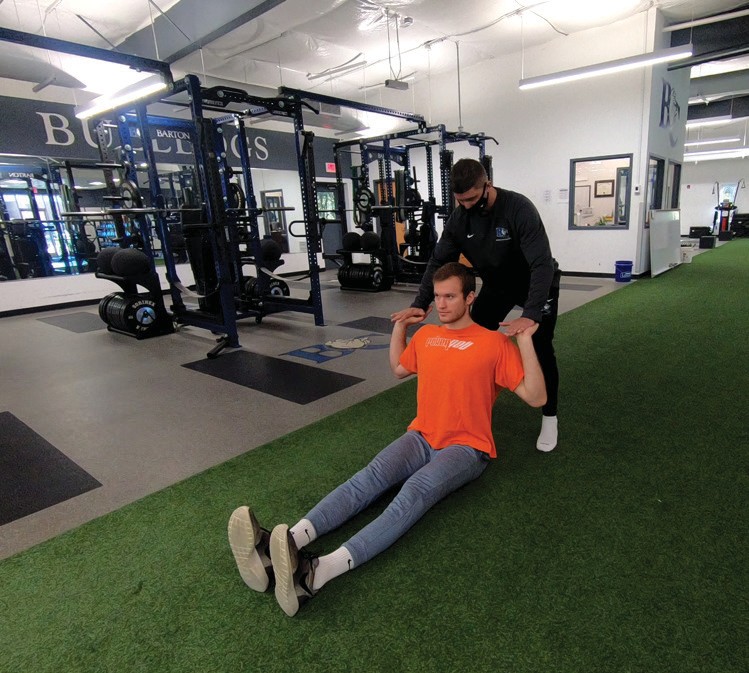
The person exercising can be sitting in a chair or sitting on the
If the person exercising is stronger, having them sit lower with the person providing resistance higher helps provide leverage for the person providing resistance (this allows the needed resistance to be delivered).
The person exercising should place their hands palm up, at shoulder
The person providing resistance puts their palms on the other person’s hands/palms and provides resistance as the exercises push up against
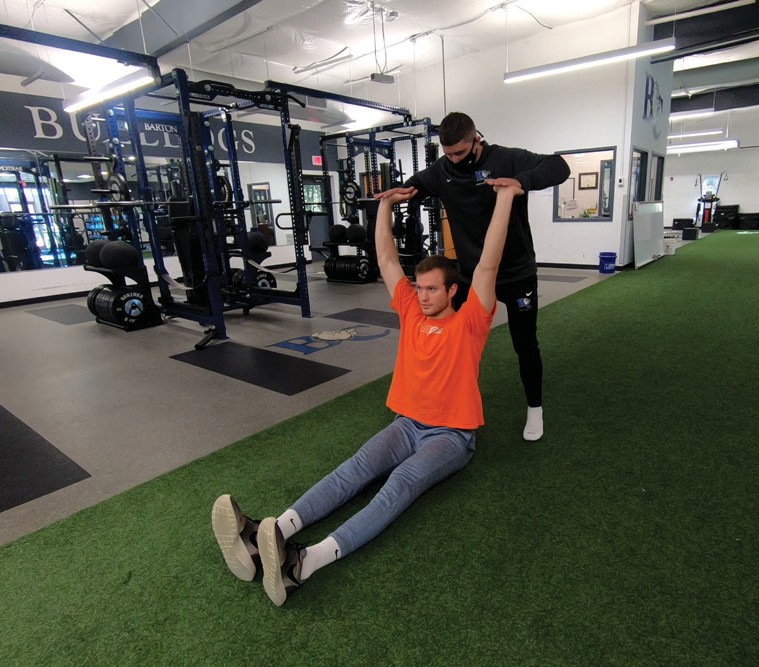
Provide steady resistance as the person exercising extends their arms over head, to an almost straight position.
Leaving a little bend in the elbows, or any joint being exercised, takes pressure off the joint and keeps the resistance on the targeted
The person exercising and the person applying resistance must communicate properly to apply appropriate resistance.
Too much resistance and the foot cannot move; too little resistance and the muscle will not be
Good communication is needed so that injury will not occur. Movement should be slow and steady through the full range of motion.
Figure 6.220: Resisted Shoulder Press Starting Position
Figure 6.221: Resisted Shoulder Press Finishing Position
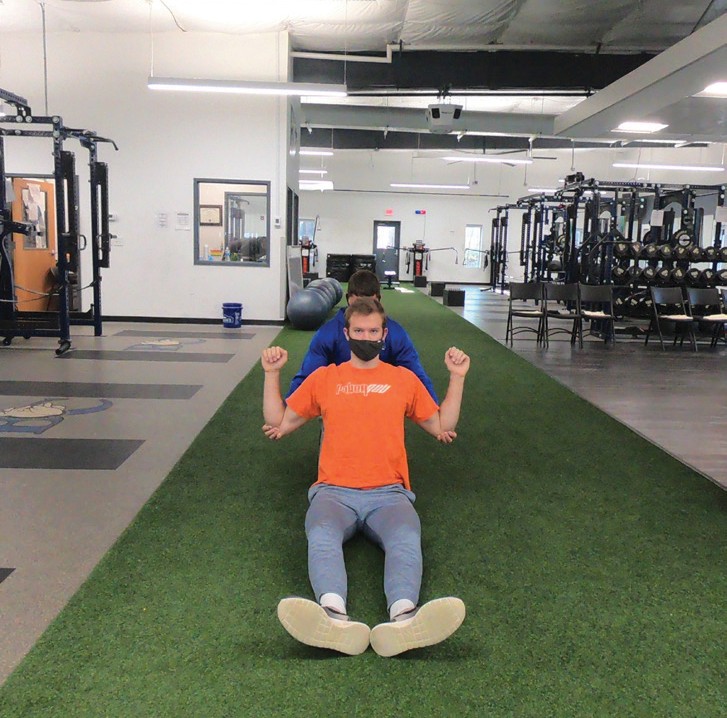
Resisted Lat Pulldown
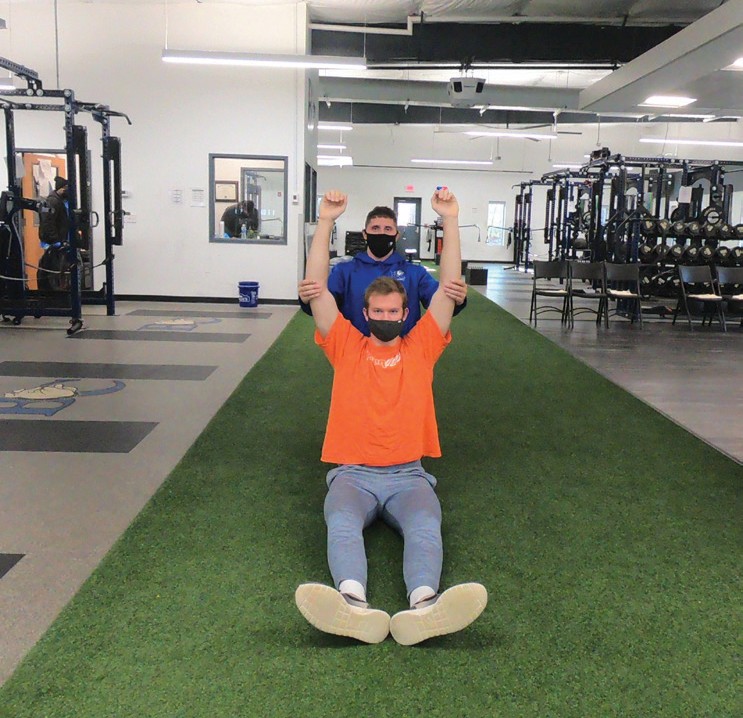
Start: Sitting with a natural arch in your back and slightly leaning back with your arms extended overhead.
Movement: Pull your elbows downwards until your elbows come down to your Pause momentarily and resist the negative to the starting position.
Spotting: Position one leg against the lifter’s back to add Grasp under the lifter’s elbows and appropriately apply pressure.
The person exercising and the person applying resistance must communicate properly to apply appropriate resistance.
Too much resistance and the foot cannot move; too little resistance and the muscle will not be overloaded.
Good communication is needed so that injury will not occur, movement should be slow and steady through the full range of motion.
Figure 6.222: Resisted Lat Pulldown Starting Position
Figure 6.223: Resisted Lat Pulldown Finishing Position
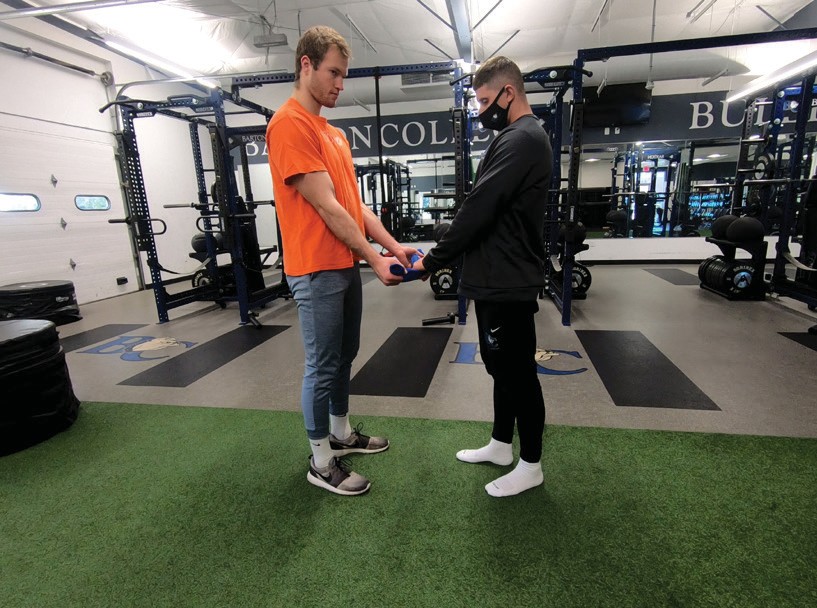
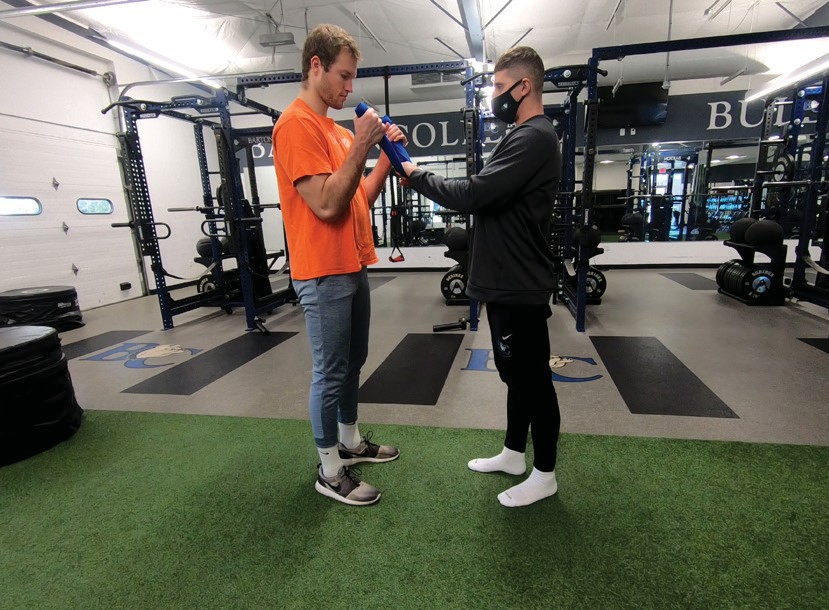
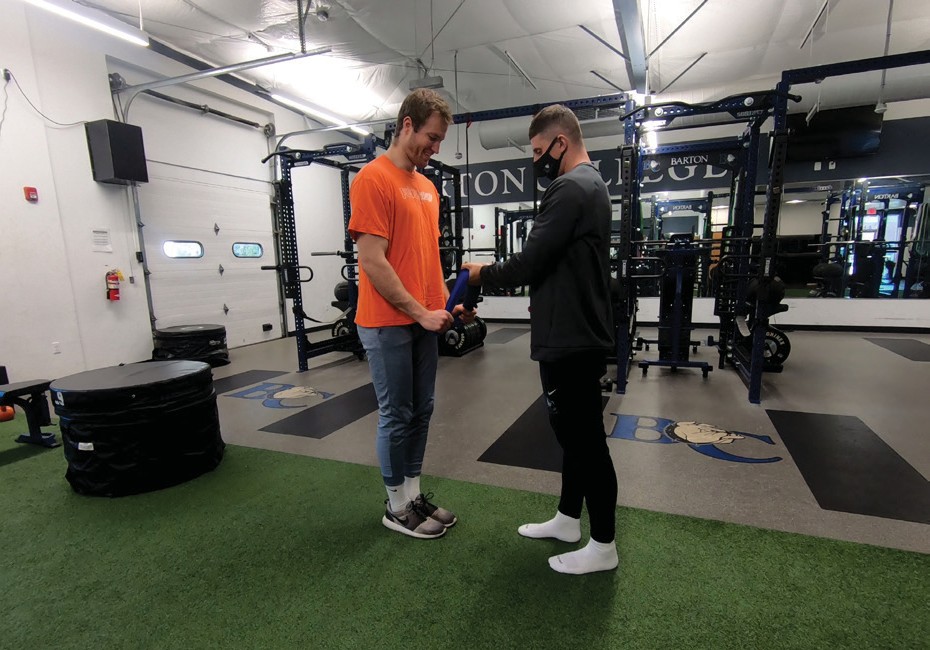
Resisted Towel Biceps Curl
Stand with feet shoulder width apart and knees slightly bent.
With an end of a short towel in each hand (palms up), start with arms extended at thigh height.
With a partner providing resistance from below, keep the elbows at the sides and flex biceps to pull the towel up to shoulder height.
The person exercising and the person applying resistance must communicate properly to apply appropriate resistance.
Too much resistance and the foot cannot move, too little resistance and the muscle will not be overloaded.
Good communication is needed so that injury will not Movement should be slow and steady through the full range of motion.
Figure 6.224: Resisted Towel Biceps Curl Starting Position
Figure 6.225: Resisted Towel Biceps Curl Finishing Position
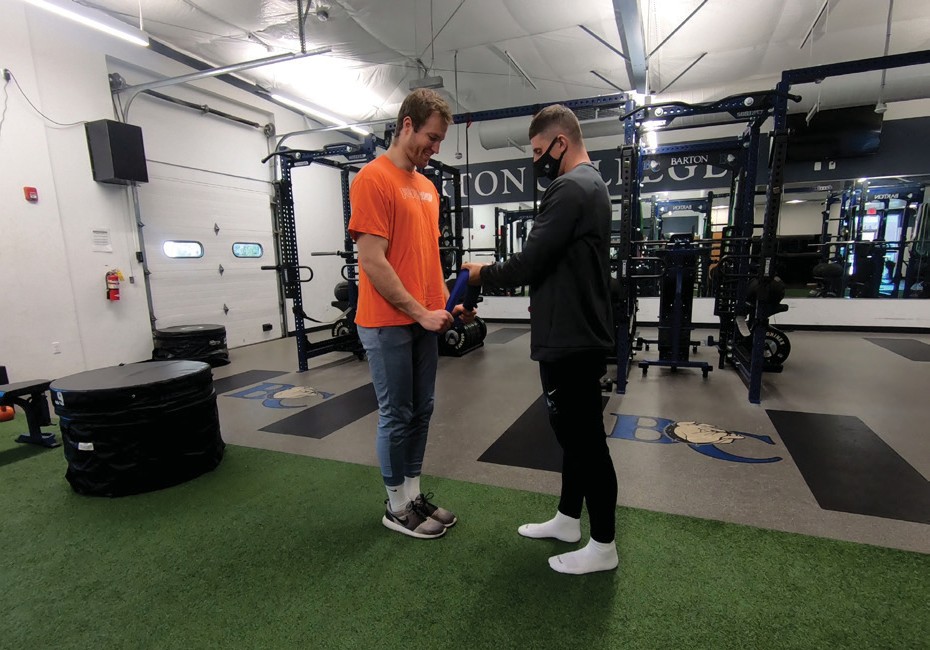
Resisted Towel Triceps Extension
Stand with feet shoulder width apart and knees slightly bent.
With an end of a short towel in each hand (palms down), start with arms flexed and hands at chest height.
With a partner providing resistance from above, keep the elbows at the sides and extend triceps, pushing the towel down to hip/thigh height.
The person exercising and the person applying resistance must communicate properly to apply appropriate resistance.
Too much resistance and the foot cannot move; too little resistance and the muscle will not be overloaded.
Good communication is needed so that injury will not Movement should be slow and steady through the full range of motion.
Figure 6.226: Resisted Towel Triceps Extension Starting Position
Figure 6.227: Resisted Towel Triceps Extension Finishing Position